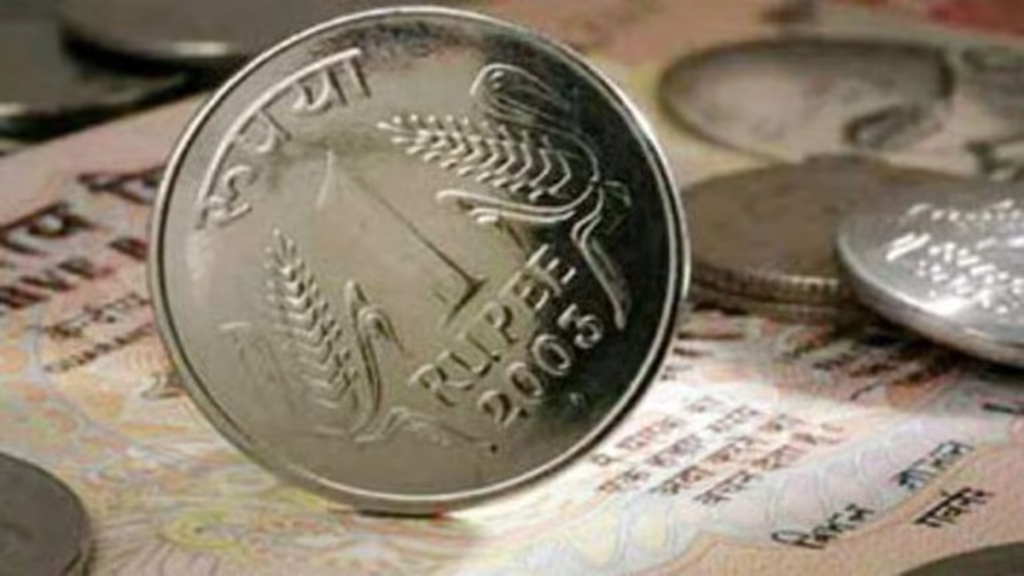
The last Friday of March proved to be heavily volatile for the Indian rupee, as it neared the dreaded 95 mark against the US dollar, slumping to new record low levels.
The currency faced immense pressure as elevated crude prices along with a high dollar index exerting pressure on the Indian Rupee.
The Indian rupee which opened at 94.16 against the dollar, fell to a record low of 94.84 in the intra-day session, before closing the trade at 94.81 mark against the greenback.
5 reasons why the rupee crashed below 94/$
Is the currency headed for even steeper declines? Here’s what experts have to say
#1 Energy supply disruption mounts on rupee
Energy prices are currently at elevated levels with Brent crude just below the $110/bbl mark as the Strait of Hormuz– a crucial trade route remains closed for most ships, with only a few being allowed to pass by.
US President Donald Trump’s postponement of strike on Iranian infrastructure was unable to calm the energy markets, further fuelling inflationary concerns and weighing on emerging market currencies like the Indian Rupee.
“As long as energy flows remain constrained, inventories continue to deplete and oil and gas prices are likely to stay firm, keeping pressure on the rupee. If crude remains elevated, we may see further reflexive weakness through speculative shorting, especially via the NDF market, along with importer panic buying and some hesitation from exporters,” said Anindya Banerjee, Head of Commodity and Currency Research at Kotak Securities.
#2 Dollar index rises to 100
The dollar index which measures the strength of the greenback against a basket of six major currencies reached the 100 level mark, amidst the escalating West Asia conflict. The rise signals towards an increase in the safe-haven demand of the dollar.
“Asian currencies were also on their weaker side as yen fell to almost 6.92, IDR (Indonesian Rupiah) closure to 17000 and KRW (South Korean Won) was below 1500. Weakness in global equity is also pushing flows into dollar as a defensive asset,” said Anil Kumar Bhansali, head of treasury and executive director, Finrex Treasury Advisors LLP.
#3 Asian markets fall on negative US cues
Domestic equity markets too fell currency pressure as both Nifty and BSE Sensex fell by over 2% amid rising geopolitical tensions and souring energy prices. “ The negative cues from US kept most Asian markets down with KOSPI falling by 0.40% (Tech stocks stable after US cues), Nikkei by 0.08% (recovered due to weaker yen), while Shanghai was up by 0.63% and Hang Seng was up by 0.38%. All these markets were flat to lower in the morning,” Finrex advisory firm added.
#4 FPI selling adds to the downturn for currency
The currency pressure had also added to the foreign investors pulling out from domestic markets. So far this year, FIIs have been net sellers of over Rs 1.55 lakh crore worth domestic equities.
“The currency is also facing headwinds from persistent FPI selling in both debt and equity, with outflows crossing $13 billion this month and potentially matching the pace seen in March 2020. Back then, the shock was COVID-led; this time, it is the West Asia energy shock, which is still disrupting global energy flows, commodity flows, and supply chains,” Banerjee added.
#5 Outlook for the Rupee
With the last trading day of this FY26 approaching, analysts at Finrex expect the rupee to be within the levels of 94.25 to 95.25 on Monday. Currency and stock markets will remain closed on Tuesday, March 31 on the occasion of Shri Mahavir Jayanti.
However, Banerjee says that the month-end alongside the end of the financial year could see some exporter selling ,as dollar earnings are repatriated into India, which may provide temporary relief. But if the situation in West Asia worsens further into April, USD/INR could move higher still, with 96.50 to 97 coming into view. For now, support is seen around 94 and then 93.50, he adds.