Despite pressure from a strong US dollar, the Indian rupee remained stable in real terms and forex reserves remain adequate, says RBI.

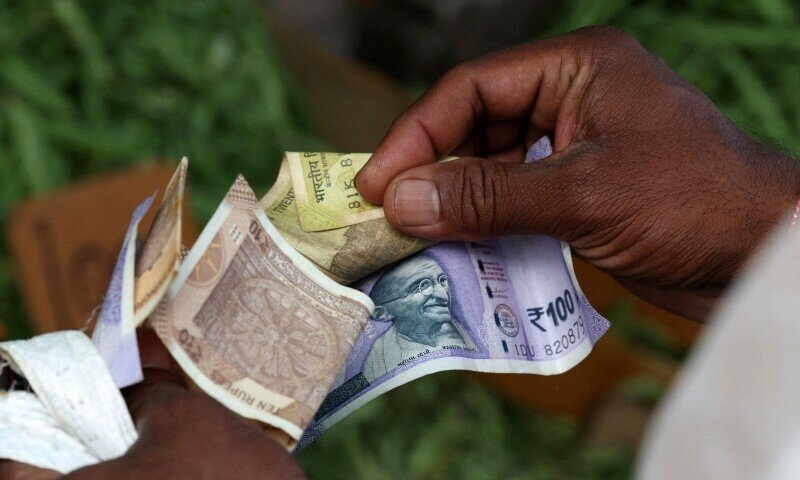
New Delhi: The Indian rupee remained broadly stable in real effective terms in November, with depreciation in nominal terms being offset by relatively higher domestic prices compared to key trading partners, the Reserve Bank of India (RBI) said in its December Bulletin.
According to the central bank, the rupee weakened against the US dollar during November due to the strengthening of the greenback, subdued foreign portfolio investment (FPI) inflows and uncertainty surrounding the proposed India–US trade deal.
“The volatility of INR, as measured by higher prices in the coefficient of variation, moderated in November from a month ago and remained relatively lower than most currencies. In December so far (up to 19), the INR depreciated by 0.8 per cent over its end-November level,” the RBI noted. In December so far, up to December 19, the rupee has depreciated by 0.8 per cent from its end-November level.
During the financial year 2025–26 so far (up to December 18), net FPI flows have remained negative, largely due to outflows from the equity segment. FPI flows turned negative in December after registering inflows in the previous two months, the RBI said.
The central bank attributed the muted FPI inflows to continued uncertainty over the India–US trade agreement and investor caution amid high domestic equity valuations.
The RBI also noted that external commercial borrowings (ECBs) moderated during the April–October 2025 period, reflecting a slowdown in offshore fundraising activity. Net ECB inflows were lower compared to the same period last year, though a significant portion of the borrowings was raised for capital expenditure.
India’s current account deficit (CAD) narrowed in the second quarter of 2025–26 compared to the same period last year, supported by a lower merchandise trade deficit, strong services exports and robust remittance inflows.
However, net capital inflows were insufficient to fully finance the current account deficit, resulting in a drawdown of foreign exchange reserves.
Despite the decline, the RBI said India’s forex reserves remain comfortable, providing import cover for more than 11 months of goods imports and covering over 92 per cent of the country’s outstanding external debt.
The RBI’s assessment underscores the resilience of the Indian rupee and the continued strength of India’s external sector amid global economic uncertainty.
IANS
Subscribe to our Newsletter
Disclaimer: Kindly avoid objectionable, derogatory, unlawful and lewd comments, while responding to reports. Such comments are punishable under cyber laws. Please keep away from personal attacks. The opinions expressed here are the personal opinions of readers and not that of Mathrubhumi.