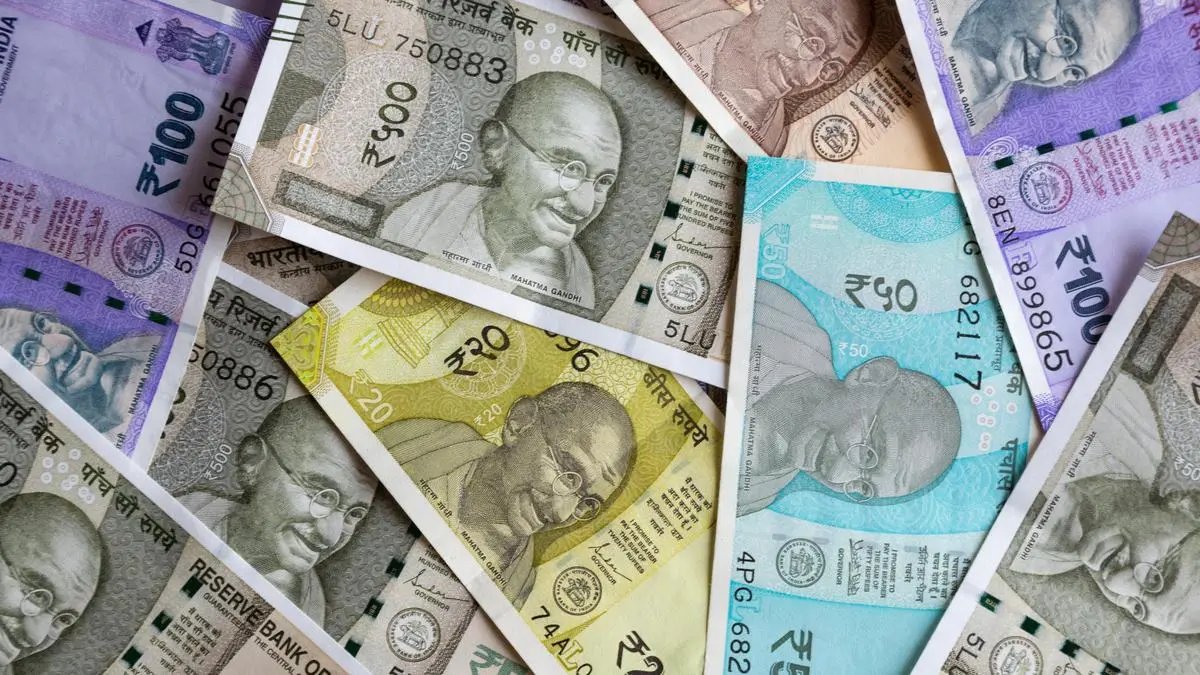
If parents are planning to send their children abroad for studies while on a tight budget, it is crucial to account for foreign exchange fluctuations in the overall cost. The Indian rupee has devalued significantly against the US dollar over the past year, raising the cost of sending children abroad.
Dr. Kamal Chhabra, Founder & CEO of KC GlobEd and GCC School, is calling it a ‘currency tax’ — a hidden burden affecting financial planning and budgeting for Indian families, making the dream of studying in the US or UK more expensive than it was just a few years ago.
The mechanics are simple. When sending their children overseas for studies, Indian parents need to convert Indian Rupees into foreign currency. For example, Indian parents have to buy US dollars if they are sending their children to US universities. The university tuition fee, living expenses, and all other costs have to be paid in dollars.
Although the rupee has historically lost value in relation to the dollar almost every year, the recent decline has been comparatively greater. The Indian Rupee fell nearly 10% against the US dollar during the period April–March 31, 2026. The numbers tell the story clearly: Back in 2017, you required Rs 64 to buy a dollar; in 2022, you needed Rs 80; in 2025, you needed Rs 86, and now in 2026, you need Rs 92.5, as of April 8. For parents sending their children abroad for studies, it simply means that more INR is required to purchase dollars than before.
Rising Cost of Education
Despite foreign universities not increasing tuition fees, the overall expenses for Indian parents have risen significantly. “In 2023, the total annual cost of studying in the US—tuition and living expenses—ranged from roughly Rs 33–58 lakh depending on the institution and location. That range has moved to approximately Rs 38–66 lakh in 2026,” says Nitish Jain, President, S P Jain School of Global Management.
The rupee has also depreciated against the UK Pound by about 11% over the last year. “Programs in UK which cost around Rs 25-30 lakh annually may now range between Rs 28-34 lakh. These figures might vary as per university and location, but the jump in costs is substantial enough to influence how students plan their budgets and apply for education loans,” says Dr. Chhabra.
Impact on Student Numbers
The number of Indian students studying in the United States has decreased by approximately 7% over the past year. Data from the US Department of Homeland Security’s Student and Exchange Visitor Information System (SEVIS) shows a decline from 378,787 students in February 2025 to 352,644 in February 2026, representing a reduction of about 6.9% across various educational programs.
Currency Tax on Indian Students Abroad: The Full Picture
Rupee depreciation · Education costs · Student mobility · FY2026
–10%
Rupee fall vs USD (FY26)
–31%
Student drop 2023–25
+₹5–8L
Extra annual cost (US)
INR/USD Exchange Rate (year-wise)
2017
₹64 per USD
₹64
BASE
2022
₹80 per USD
₹80
+25%
2025
₹86 per USD
₹86
+34%
2026
₹92.5 per USD (Apr 8)
₹92.5
+45%
Annual Education Cost — US (INR, total)
2023
US — Lower estimate
₹33L
2023
2023
US — Upper estimate
₹58L
2023
2026
US — Lower estimate
₹38L
2026
2026
US — Upper estimate
₹66L
2026
Indian Students Abroad (lakh)
2023
Total students abroad
9.08L
PEAK
2024
Total students abroad
7.7L
–15%
2025
Total students abroad
6.26L
–31%
US
SEVIS — Feb 2025
3.79L
FEB 25
US
SEVIS — Feb 2026
3.53L
–6.9%
| Category | Metric / Year | 2023 Value | 2026 Value | Change | Impact |
|---|---|---|---|---|---|
| Forex | INR/USD rate | ₹82 (est.) | ₹92.5 | –10% (FY26) | High |
| Forex | INR/GBP rate | ~₹103 | ~₹114 | –11% (1 yr) | High |
| Forex | INR/USD — 2017 baseline | ₹64 | ₹92.5 | –44.5% | Very High |
| Cost | US annual cost (lower) | ₹33L | ₹38L | +₹5L | Moderate |
| Cost | US annual cost (upper) | ₹58L | ₹66L | +₹8L | High |
| Cost | UK annual cost (lower) | ₹25L | ₹28L | +₹3L | Moderate |
| Cost | UK annual cost (upper) | ₹30L | ₹34L | +₹4L | Moderate |
| Students | Total Indian students abroad | 9.08L | 6.26L (2025) | –31% | Severe |
| Students | Indian students in US (SEVIS) | 3,78,787 | 3,52,644 | –6.9% | High |
Swipe horizontally to view all columns · SEVIS data: Feb 2025 vs Feb 2026
Extra INR cost per year due to currency depreciation
United States
US Universities
Annual cost (2023)₹33–58L
Annual cost (2026)₹38–66L
Extra per year+₹5–8L
4-year course extra+₹20–32L
USD depreciation (FY26)–10%
United Kingdom
UK Universities
Annual cost (before)₹25–30L
Annual cost (now)₹28–34L
Extra per year+₹3–4L
2-year course extra+₹6–8L
GBP depreciation (1 yr)–11%
Hedge Strategy — US Stocks
S&P 500 Play
S&P 500 return (FY26)+14%
INR depreciation gain+10%
Combined benefit~24%
StrategyInvest in USD assets
Planning Rule of Thumb
Budget Buffer
Historical INR depreciation3–5% / yr
FY26 actual depreciation10%
Recommended buffer5–10% extra
Early fee paymentRecommended
Sources: SEVIS / US Dept of Homeland Security · SP Jain School of Global Management · KC GlobEd · RBI forex data · Data as of April 8, 2026
However, the fall in the number of Indian students moving to the US could be attributed largely to heightened scrutiny and compliance requirements mandated by the US administration. The new US student visa rules call for tighter vetting of student visa applicants, which now includes examinations of their online presence and social media activity.
Has Interest in Studying Abroad Dropped?
The number of Indian students studying abroad has decreased over the past three years, with 9.08 lakh travelling overseas in 2023, falling to 7.7 lakh in 2024 and 6.26 lakh in 2025. This reflects a nearly 31% cumulative decline from 2023 to 2025.
Yet, as can be seen from the numbers above, Indian students haven’t completely shut the doors to US education. “The Indian rupee has kept depreciating against USD/GBP for the last 50 years, but this has not diminished the appeal for Western education. Universities that have been deliberate about fee stability and that offer strong scholarship programs have cushioned this for international students to a meaningful degree,” says Jain.
“Interest in studying abroad has not dropped, but the nature of the conversation has changed. Across our network, students and families are coming in with sharper questions than they were two or three years ago—about employability outcomes, post-study work rights, industry connections, and what the program concretely delivers relative to its cost,” says Jain.
“They are doing the math, and institutions that can answer those harder questions with evidence rather than promises are the ones continuing to see strong demand,” adds Jain.
“The burden falls hardest on students who choose programs without a clear line of sight to career outcomes; where the combination of tuition, living costs, and currency depreciation adds up without a commensurate return on the other side,” adds Jain.
“We are currently not seeing a drop in student interest in studying abroad, but there is definitely a shift in strategy. Students are becoming more financially aware. With many exploring scholarships, affordable universities and low-cost living countries with higher ROI. A growing interest in part-time work opportunities is adding to this shift. The demand and interest remain strong, but the process of planning is now more rigorous and value-driven,” says Dr. Chhabra.
How to Plan
If the rupee-dollar exchange rates are going to disrupt your foreign education plans, you need to have a plan in place. Historically, the Indian Rupee has depreciated by approximately 3-5%, necessitating parents to account for this INR-USD forex conversion rate when budgeting for their child’s 3-4 year course in the US.
“My advice to students and parents is that don’t plan finances according to the current rates, but put a buffer for currency fluctuation. Explore forex strategies, early fee payments, and education loans with flexible repayment terms to help manage risk. Focus on internships and part-time jobs,” says Dr. Chhabra.
One practical option is to hedge against INR depreciation. One can open a US bank account and fund it in advance, or save on depreciation costs by purchasing US stocks from India. Indians investing in US stocks experienced a double benefit in FY 2025-26, with the S&P 500 rising by 14% and the Indian Rupee depreciating by 10% against the US dollar, enhancing their investment gains.
Disclaimer: The information presented in this article is intended for general informational purposes only and should not be construed as financial, investment, or legal advice. Exchange rates, tuition fees, and cost estimates cited are indicative and subject to change; readers should verify current figures with relevant financial institutions, universities, or official sources before making any decisions. The views and opinions expressed by the individuals quoted herein are their own and do not necessarily reflect the views of the publication. References to specific institutions, programs, or financial instruments are for illustrative purposes only and do not constitute an endorsement or recommendation. Readers are advised to consult a qualified financial advisor or education consultant before making any financial commitments related to overseas education.