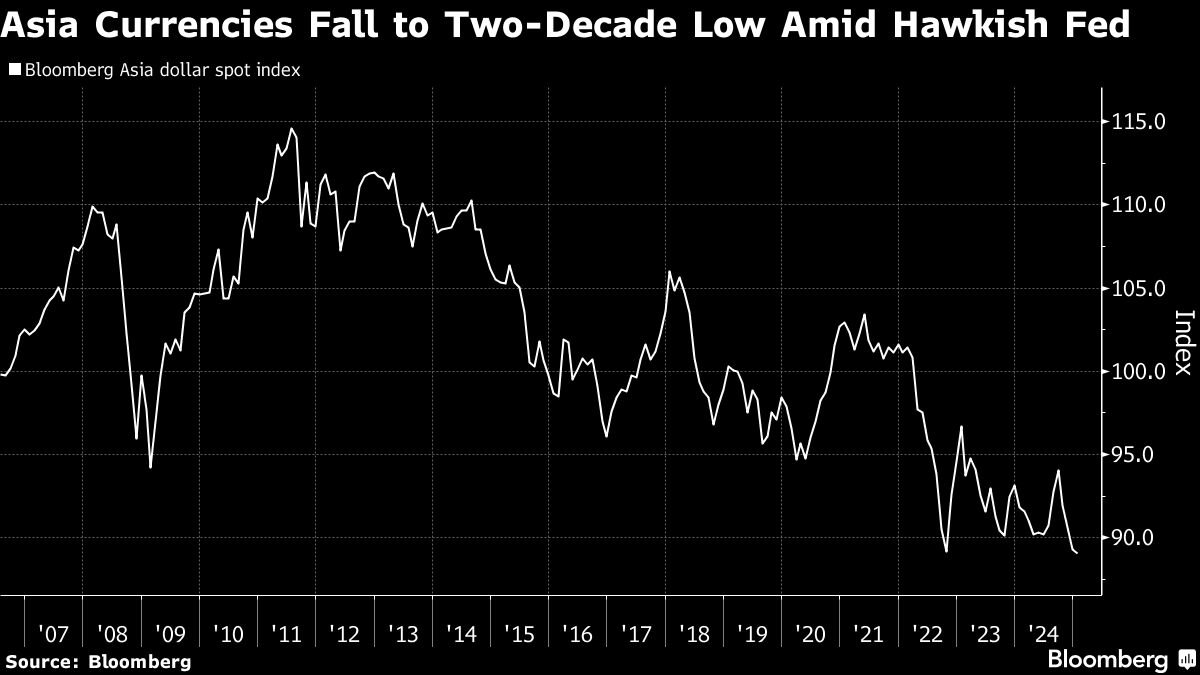
Asian foreign exchange markets are moving within narrow ranges as Lunar New Year holidays reduce regional liquidity, limiting conviction across currency pairs even as geopolitical headlines turn incrementally supportive. Reports that the United States and Iran have reached a general agreement forming the basis for a potential nuclear deal have encouraged a modest improvement in risk sentiment tied directly to regional currencies, creating a balance between supportive macro signals and constrained trading conditions.
Price action reflects this equilibrium. is edging higher by 0.2% to 153.60, indicating that dollar demand remains intact despite the softer geopolitical backdrop, while USD/KRW is holding broadly unchanged at 1,444.67, underscoring the absence of decisive capital flows during the holiday-thinned session.
In contrast, is slipping 0.2% to 0.7070, suggesting that incremental shifts in global risk appetite are not yet strong enough to generate sustained buying across pro-cyclical currencies. Together, these moves point to consolidation rather than trend formation, where reduced participation dampens the transmission of improving geopolitical signals into currency strength.
For investors, the immediate implication is that sentiment-driven support tied to Middle East de-escalation is being moderated by liquidity constraints rather than rejected by the market. The base case is continued range-bound trading across Asian currency pairs until normal participation resumes and geopolitical developments translate into measurable capital allocation shifts.
The primary risk is that diplomatic progress fails to advance beyond preliminary agreement, which would quickly restore defensive dollar positioning and pressure regional currencies. Market focus now turns to confirmation of diplomatic follow-through and the return of full trading volumes, both of which will determine whether consolidation evolves into directional movement.