


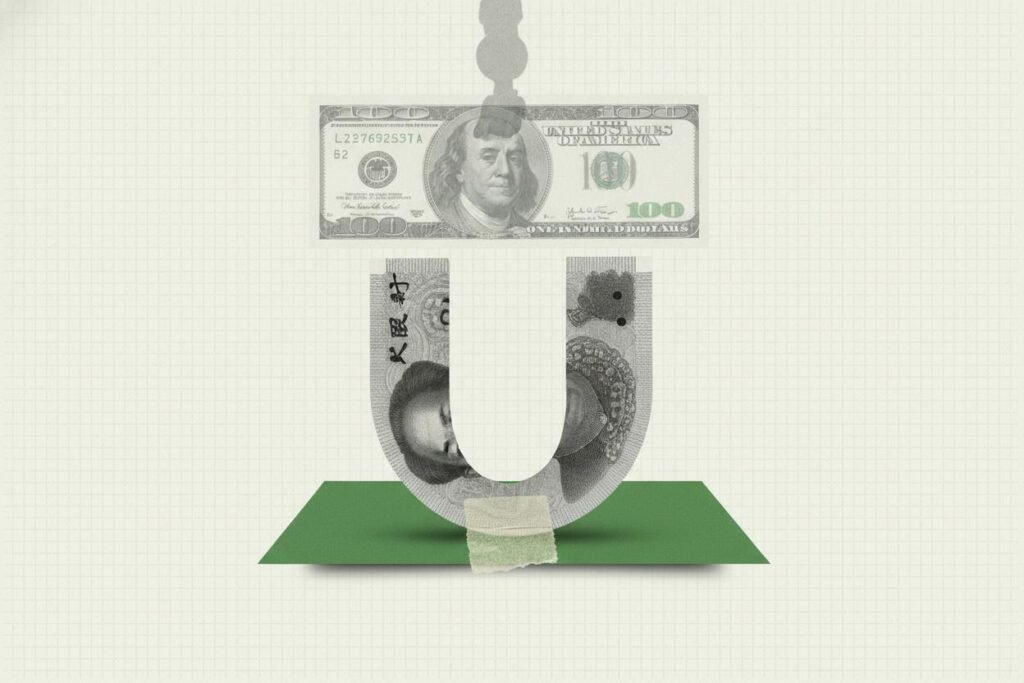
. A stronger US dollar and expectations for more Fed rate hikes have been leaning on emerging-market currencies broadly, a theme that picked up after the Fed’s meeting minutes signaled officials were open to additional tightening.
China’s policymakers are also trying to keep the move orderly. The People’s Bank of China (PBOC), China’s central bank, set its daily reference rate at 6.7131 per dollar, much weaker than Reuters’ model estimate of 6.6731, and the yuan is only allowed to trade within a 2% band around that midpoint. That kind of “weaker-than-expected” fixing can be read as a message that officials don’t want a rapid run of yuan strength that could hurt exporters while domestic demand is still soft.
Why should I care?
For markets: The PBOC’s 6.7131 fixing hints at a capped rebound.
The central bank’s daily midpoint matters because it shapes where traders expect policymakers to draw the line. By setting 6.7131 – roughly 400 pips weaker than the model estimate – the PBOC signaled it’s comfortable with a firmer yuan, but not a straight-line rally. That can shift hedging behavior toward “two-way” outcomes and make the December-January repatriation boost look more like a near-term floor than the start of a lasting upswing. The spillover tends to show up first offshore, where the tradable yuan (CNH) is more sensitive to global risk sentiment, especially when Fed-driven dollar strength is already pressuring emerging-market foreign exchange.