


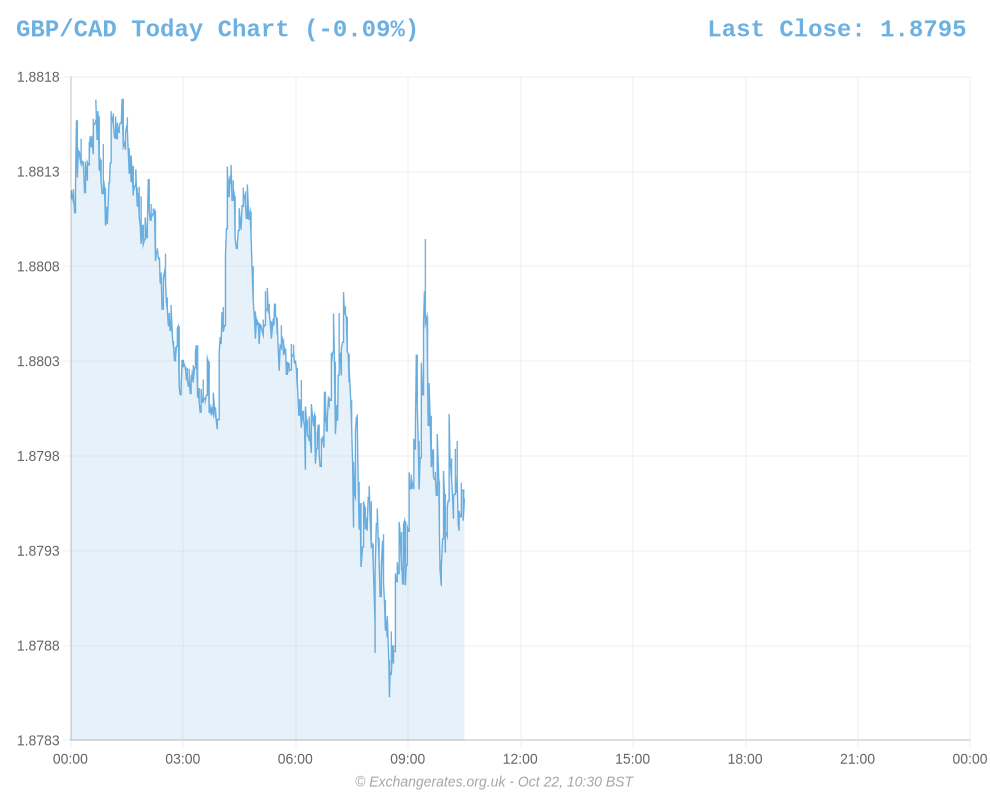
GBP/CAD is near 1.8809 on Wednesday morning as Britain and Canada receive different signals about inflation beneath the headline figures.
UK services inflation accelerated to 3.7% in September, adding to the argument for Bank of England tightening.
Canada’s annual inflation rate rose more modestly to 3.1% from 3.0%, with expensive petrol accounting for much of the pressure.
The Bank of Canada’s preferred trimmed and median measures eased to 1.8% and 1.9%, respectively, offering policymakers more reassurance about underlying prices.
RBC consequently expects Canadian rates to remain unchanged through the rest of 2026 before increases begin in 2027.
The bank nevertheless warns that recent central-bank communication raises the risk of an earlier move to prevent energy costs from becoming embedded in broader inflation.
Canada’s loss of 68,000 jobs in September also gives the central bank a reason to avoid tightening too quickly into a fragile recovery.
Higher oil prices can support Canadian export earnings even while complicating monetary policy, helping explain why softer domestic data need not translate directly into a weaker currency.
The pair remains close to its main exponential moving averages, suggesting that the competing influences have yet to produce a clear trend.
Our December forecast average is 1.8543, around 1.4% below the current rate, with six providers contributing forecasts.
The Bank of Canada’s 28 October decision will show whether officials share RBC’s patience or place greater weight on the risk of inflation spreading.
Britain’s Budget arrives the same day, leaving GBP/CAD exposed to a change in either Canadian rate expectations or confidence in the UK’s borrowing plans.
Mid-market reference rate. Customer rates normally include provider margins and fees.