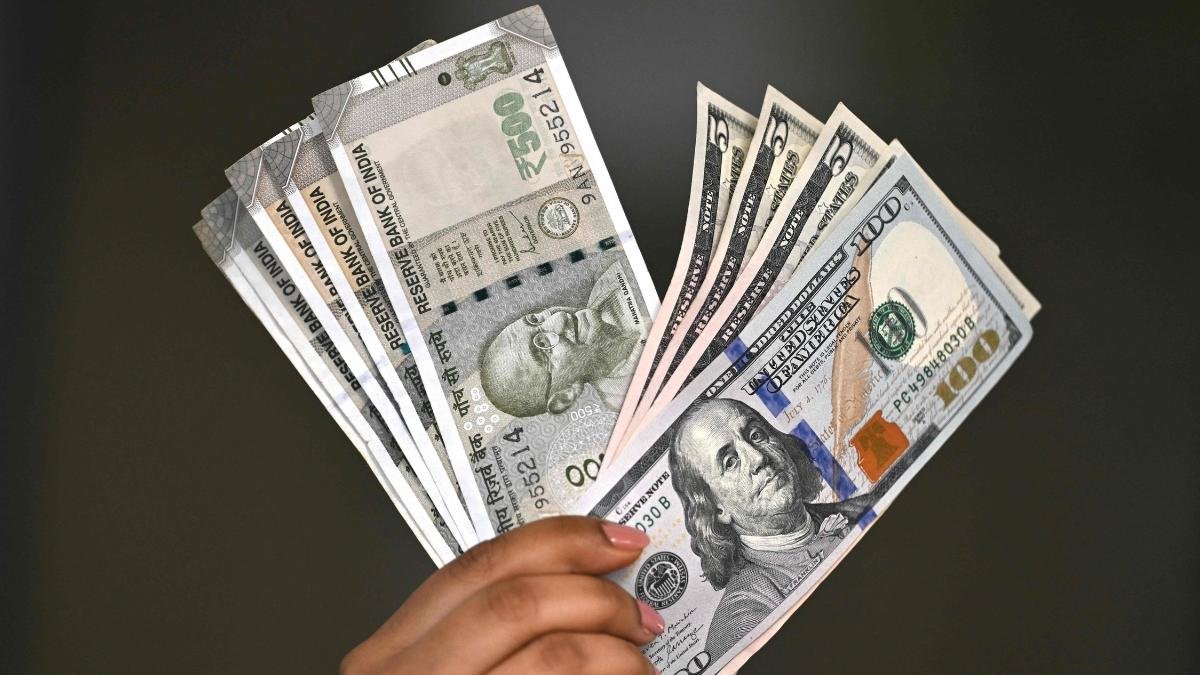
The Indian rupee witnessed steep appreciation as RBI governor Sanjay Malhotra announced measures towards managing foreign exchange stability and boosting foreign capital inflows in the country. The currency touched an intraday high of 94.75 per dollar, weighed by positive sentiment, as the central bank kept key policy rates unchanged.
The domestic currency had opened almost flat at 97.71 against the US dollar, and appreciated to 94/$ level intra-day, up nearly 1% intra-day. The currency ended Friday’s trade back at 94.97 per dollar mark, up 0.9% on day.
Govt scraps capital gains tax on bond investment by FIIs
The government also promulgated a new ordinance to scrap long-term capital gains tax on investments made by foreign institutional investors in government securities. The governor said that these measures would attract foreign capital inflows into the country.
“A realistic base-case estimate would be around $25-30 billion, with upside potential if global bond investors increase allocations to India amid relatively attractive real yields,” said Kunal Sodhani, Head of Treasury, Shinhan Bank.
RBI measures to attract flows support rupee
The RBI Monetary Policy Committee unanimously delivered a Neutral stance and announced a slew of measures to attract foreign inflows. .
These include support for hedging costs to raise FCNR deposits, an increase in the forex swap window, increased access to government bonds via the fully accessible route (FAR), and an increase in the limit of equity investments for NRIs and OCIs.
Rupee second worst-performing Asian currency
The Indian rupee was 2025’s worst-performing Asian currency and has depreciated by more than 6% so far this year, making it the second-worst-performing Asian currency, just next to its Asian counterpart, the Indonesian rupiah, which has declined by 7.5% on a year-to-date basis.
India, the world’s third-largest oil importer, continues to face the pressure of the prolonged US-Iran conflict, as the chokepoint, the Strait of Hormuz, which transits nearly 20% of the global energy flows, remains closed.
Oil prices continue to trade at elevated levels as Middle East tensions continue to hold, further fuelling inflationary concerns and mounting pressure on the rupee, as oil is predominantly traded in dollars.
Economists expect rate hikes later in the year
Economists expect the central bank to hike rates later in the year. “We expect RBI to possibly start with the tightening cycle post Oct ’26, since by then, there will be more clarity even on the distribution of rainfall. Thereby, we expect one-two rate hikes in FY27,” said Jahnavi Prabhakar, Economist at Bank of Baroda.
“We expect the rate-hiking cycle to begin as early as the August policy meeting, with cumulative rate increases of 75–100 basis points over the course of the current fiscal year,” said Amar Ambani, Executive Director and Head, Institutional Equities Research at Yes Securities.
Outlook for rupee
According to Anil Kumar Bhansali, Head of Treasury at Finrex Treasury Advisors LLP, the currency is expected to appreciate towards the 93 per dollar mark by September.