[Editor’s Note: Follow the Khaleej Times live blog for the latest regional developments with the US-Israel-Iran ceasefire now in effect.]
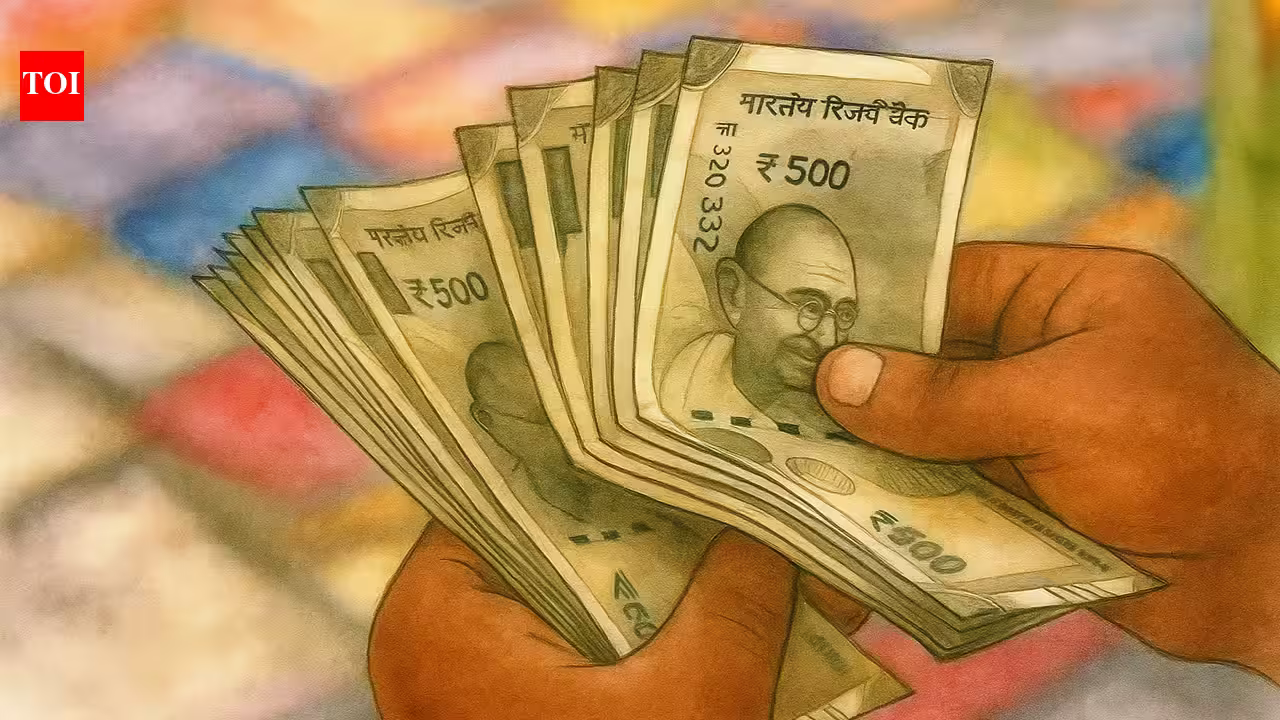
India’s rupee is rapidly approaching a historic psychological threshold, with currency markets increasingly betting that the battered unit could breach the Rs100-per-dollar mark if the Middle East conflict persists and oil prices remain elevated.
The rupee, which has already weakened nearly six per cent since the eruption of the US-Israel-Iran conflict in late February, briefly hovered near the 97 level this week despite heavy intervention by the Reserve Bank of India. Currency traders and economists now believe the question is no longer whether the rupee will cross 100, but how soon.
The sharp depreciation reflects a dangerous mix of soaring crude oil prices, relentless foreign fund outflows, a widening current account deficit and mounting geopolitical uncertainty. For India — which imports nearly 90 per cent of its crude oil requirements — every spike in oil prices directly intensifies pressure on the currency and inflation.
Stay up to date with the latest news. Follow KT on WhatsApp Channels.
The rupee’s weakness has also become a critical concern for millions of Indians living in the Gulf, particularly in the UAE, where remittances form a major lifeline for families back home. At the current exchange trajectory, the UAE dirham — pegged to the US dollar at 3.67 — is edging closer to Rs27 per dirham and could soon move towards Rs28 if the rupee breaches the 100-per-dollar mark.
For NRIs in the Gulf, the depreciation offers short-term gains in remittance value. A monthly remittance of Dh5,000 now fetches significantly more rupees than it did at the start of the year. However, economists warn that the benefits could be temporary if the rupee collapse fuels inflation and erodes household purchasing power in India.
The central bank is now scrambling to prevent panic in currency markets. According to reports, senior RBI officials, led by Governor Sanjay Malhotra, have held multiple internal meetings to examine emergency measures aimed at stabilising the rupee.
Among the options under consideration are an unscheduled interest rate hike, fresh dollar swap auctions, sovereign dollar bonds and a special foreign currency deposit scheme targeting NRIs — a strategy similar to the one India deployed during the 2013 taper tantrum crisis.
Officials believe such a scheme could mobilise as much as $50 billion from overseas Indians, substantially strengthening India’s foreign exchange reserves and easing pressure on the currency. Yet economists remain divided on whether intervention alone can stop the rupee’s slide.
Arvind Panagariya, chairman of 16th Finance Commission, has publicly warned the RBI against becoming fixated on the “psychology” of the Rs100 level. In strongly worded remarks, he argued that defending an artificial currency level could drain reserves without addressing the underlying economic imbalance.
According to Panagariya, allowing the rupee to depreciate naturally may ultimately help India regain competitiveness, especially if high oil prices prove temporary. If the energy shock persists for more than a year, however, he warned that aggressive defence of the currency could become unsustainable.
His comments reflect a growing view among economists that India may eventually have to accept a structurally weaker currency in a world shaped by prolonged geopolitical instability and elevated energy costs.
The RBI’s challenge has become more complicated because India’s interest rate differential with the US has narrowed sharply. The gap between Indian and US bond yields is now at its tightest level in more than a decade, reducing the attractiveness of Indian assets for foreign investors.
Foreign institutional investors have already withdrawn more than $19 billion from Indian equities this year, exceeding last year’s record outflows. Persistent capital flight has intensified dollar demand and deepened pressure on the rupee.
At the same time, inflation risks are mounting. Higher oil prices are expected to push up transportation costs, food prices and manufacturing expenses, complicating the RBI’s monetary policy outlook. Economists increasingly expect interest rates to move higher in the coming months despite slowing global growth concerns.
The RBI recently announced a $5 billion-dollar swap auction to strengthen near-term reserves and inject liquidity into the banking system. More such interventions are likely if volatility intensifies.
Still, many analysts believe the central bank is merely buying time.
Historically, India has managed currency shocks through a combination of reserve deployment, tighter liquidity, import curbs and NRI deposit schemes. But the present crisis carries greater risks because it coincides with a potentially prolonged geopolitical conflict involving one of the world’s most critical oil-producing regions.
A breach of Rs100 per dollar would carry enormous symbolic significance for Indian markets and consumers. Yet economists argue that the real danger lies not in the number itself, but in the possibility of sustained imported inflation, weaker investor confidence and rising external financing costs.
For Gulf-based NRIs, however, the weakening rupee continues to provide a powerful remittance advantage. Unless oil prices retreat sharply or geopolitical tensions ease soon, the rupee’s march towards 100 may now be difficult to stop.