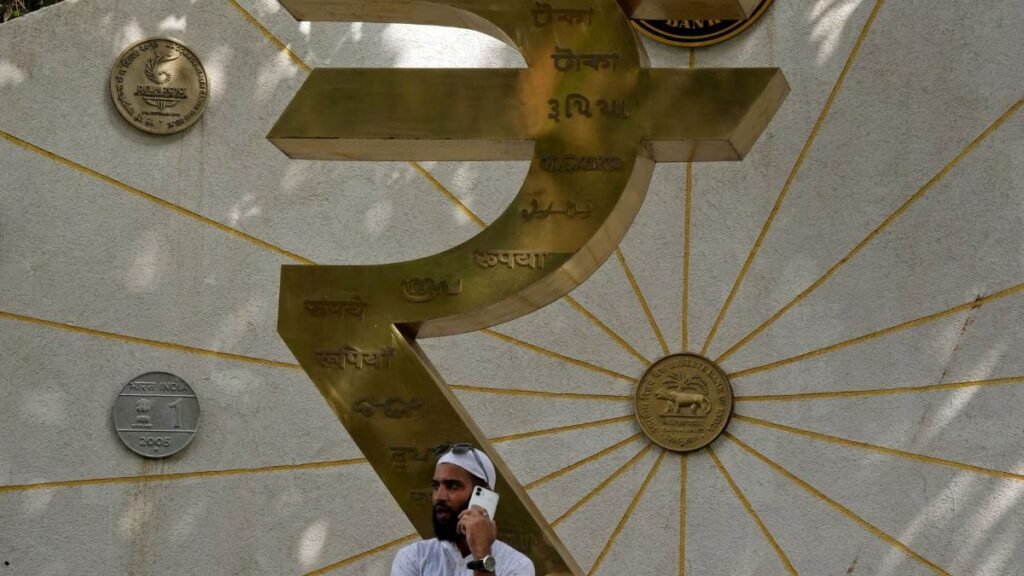
The Indian rupee took a breather on Friday (May 22), touching a weekly high of 95.86 against the US dollar. This was supported by heavy RBI intervention and a slight ease in oil prices, as investors monitored the negotiations between the US and Iran.
The currency had opened flat at 96.26 per dollar, but went to the highs of 95 as market participants reported heavy dollar sales were being undertaken by the Indian central bank.
On Wednesday, the currency had hit an all-time low of 96.96 per dollar, following which the RBI announced a $5-billion dollar-rupee buy/sell swap auction for a three-year tenor on May 26 to inject durable liquidity into the banking system.
Cutting out on long positions
The dollar index, which gauges the strength of the greenback against a basket of six major currencies, was hovering around its six-week high of 99.2 as uncertainty around the prolonged West Asia conflict kept investor sentiment cautious about inflation and rate hikes.
Industry experts reported that the central bank intervened to curb long positions in the market and prevent the currency from breaching the crucial 97 mark against the dollar.
“They are selling in every upward bid, ensuring that longs are cut,” said Anil Kumar Bhansali, head of treasury at Finrex Treasury Advisors LLP.
Slight cool-off in crude prices
US Secretary of State Marco Rubio, in a video, called India “a great ally” and said Washington is prepared to sell India “as much energy as they’ll buy”. This comes just a day ahead of his New Delhi visit scheduled for May 23.
These remarks may offer some relief to domestic oil market sentiment, as they come at a time when state-run oil marketing companies have raised petrol and diesel prices twice over the past week.
Brent crude futures have climbed down from their record high levels of $110 per barrel, but continue to trade at elevated levels, as the chokepoint, Strait of Hormuz, remains largely closed.
Brent crude was last quoted around the $105 per barrel mark, while the US benchmark, West Texas Intermediate, was trading near the $98 per barrel level.
Oil is predominantly traded in dollars; therefore, an increase in oil prices raises dollar demand, weighing negatively on emerging market currencies like the rupee. India is a net oil importer.
Little respite for the rupee
Currency market experts still remain cautious on the Indian rupee, citing high foreign capital outflows and a widening current account deficit. “There will be little respite for Asian currencies in the short term unless the Strait of Hormuz fully opens soon and oil prices subsequently decline, neither of which appear to be close at hand,” analysts at Barclays told Reuters.
“RBI measures and liquidity support may help provide temporary relief and contain volatility in the near term,” said Amit Pabari, Managing Director at CR Forex Advisors.
Outlook
“From a technical perspective, the 97.00 zone is expected to act as an immediate resistance area for USDINR, while support may emerge around the 95.50–95.80 zone,” Pabari added.
Markets will also watch out for the record surplus transfer from Mint Street scheduled later in the day, as economists’ forecasts indicate the number could be closer to Rs 3 trillion for FY26. If approved, this would surpass last fiscal year’s payout of Rs 2.7 trillion.