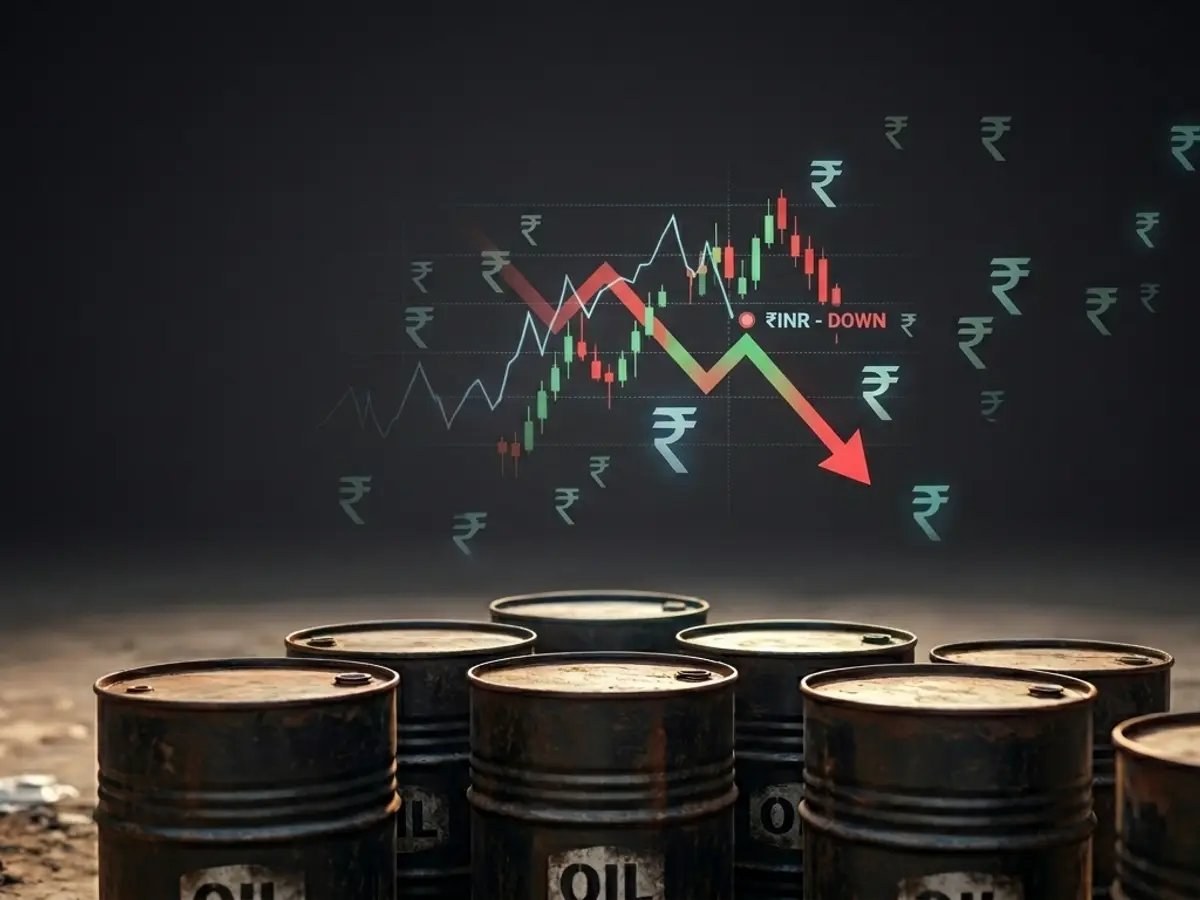
The Indian rupee breached 96 for the first time on Friday due to higher oil prices and a strengthened dollar, market participants said. After hitting a low of 96.14 intraday, it pared losses to end at 95.97, down 20 paise from the previous close. Following the start of the war in West Asia on February 28, the rupee has been under significant pressure and has weakened by around 5.5%.
With US-Iran peace continuing to falter, oil prices have surged. Crude oil prices rose 3.7% to $109.64 per barrel on Friday. Meanwhile, the dollar index strengthened to 99.21 compared to 97.90 a week ago.
In the current calendar year, the currency depreciated 6.8%.
Short Squeeze
“Over the past few days the rupee held the 96 level, but it broke below that today (Friday). Once that level was breached, market participants began covering their short positions, which also contributed to the move,” said Dilip Parmer, research analyst at HDFC Securities.
He added that the higher-than-expected trade deficit figure also added to the pressure. India’s merchandise trade deficit expanded to $28.38 billion in April due to supply disruption and higher oil prices amid the West Asia crisis.
“As oil prices rose to $109, the rupee weakened in anticipation of a further spike in oil price,” said Ritesh Bhansali, deputy CEO, Mecklai Financial Services.
“That said, I don’t expect the rupee to reach 96.5, as there is talk that the government and RBI may introduce measures to attract capital,” he added.
Market Eyes RBI Interventions
Market participants expect the government and the RBI to introduce some measures to support the currency. Reports suggest that the government has already considered measures such as lowering tax for foreign investors buying Indian bonds.
“The dollar demand is strong and outflows continue. Therefore, the RBI can deploy the 2013 playbook. Dollar demand measures are likely to be more effective than dollar supply measures because of the global environment. Even if introduced, these measures will only work if the RBI and government absorb the cost,” said Kanika Pasricha, chief economic advisor, Union Bank of India.
Pasricha explained that these measures must be carefully designed to succeed in the fragile environment, particularly when deploying products such as FCNR, with the RBI offering concessional hedging cost to support attractive product pricing.