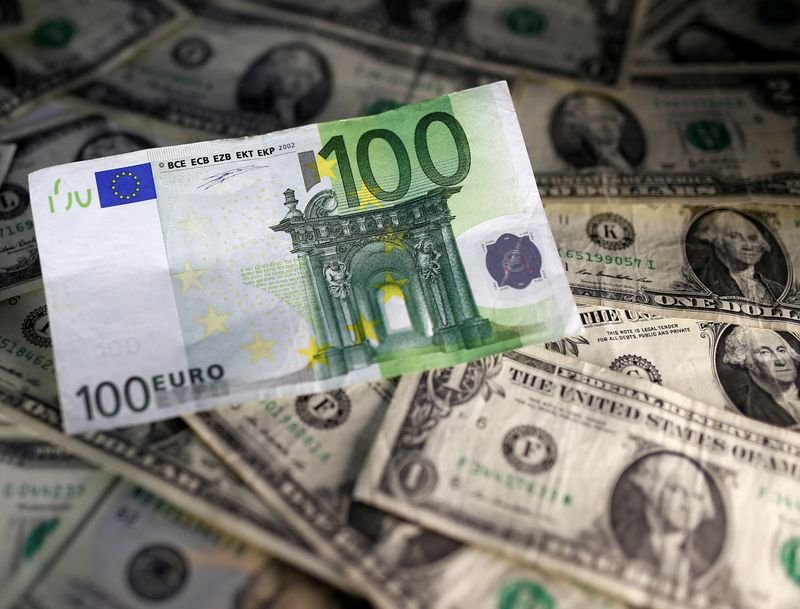
LONDON (Reuters) -The euro has fallen to one-year lows, reviving talk the currency could hit the $1 mark. Donald Trump’s U.S. election win raises the prospect of a hike in tariffs that could deal a fresh blow to the euro zone economy.
At around $1.05, the euro has slumped 6% from more than one-year highs in September when a weakening economic outlook stopped it in its tracks.
Euro/dollar is the world’s most actively traded currency pair.
Here’s a look at what’s driving the move in the euro and what could be next for the currency.
1. Could the euro hit $1?
It’s possible. Parity is just 5% away and the euro has traded below that level before – once in the early 2000s and again for a few months in 2022, when U.S. interest rates were rising faster than euro zone ones as Europe grappled with the energy price surge that followed the war in Ukraine.
For traders, the $1 mark is a key psychological level. So a fall below here could exacerbate negative euro sentiment, leading to a further depreciation.
Big banks including JPMorgan and Deutsche Bank reckon a drop to parity could happen, depending on the extent of tariffs. Tax cuts could also fuel U.S. inflation and limit Federal Reserve rate cuts, making the dollar potentially more attractive than the euro.
2. What does it mean for businesses and households?
A weak currency typically raises the cost of imports. That can lead to prices of food, energy and raw materials rising, aggravating inflation.
Since hitting double digits two years ago, inflation has fallen quickly so the hit to prices from currency weakness shouldn’t be a big worry for now. Most economists see inflation back at its 2% target next year after some volatility at the end of 2024.
Conversely, a fall in the euro makes exports cheaper – good news for Europe’s automakers, industrials and luxury retailers, for example, and for individuals or investors with overseas incomes.
It’s especially positive for Germany. Long-considered Europe’s export engine, the German economy has suffered from a number of headwinds including a weak Chinese economy.
3. Is the euro being singled out?
Not necessarily. Many currencies of major U.S. trading partners have been hit hard in the past six weeks by tariff worries.
The euro has lost over 4.5%, while the Mexican peso has lost 6% and the Korean won has fallen 5.4%. The euro actually rallied 6% over the course of Trump’s last term, but fell by nearly 6% in the six weeks following the 2016 result, before recovering.
And look at Japan’s yen. It’s down almost 10% this year against the dollar; the euro has fallen less than half of that.