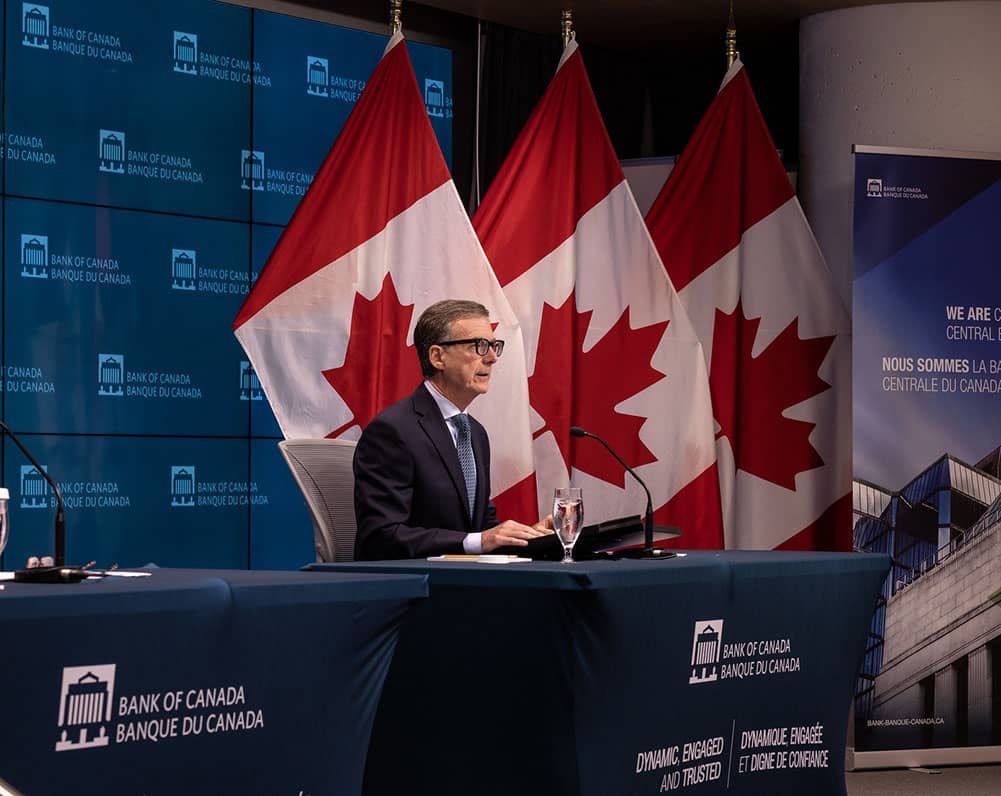

Above: File image of Tiff Macklem. Image source: Bank of Canada.
The Bank of Canada’s dovish tone sends GBP/CAD surging by over one per cent .
The pound-Canadian dollar rate had been under pressure but a surge by more than a per cent on Thursday stabilises the outlook: a 1.35% daily gain propelled it back to 1.8450 and through the 50-day moving average, opening the door to a more sustained potential recovery.
Friday’s price action shows the exchange rate has pared some of the previous day’s advance, but that’s surely to be expected given the scale of Thursday’s jump.
At the very least the rally puts a floor under GBP/CAD in the short-term as it arrests the January-February selloff that, at its widest, saw the pair drop from 1.88 on January 27 to 1.8021 on March 09.
Compare GBP to CAD Exchange Rates
Find out how much you could save on your pound to Canadian dollar transfer
Potential saving vs high street banks:
C$4,450.00
Compare GBP/CAD Rates from Leading Providers →
Free • No obligation • Takes 2 minutes
CAD was a definite underperformer on Thursday, meaning to understand the move higher in GBP/CAD we should look for Canadian drivers.
There’s no smoking gun, but there are some signs that underlying interest rate developments and the currency’s relationship to the oil price are behind the move.
“CAD is underperforming G10 FX, as rate spreads move against it and given the risk-off move. Given CAD’s falling beta to energy prices, we expect rate spreads to be a more important driver of the currency,” says Noah Buffam, FX strategist at CIBC.

A falling beta to energy prices refers to the CAD’s typically bullish responsiveness to oil price spikes. Thus far, it’s been assumed that rising oil prices would bolster Canada’s foreign exchange earnings and insulate the economy from the shock.
That’s naturally supportive of CAD. And that’s played true so far. However, CIBC’s analysis suggests that supportive impulse from oil might not be as strong as previously thought.
Interest rate differentials are also potentially weighing on the currency. Yesterday saw the UK’s two-year bond yield surge by 4.5%, but Canada’s rose by 3.5%. The differential is clear:

Above: GB two-year minus the Canadian equivalent (top panel), pulls GBP/CAD higher.
So that’s an outperformance firmly in the pound’s favour. And that dynamic is replicated elsewhere, for example, in EUR/CAD.
That’s not a surprising development given yesterday saw both the Bank of England and European Central Bank deliver relatively ‘hawkish’ policy updates that leads markets to believe both are likely to raise rates in the coming months.
Contrast that to Wednesday’s Bank of Canada call, where it was signalled that inflationary pressures were building but, crucially, there was no signal that rate hikes were being actively considered.
“At the margin, the statement was slightly more dovish than market expectations,” says economist Sarah Ying at CIBC.
“The Bank of Canada held rates at 2.25% as widely expected, as the policy statement struck another cautious tone by leaning into softer economic data since January,” adds TD Bank.
Interest rate differentials are therefore more bullish outside of Canada, and that’s a headwind to CAD.