Unlock the Editor’s Digest for free
Roula Khalaf, Editor of the FT, selects her favourite stories in this weekly newsletter.
Australia’s central bank has raised interest rates for the second time in as many months, pointing to the impact of the conflict in the Middle East on its inflation expectations.
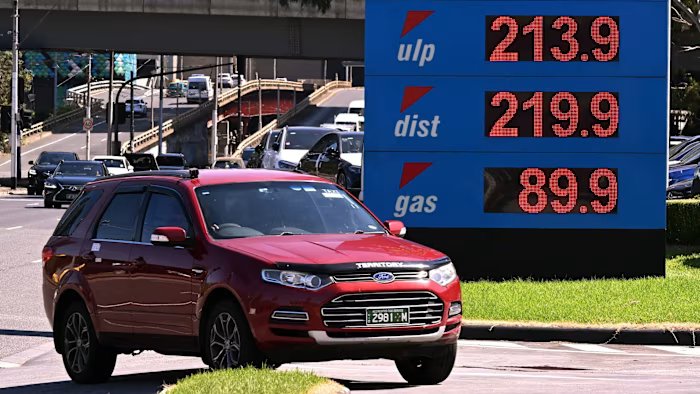
Five of the nine members of the Reserve Bank of Australia’s monetary policy board voted in favour of a 25 basis point rise in interest rates to 4.1 per cent, reacting to a sharp rise in fuel prices due to the global disruption in the supply of oil.
“In large part, higher interest rates reflect expectations for the path of monetary policy, which have risen in Australia and most other advanced economies in response to the expected inflationary implications of the conflict in the Middle East,” the RBA said in a statement on Tuesday.
The Australian central bank’s move precedes a number of key interest rate decisions this week.
The Bank of England, US Federal Reserve, European Central Bank and Bank of Japan are all widely expected to hold rates, while considering what the Middle East war will mean for inflation.
The RBA, led by Michele Bullock, said its decision was also taken due to tighter financial conditions in the Australian economy.
The bank cited “material uncertainties about the outlook for domestic economic activity and inflation and the extent to which monetary policy is restrictive”.
It argued that the conflict in the Middle East has posed “substantial risks in both directions”, adding that a long or more severe conflict would put upward pressure on energy prices and push up near-term inflation, while prolonged uncertainty could mean lower growth in Australia and its major trading partners.
The Australian dollar had strengthened sharply as investors placed bets on an interest rate rise that would make the country’s central bank a global outlier.
The currency gained more than 1 per cent against the US dollar overnight to trade at 70.84 cents ahead of the RBA meeting. It dropped marginally following the decision.
The RBA lifted rates by 25bp to 3.85 per cent in February, its first rise since 2023, in what was seen as the start of a tightening cycle with inflation still not tracking within the central bank’s 2-3 per cent band.
Paul Bloxham, chief economist at HSBC’s Australian unit, said the central bank might have to make the case that Australia needs an economic downturn to get inflation under control. “The RBA is in a very tricky spot,” he said in a note.