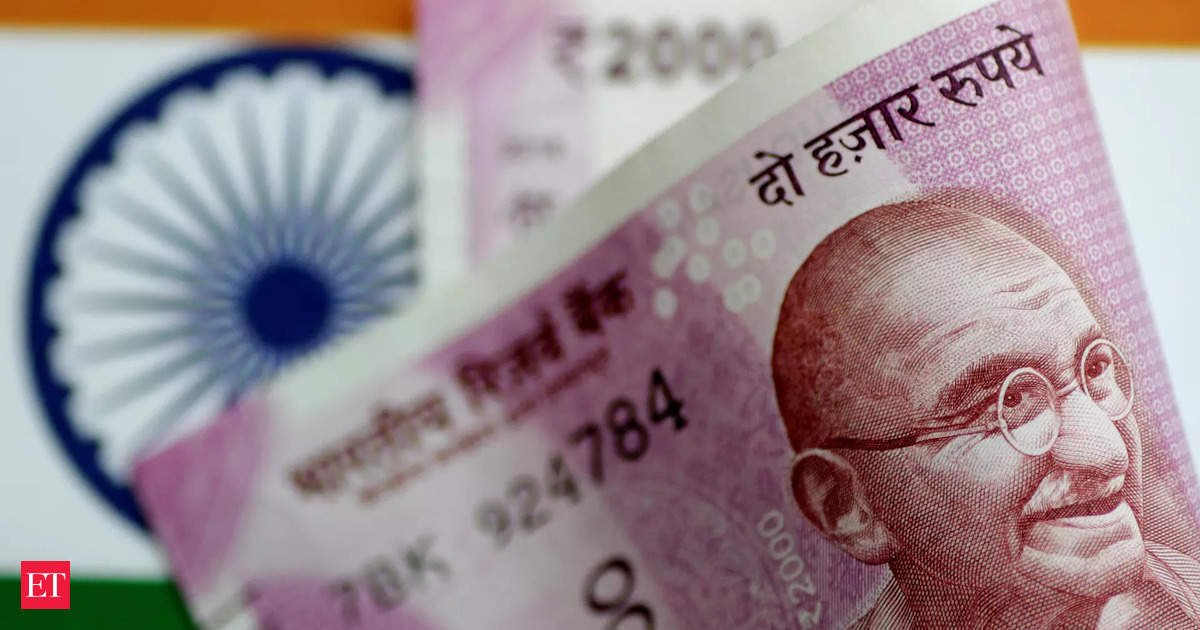
When the US stock market today responds to global capital flows and the rupee edges closer to 90 against the dollar, the reaction is always the same: alarm, debate, and a rush to explain why this time feels different. But the truth is quieter, and far more consequential. For most long-term investors, the real cost of currency depreciation is not felt in the year it happens. It shows up years later, when portfolios look respectable on paper but feel insufficient in practice.
The rupee near 90 is not a sudden shock. It is the visible end of a long, structural slide. In 1991, the rupee averaged around ₹22.74 to the dollar. By 2001, it was closer to ₹47.19. In 2011, it briefly strengthened to the mid-40s before resuming its decline. By 2021, it was trading around ₹74.57, and by 2024–25 it was consistently in the ₹82–85 range, before drifting toward ₹90 and above. In early 2026, the RBI reference rate touched levels close to ₹92 per dollar.
That is not a collapse. It is compounding.
Over the past three decades, the rupee has depreciated at roughly 3.5–4% per year on average. In any single year, that number feels harmless. Over 30 years, it reduces purchasing power by more than 65%. By the time the currency reaches a psychologically loud number like 90, most of the damage has already been absorbed quietly, year after year.
Below are six hard, measurable lessons Indian investors often wish they had internalised earlier, usually after time had already done its work.
1) The Rupee Didn’t Collapse. It Compounded Downward.
India’s currency history does not show sudden failure. It shows persistence. From the early 1990s to the mid-2020s, the cost of one dollar in rupee terms rose from the mid-20s to the low-90s. That is a nearly four-fold increase over a single working lifetime.
A currency that depreciates at 3–4% annually rarely triggers urgency. But the math is unforgiving. At 3.5% annual depreciation, the rupee loses roughly 50% of its value in 20 years. At 4%, the loss goes up to 55%. Investors who waited for dramatic warning signs often found that the most important part of the move had already happened without drama.
2) Currency Losses Don’t Feel Like Losses, Until Life Gets Expensive.
Currency erosion doesn’t show up as a drawdown in portfolio statements. It shows up in outcomes.
Take education as a simple example. A four-year overseas degree costing $40,000 per year would have required about ₹10 lakh annually when the rupee was near ₹25 in the early 1990s. At ₹90 per dollar, the same cost is ₹36 lakh a year. Even ignoring inflation, the rupee cost has more than tripled purely because of currency.
The same arithmetic applies to global travel, imported healthcare, foreign subscriptions, and lifestyle inflation driven by globally priced goods. Investors often realise too late that while their portfolios grew nominally, their ability to participate in a globalised economy shrank. The mistake wasn’t stock selection. It was assuming rupee-only returns were enough in a world where many costs aren’t.
3) The Same Global Asset Produces Very Different Outcomes in Rupee Terms.
Global equities illustrate this clearly. Over long periods, U.S. equities have delivered 10–11% annual returns in dollar terms, including dividends. Over the same periods, the rupee depreciated at around 3–4% annually.
Combine the two, and the rupee-denominated return of the same asset changes materially.
A $10,000 investment growing at 10% annually becomes roughly $26,000 over ten years. If the rupee moves from ₹65 to ₹85 over the same period, the rupee value of that investment rises from ₹6.5 lakh to over ₹22 lakh. The asset didn’t change. The currency did.
This isn’t market timing. It’s arithmetic. Even moderate currency depreciation, layered over long horizons, can add 300–400 basis points to effective rupee returns. Many investors only recognise this after comparing outcomes with peers who held modest but consistent overseas exposure, not because they picked better stocks, but because they allowed currency to work with compounding rather than against it.
4) Inflation and Currency Together Do the Real Damage.
India’s consumer inflation has averaged roughly 5–6% annually over the past decade. Add long-term currency depreciation of 3–4%, and the implicit hurdle rate for maintaining global purchasing power moves into double digits.
This is where nominal returns deceive. A domestic portfolio growing at 11–12% a year may look strong on paper. But after adjusting for inflation and currency, real purchasing power, especially for globally linked goals, barely moves.
This is why many investors later feel asset-rich but outcome-poor. The numbers looked fine. The translation didn’t.
5) Waiting for the “Right Time” to Add Dollar Exposure Has a Cost.
A common regret among investors is not avoiding global assets, but delaying them.
Many waited for a stronger rupee – at ₹70, then ₹75, then ₹80 – expecting a meaningful reversal. Historically, those reversals have been brief. The rupee has spent far more time weakening gradually than strengthening sustainably.
An investor who delayed dollar exposure from ₹67.79 in 2017 to ₹84.83 in 2024 faced a 25% higher entry cost, before accounting for asset returns. Across cycles, the pattern repeats. Dollar exposure is added late, defensively, and in smaller amounts, long after its protective value would have mattered most.
6) Diversification Breaks When Currency Is Treated as an Afterthought.
Many portfolios appear diversified, multiple funds, sectors, and strategies, yet remain tied to a single currency regime. In stress periods, correlations across domestic assets rise sharply, while currency risk sits underneath everything.
True diversification isn’t only about asset classes. It’s about currency exposure. Investors who ignored this often discovered that domestic diversification alone did little to protect long-term purchasing power when the currency itself was part of the problem.
The math of a multi-currency portfolio reveals a gap that domestic diversification alone cannot bridge.
Quantitative Proof: The Impact of Global Allocation
To understand why global diversification is a necessity rather than an option, let’s look at the math. If you had invested ₹10 Lakh in 2016 and held it for 10 years, how would your wealth look today?
The Scenario
- Domestic Growth (Nifty 50): 14% CAGR
- International Growth (S&P 500): 16.83% CAGR
- The Currency Factor: Rupee depreciated from ₹66 to ₹90 vs the US Dollar.
| Portfolio Strategy | India (Nifty 50) | US (S&P 500 + FX) | Final Portfolio Value | Currency Bonus |
| Domestic-Only | 100% ( ₹10L) | 0% | ₹37.07 Lakh | Baseline |
| 70/30 Strategic | 70% ( ₹7L) | 30% ( ₹3L) | ₹45.33 Lakh | + ₹8.26 Lakh |
| 50/50 Globalist | 50% ( ₹5L) | 50% ( ₹5L) | ₹50.84 Lakh | + ₹13.77 Lakh |
The Step-by-Step Breakdown
Where does that ₹13.77 Lakh extra in the 50/50 portfolio come from? It’s the result of two different compounding engines:
1. The Domestic Engine (India)
Every ₹5 Lakh invested in India at 14% grew to ₹18.54 Lakh. This is solid growth, but it is limited to the local economy’s performance and the local currency’s value.
2. The Global Engine (US + Currency)
The other ₹5 Lakh invested in the US didn’t just grow; it transformed.
- Step A (Stock Growth): The S&P 500’s 16.83% CAGR turned the $7,575 ( ₹5L at the time) into $35,885.
- Step B (The Currency Multiplier): Because the Rupee moved to 90, those Dollars are now worth more.
- Result: That same ₹5 Lakh became ₹32.30 Lakh.
Why the Gap Widens
The significant outperformance of the 50/50 and 70/30 portfolios isn’t just a result of the live US stock market performance; it is the Currency Delta at work.
- The Domestic-Only investor relies solely on local market growth to outpace inflation.
- The Global Allocator benefits from a dual-compounding effect: the underlying asset growth (S&P 500) multiplied by the rising value of the Dollar.
When the Rupee moves toward 90, it acts as a structural tailwind for the US portion of the portfolio. This doesn’t just increase the final Rupee value; it provides a “Global Hedge” that protects the investor’s ability to fund international goals, such as education or travel, which are priced in Dollars.
The Hard Truth
As the simulation shows, the rupee near 90 is not an inflection point. It is a mirror. It reflects decades of gradual erosion that most investors tolerated because it never demanded immediate attention.
Currency depreciation is not an event to trade or a headline to react to. It is a structural force that compounds quietly, reshaping outcomes over decades. Investors who recognised this earlier didn’t need perfect timing or bold bets. They simply accepted that earning in a global economy while spending in a global economy requires portfolios built for that reality.
For many Indian investors, the most expensive mistake wasn’t choosing the wrong stock or sector. It was underestimating how steadily currency erosion rewrites the value of every return earned at home.
The rupee approaching 90 doesn’t signal what might happen next. It makes visible what has been happening all along, and why so many people only notice it once time has already passed.
Building Portfolios That Acknowledge Currency Reality
If currency exposure materially alters long-term outcomes, the practical question is how investors act on that insight without overcomplicating portfolios.
This is where Appreciate fits naturally. The platform enables Indian investors to access 8,000+ U.S. stocks and ETFs, allowing diversification beyond rupee-denominated assets. Fractional investing lowers the barrier to entry, making it possible to build dollar exposure gradually instead of waiting for large, perfectly timed allocations.
Appreciate also provides Refinitiv-backed research and US stock market news and reports, giving investors institutional-grade data rather than surface-level narratives. Integrated portfolio views help investors see how global assets and currency movements interact with overall wealth in rupee terms, making currency exposure visible instead of incidental.
These capabilities address the exact gaps investors often recognise too late: delayed global access, postponed dollar exposure, and portfolios built without acknowledging currency as a structural driver.
In a world where currency regimes and market returns interact over decades, having tools that make global exposure practical and transparent isn’t about sophistication. It’s about avoiding regrets.
FAQs
1. Is it better to wait for the Rupee to strengthen before investing in the US stock market? History suggests that “waiting for a better rate” often results in missing out on asset growth. While the Rupee occasionally sees brief periods of strength, its long-term trajectory has been a steady decline (compounding downward at 3–4% annually). An investor who waited for a “cheaper” Dollar at ₹75 or ₹80 often ended up entering at ₹85 or ₹90, losing out on both the currency tailwind and the US stock market returns in the interim.
2. Does a 100% India portfolio offer enough growth to beat currency depreciation? While Indian equities often provide high nominal returns, they are still denominated in a weakening currency. If your long-term goals, like a child’s foreign education or global travel, are priced in Dollars, a domestic-only portfolio has to work twice as hard. As the simulation shows, a 50/50 India-US split can outperform a domestic-only approach by over 30% over a decade, simply because it stops the “silent leak” of purchasing power.
3. If the US stock market and the Indian market both fall, does the currency hedge still work? Yes. Typically, in times of global economic stress, the US Dollar acts as a “safe haven” asset and tends to strengthen against the Rupee. This means that even if US stock prices remain flat or dip slightly, the value of those holdings in Rupee terms can stay stable or even rise because the Dollar itself became more expensive. This provides a “buffer” that a domestic-only portfolio lacks.
4. Is the live US stock market investing only for those with very high capital? Historically, global investing was complex and expensive. However, with modern platforms and fractional investing, you can start building a Dollar-denominated portfolio with small amounts. You don’t need to move large sums at once; by investing regularly, you “average” your currency entry price, ensuring you aren’t trying to time the Rupee at exactly 90 or any other specific level.
Visit the new Mint x Appreciate US Markets page — where financial knowledge meets real opportunity.
To know more about investing in US stocks, ETFs, and Mutual Funds, click here.
Note to the reader: This article has been produced on behalf of the brand by HT Brand Studio and does not have journalistic/editorial involvement of Mint.