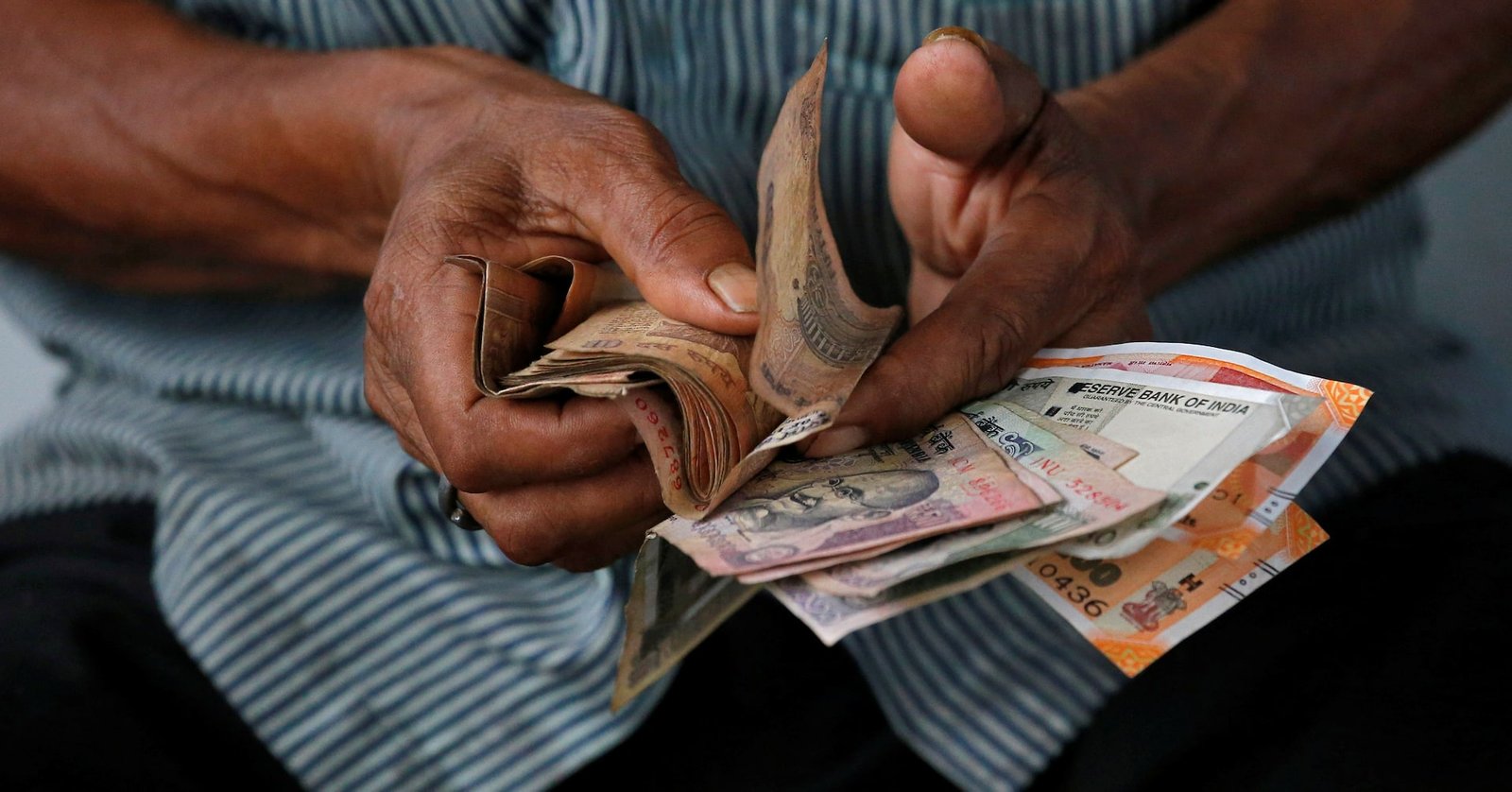
The USD/INR pair ended Friday’s session with 0.1% gains at 91.87. On the same day, the pair posted a fresh all-time high at 92.21 amid weakness in the Indian Rupee (INR) due to the continuous outflow of foreign funds from the Indian stock market.
So far in January, Foreign Institutional Investors (FIIs) have offloaded their stake worth Rs. 40,704.39 crore, including Friday’s data.
The Indian currency is expected to open on a firm note against the US Dollar (USD) on Tuesday, with the Indian market remaining closed on Monday due to Republic Day. The USD/INR eyes a weak start as the US Dollar underperforms on Monday due to multiple headwinds.
As of writing, the US Dollar Index (DXY), which tracks the Greenback’s value against six major currencies, trades 0.4% lower to near 97.00, the lowest level seen in over four months.
US Dollar Price Today
The table below shows the percentage change of US Dollar (USD) against listed major currencies today. US Dollar was the weakest against the Japanese Yen.
| USD | EUR | GBP | JPY | CAD | AUD | NZD | CHF | |
|---|---|---|---|---|---|---|---|---|
| USD | -0.33% | -0.21% | -1.03% | -0.14% | -0.35% | -0.22% | -0.57% | |
| EUR | 0.33% | 0.11% | -0.68% | 0.19% | -0.03% | 0.10% | -0.25% | |
| GBP | 0.21% | -0.11% | -0.80% | 0.07% | -0.14% | -0.01% | -0.36% | |
| JPY | 1.03% | 0.68% | 0.80% | 0.89% | 0.67% | 0.81% | 0.45% | |
| CAD | 0.14% | -0.19% | -0.07% | -0.89% | -0.21% | -0.08% | -0.43% | |
| AUD | 0.35% | 0.03% | 0.14% | -0.67% | 0.21% | 0.13% | -0.20% | |
| NZD | 0.22% | -0.10% | 0.01% | -0.81% | 0.08% | -0.13% | -0.35% | |
| CHF | 0.57% | 0.25% | 0.36% | -0.45% | 0.43% | 0.20% | 0.35% |
The heat map shows percentage changes of major currencies against each other. The base currency is picked from the left column, while the quote currency is picked from the top row. For example, if you pick the US Dollar from the left column and move along the horizontal line to the Japanese Yen, the percentage change displayed in the box will represent USD (base)/JPY (quote).
Rising market concerns over the outlook of Washington’s long-term relations with the Eurozone and hopes that the new Federal Reserve (Fed) Chairman’s announcement this week are acting as major drag on the US Dollar. Investors remain cautious over US trade relations with the old continent, even as disputes between both economies have resolved, after President Donald Trump rolled back 10% additional import duties and downplayed risks of forceful action on Greenland.
This week, the White House is expected to announce the name of Fed’s next chairman as Trump said in December that the name of Fed Jorome Powell’s successor will be revealed sometime in January.
Going forward, investors will also focus on the Fed’s monetary policy outcome on Wednesday. According to the CME FedWatch tool, the Fed is expected to hold interest rates steady in the range of 3.50%-3.75%.
Meanwhile, the Indian Rupee is expected to rise in the opening bid on Tuesday amid hopes that the US could roll back 25% punitive tariffs imposed on India in mid of 2025 for buying oil from Russia. The speculation for Washington removing punitive tariffs has prompted after comments from US Treasury Scott Bessent in his comments at the sidelines of the World Economic Forum (WEF) in Davos last week.
“We put 25% tariffs on India for buying Russian oil, and the Indian purchases by their refineries have collapsed. That is a success. The 25% Russian oil tariffs are still on. I would imagine there is a path to take them off now. So that’s a check and a huge success,” Bessent said, Financial Express reported.
Indian Rupee FAQs
The Indian Rupee (INR) is one of the most sensitive currencies to external factors. The price of Crude Oil (the country is highly dependent on imported Oil), the value of the US Dollar – most trade is conducted in USD – and the level of foreign investment, are all influential. Direct intervention by the Reserve Bank of India (RBI) in FX markets to keep the exchange rate stable, as well as the level of interest rates set by the RBI, are further major influencing factors on the Rupee.
The Reserve Bank of India (RBI) actively intervenes in forex markets to maintain a stable exchange rate, to help facilitate trade. In addition, the RBI tries to maintain the inflation rate at its 4% target by adjusting interest rates. Higher interest rates usually strengthen the Rupee. This is due to the role of the ‘carry trade’ in which investors borrow in countries with lower interest rates so as to place their money in countries’ offering relatively higher interest rates and profit from the difference.
Macroeconomic factors that influence the value of the Rupee include inflation, interest rates, the economic growth rate (GDP), the balance of trade, and inflows from foreign investment. A higher growth rate can lead to more overseas investment, pushing up demand for the Rupee. A less negative balance of trade will eventually lead to a stronger Rupee. Higher interest rates, especially real rates (interest rates less inflation) are also positive for the Rupee. A risk-on environment can lead to greater inflows of Foreign Direct and Indirect Investment (FDI and FII), which also benefit the Rupee.
Higher inflation, particularly, if it is comparatively higher than India’s peers, is generally negative for the currency as it reflects devaluation through oversupply. Inflation also increases the cost of exports, leading to more Rupees being sold to purchase foreign imports, which is Rupee-negative. At the same time, higher inflation usually leads to the Reserve Bank of India (RBI) raising interest rates and this can be positive for the Rupee, due to increased demand from international investors. The opposite effect is true of lower inflation.