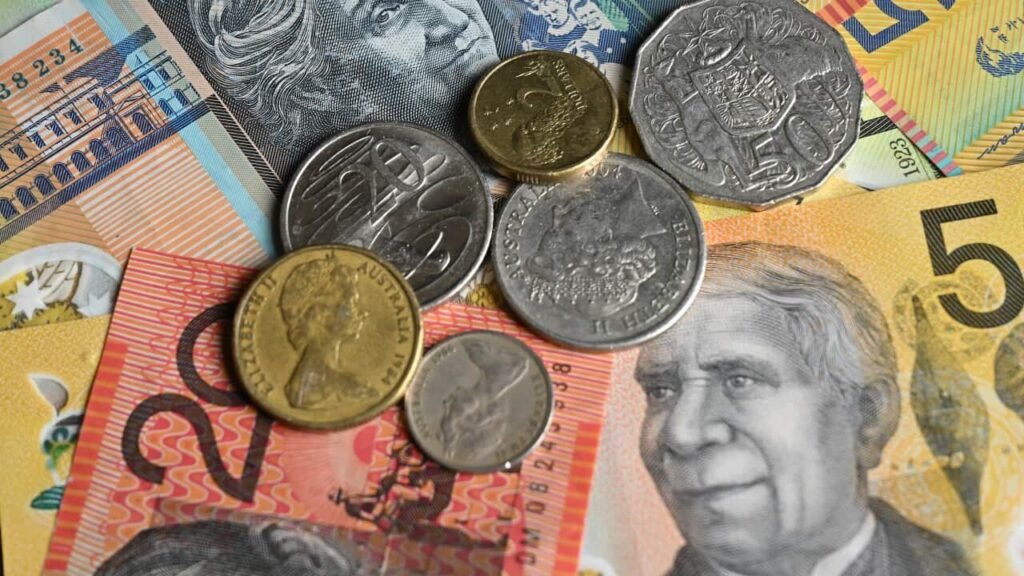
The value of the Australian dollar has reached a 15-month high and could continue its current momentum upwards thanks to a mix of domestic data and overseas influences.
The Australian dollar has been sitting between 68.5 and 69 US cents over the Australia Day long weekend, an increase of around 2.3 per cent over the trading week to Friday.
Tony Sycamore from IG Markets told SBS News that the Australian dollar has been a “standout performer” compared to other currencies, while the United States dollar has weakened.
“The key driver has been the robust December labour force data,” he said.
ABS data showed unemployment had edged down to 4.1 per cent from 4.3 per cent in November.
He added that tensions between the European Union and the US, and the increasing cost of precious metals, has created “very solid support” for the Australian dollar.
“[Reaching 70 US cents] is certainly possible in the weeks ahead if the current momentum holds,” he said.
Geopolitical uncertainties, such as the threat of a US/EU trade war, have also played a part in the fluctuating values of currencies.
“The events of this week are in line with the Trump administration’s unpredictable style, which is going to keep markets on their toes in 2026,” he said.
Effect on travel, cost of living
If you’re planning on travelling overseas anytime soon, you might benefit from that value jump — or lose out — depending on where you’re flying to.
However, the change in value may not make a significant difference in how far your dollar stretches in a foreign currency, according to Graeme Hughes a consumer expert from Griffith University.
“It might be worth considering exchanging some currency now to lock in a better rate,” Hughes said.
“However, if you’re not travelling soon, it might be wise to wait and see how the dollar performs.”
The Australian dollar has been rising in the past few days when compared to the US dollar, Euro and Yen, although the gains are slight.
Besides travel, a stronger dollar makes imports to Australia less expensive, which can reduce prices for commodities like petrol, because its pricing is dependent on global markets.

A stronger Australian dollar may mean cheaper petrol. Source: AAP
Other items Australia imports, from the US for example, would also become cheaper.
Hughes said predicting currency movements is “tricky business”, but there are indicators to look out for.
“Decisions made by the Reserve Bank of Australia, the performance of the global economy, and the strength of the US dollar will all play a role.”
For the latest from SBS News, download our app and subscribe to our newsletter.