


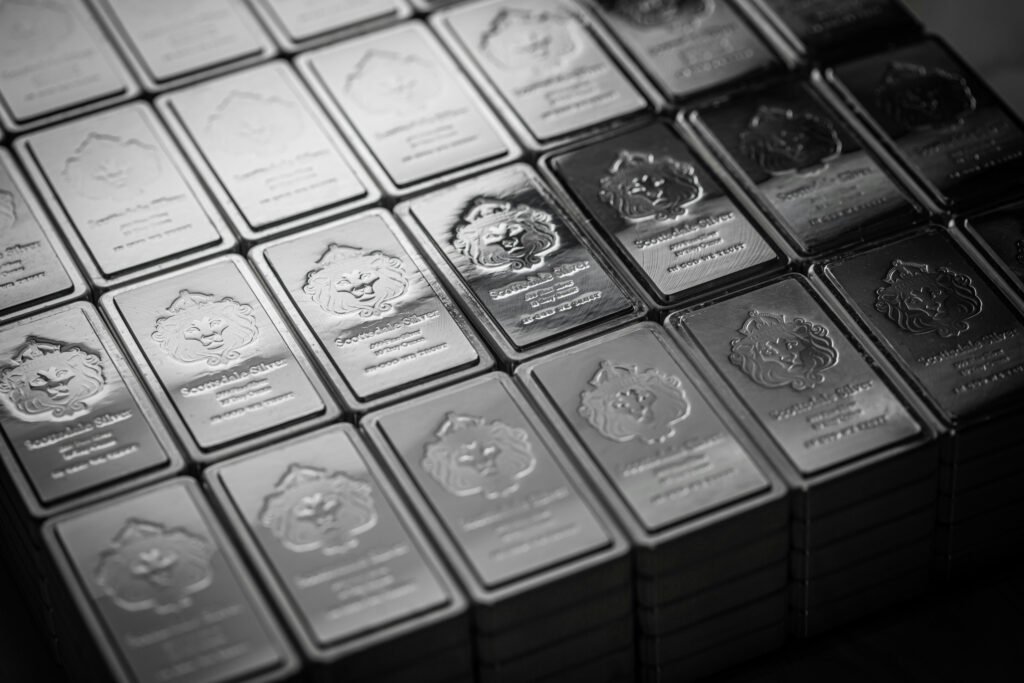
Silver prices have come under renewed pressure in mid-February 2026, with the white metal experiencing sharp volatility as a stronger US dollar and cautious investor sentiment weigh on demand. The recent pullback follows months of strong gains that had pushed precious metals to record levels earlier this year.
Recent market data shows spot silver falling sharply during intraday trade, briefly dipping toward the $72–$75 per ounce range before stabilising slightly. The correction comes after a period of aggressive rallies that left the market vulnerable to profit booking and macro-driven reversals.
Dollar Strength Remains the Primary Trigger
A firmer US dollar has been one of the most consistent drivers behind the latest silver weakness. A stronger greenback makes dollar-denominated commodities more expensive for international buyers, reducing demand and triggering short-term sell-offs.
Market reports indicate the US Dollar Index strengthening alongside steady economic data, which has historically pressured bullion. Analysts also highlight thin global liquidity — due to holidays and subdued participation — as a factor amplifying price swings.
Profit Booking Adds to Selling Pressure
Another key driver behind the decline is aggressive profit booking after record highs earlier in 2026. Silver had surged significantly over the past year, prompting investors to lock in gains as volatility increased.
On India’s Multi Commodity Exchange (MCX), silver futures dropped sharply in recent sessions, with prices falling several percentage points in just days. Some reports suggest silver has already corrected substantially from its January peaks, highlighting how stretched positioning had become.
Volatility Highlights Silver’s Dual Nature
Unlike gold, silver sits at the intersection of investment demand and industrial use. This dual identity often makes it more volatile during macro transitions.
When global liquidity tightens or currency markets shift, silver typically experiences sharper swings than gold. Analysts say the metal’s smaller market size and speculative positioning amplify both rallies and corrections.
Interest Rates and Fed Signals in Focus
Investors are now closely watching signals from the US Federal Reserve, particularly around interest rates and inflation. Precious metals tend to struggle when yields remain elevated, as they offer no income compared to bonds.
At the same time, expectations of potential rate cuts later in 2026 continue to support longer-term bullish sentiment, creating a push-pull dynamic in the market.
Is This a Short-Term Correction?
Some analysts believe the recent weakness may represent a short-term correction rather than a structural reversal. Reports suggest silver could consolidate within a broad $70–$90 per ounce range if macro conditions stabilise.
Others warn that continued dollar strength or tighter financial conditions could keep metals under pressure in the near term.
Outlook: Volatility Likely to Persist
For now, silver appears to be entering a consolidation phase marked by sharp intraday swings and macro-driven moves. While long-term fundamentals such as industrial demand and clean-energy use remain supportive, short-term direction will likely depend on:
- US dollar strength
- Federal Reserve policy signals
- Global liquidity conditions
- Investor positioning
One message is clear: after a powerful rally, silver has re-entered a high-volatility phase. Whether this evolves into a deeper correction or a pause before the next uptrend will depend largely on macroeconomic developments in the weeks ahead.


