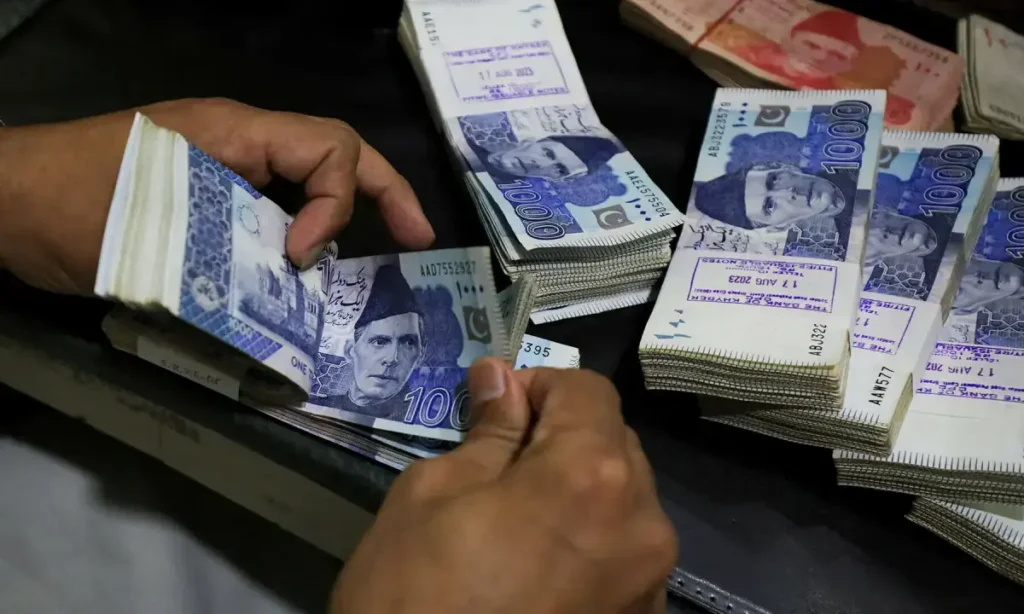
Pakistan’s exchange rate has stayed stable despite 19 days of Middle East war, even as regional currencies like the Indian rupee weakened by up to five per cent.
KARACHI: Pakistan’s exchange rate has remained stable despite 19 days of war in the Middle East, a development that has encouraged stakeholders including the State Bank of Pakistan (SBP) and the government.
The exchange rate has largely held steady during the current fiscal year, and predictions of destabilisation have proven unfounded despite the prolonged regional conflict. This stability stands in contrast to weakening currencies in the region; the Indian rupee, for instance, depreciated by up to five per cent, falling from Rs88 to Rs92 against the US dollar during the war, with fears of further depreciation persisting.
Currency dealers welcome stability
Currency dealer Zafar Paracha praised the development, stating:
“This is highly appreciable and extremely supportive for the country that, despite almost three weeks of war, the exchange rate is under control.”
Financial sector experts believe the exchange rate is being managed to some extent, though they have cautioned that a continuation of the war could still pose risks to Pakistan’s currency stability going forward.
Exporters express concern
While the stable exchange rate has been welcomed by many quarters, exporters have expressed fears that the ongoing Middle East conflict could have adverse effects. The prolonged nature of the regional hostilities continues to be a source of concern for those involved in Pakistan’s export sector.
The stability of the Pakistani rupee amid regional turmoil has been a notable achievement for monetary authorities, particularly given the broader pressures facing regional currencies. The fact that the exchange rate has remained largely unchanged throughout the current fiscal year suggests a degree of resilience in Pakistan’s foreign exchange market, even as the Middle East conflict enters its third week.
Meanwhile, flights to Dubai and Umrah travel have continued despite the regional tensions, though airfares have reportedly surged in the wake of the conflict.
The sustained stability of the rupee comes at a time when Pakistan’s economy has been navigating multiple challenges, and the ability to maintain a controlled exchange rate amid an active regional conflict has been viewed as a positive signal by financial market participants and policymakers alike.