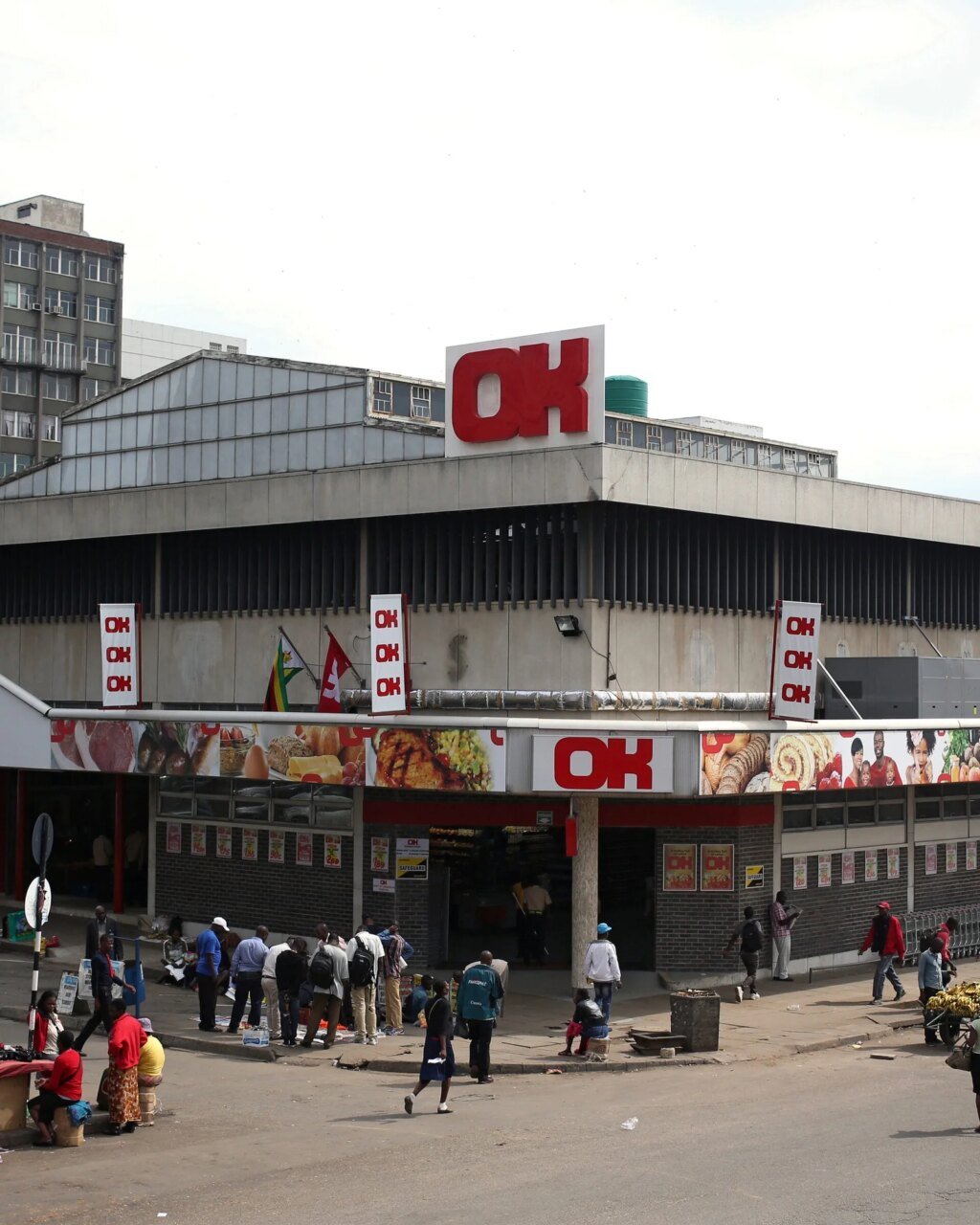
OK Zimbabwe Limited (OK), one of the country’s largest retail groups, has embarked on a major restructuring programme that includes auctioning and disposing of several properties, as well as closing 11 stores, including three Food Lover’s Market outlets. The initiative is part of a broader strategy to recover from significant financial losses aggravated by the ongoing instability of the ZiG currency. Following the closures, OK’s national footprint now stands at 62 operational branches.
The decision to dispose of assets is central to OK’s survival strategy. The introduction of the ZiG in 2024 triggered widespread liquidity challenges, delayed settlements, and rapid erosion of value across the formal retail sector. While the currency reform was intended to stabilise the economy, it has instead heightened operational volatility for formal businesses, forcing retailers like OK to contend with strict pricing rules and tax obligations that informal competitors largely avoid.
OK Zimbabwe’s struggles are symptomatic of a wider economic downturn under President Emmerson Mnangagwa’s administration. Businesses have faced repeated currency changes, chronic power outages, high taxation, and weakening consumer spending, creating an environment in which formal retailers are increasingly vulnerable. Since 2018, the formal sector has experienced alarming contraction, with supermarkets, clothing stores, pharmacies, and manufacturers either scaling down operations or closing entirely. Both the Confederation of Zimbabwe Industries (CZI) and the Zimbabwe National Chamber of Commerce (ZNCC) have repeatedly warned that unstable monetary policies and exchange-rate distortions continue to undermine formal business viability.
For OK, the situation deteriorated sharply in 2024. Supply chain disruptions, dwindling liquidity, subdued customer traffic, and mounting competition from informal traders significantly eroded revenue. The company now carries a debt burden exceeding US$30 million. To address this, OK raised US$20 million through a renounceable rights offer and is targeting an additional US$10.5 million from the sale and auction of freehold properties.
OK Zimbabwe Launches Property Auctions, Restructures Amid Deep Losses
In its financial results for the year ending 31 March 2025, OK reported a loss of US$25.03 million. The latest trading update confirmed that the 11 shuttered stores were no longer viable, with three more locations in the process of being wound down. “The company will continue to operate 62 stores that are in strategic and viable locations,” the update stated. “Close monitoring continues, and stores that cease to contribute meaningfully will also be closed.”
The restructuring plan extends beyond store closures. The Bon Marche Chisipite branch is being relocated into a redeveloped mall, while the Makoni Shopping Centre outlet is moving from an undersized facility into a larger, purpose-built store designed to improve competitiveness in a high-traffic area. Head office staff have also been reduced, contributing to a 35% cut in operating costs, with projections indicating a 50% reduction by December 2025. Additionally, the group has shut down its loss-making pharmacy business, part of a wider effort to focus on core operations.
Although OK’s audited loss for 2025 represents a 15.5% improvement from previously reported unaudited figures, the retailer notes that property disposals—critical for bridging liquidity gaps caused in part by the ZiG—have taken longer than anticipated. Two property sales are close to finalisation, while offers on three remaining assets are still under consideration.
Industry observers say OK Zimbabwe’s aggressive restructuring and property auctions reflect the mounting pressures facing the formal retail sector. The challenges are not limited to OK alone: supermarkets and retail chains across the country are grappling with currency instability, rising operational costs, and shrinking consumer spending. For OK, the ability to streamline operations, liquidate non-core assets, and focus on strategically located stores will be key to navigating an increasingly uncertain business environment.
The company’s moves also highlight broader concerns about the formal sector’s resilience. Analysts note that prolonged economic uncertainty, combined with persistent policy shifts and an unstable ZiG, will continue to test the capacity of major retailers. While OK’s restructuring offers a blueprint for survival, it also serves as a stark reminder of the vulnerabilities facing established retail chains in Zimbabwe today.
As OK Zimbabwe proceeds with its property auctions and operational rationalisation, stakeholders will be closely monitoring whether the measures are sufficient to stabilise the business, restore investor confidence, and safeguard the viability of the formal retail sector in a turbulent economic landscape.
Source- ZimEye