Key Takeaways
- China’s currency peg stabilizes the yuan through a basket of currencies.
- The peg makes Chinese exports cheaper and more competitive globally.
- Economic growth and a trade surplus are benefits for China under this system.
- Critics argue the peg offers unfair advantages to Chinese exporters.
Understanding China’s Currency Peg
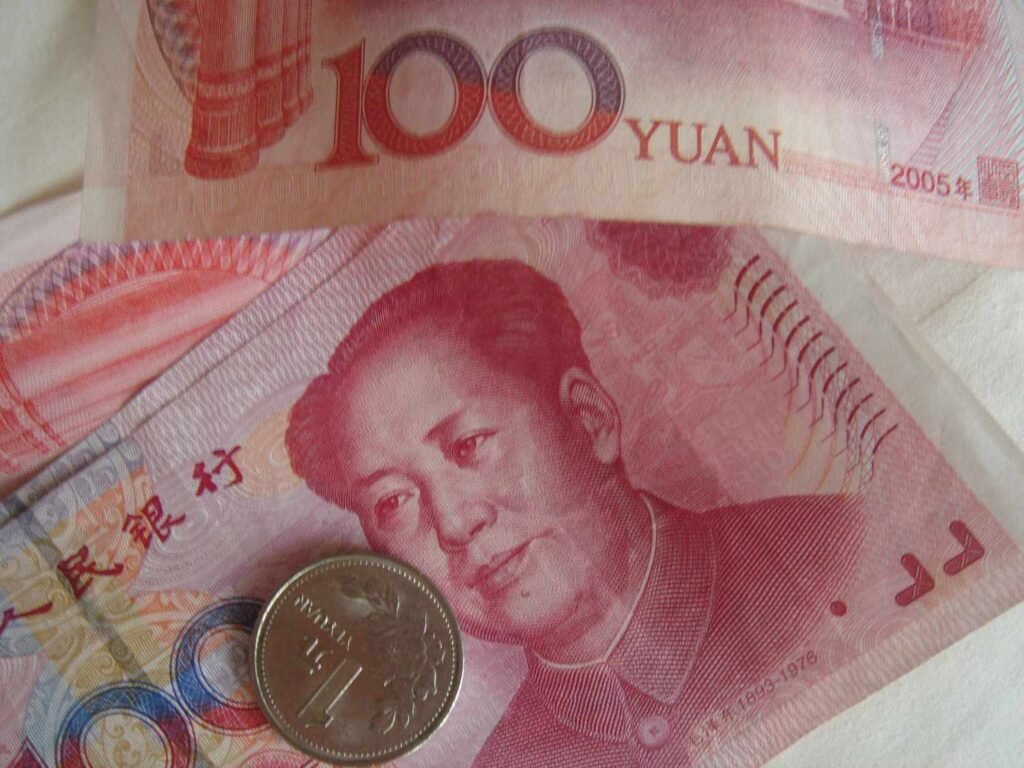
China’s currency peg is a system where the yuan (CNY) is tied to the value of another currency or a group of currencies to maintain stability. Originally pegged to the U.S. dollar, China shifted to a basket of currencies to reflect global trade dynamics. This peg helps keep the yuan’s value lower, making Chinese exports cheaper and more competitive. China benefits from economic growth and a trade surplus. Critics argue the impact can create unfair advantages for exporters.
Benefits of China’s Currency Peg
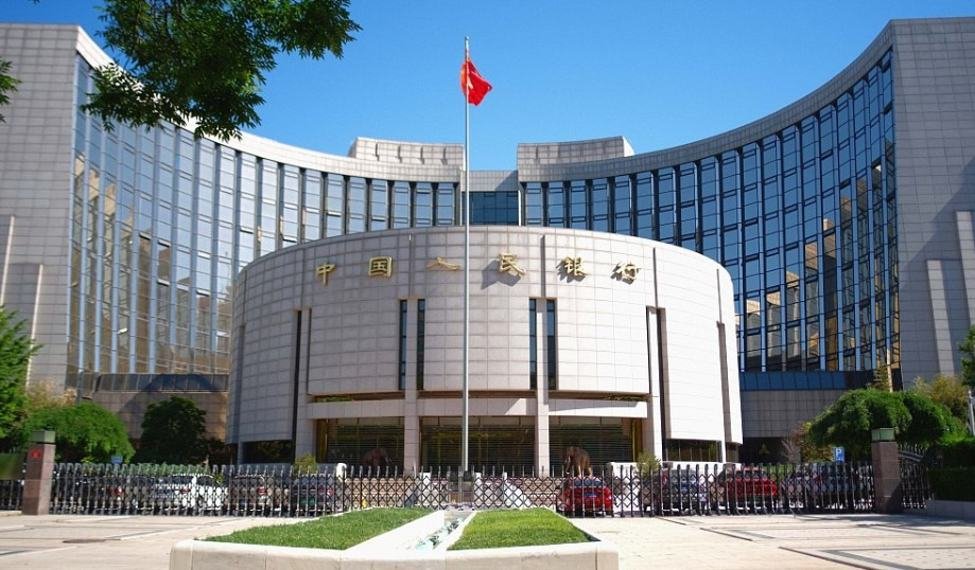
As long as a currency peg keeps the yuan low relative to other currencies, consumers using foreign currencies can buy more of China’s exports than they would if the yuan was more expensive. Specifically, if the People’s Bank of China keeps the yuan weak compared to the U.S. dollar, consumers using the greenback can buy more Chinese exports.
Exports are a major driver of any economy because they represent money flowing into a nation. To keep the yuan artificially low and support robust export activity, the People’s Bank of China engages in currency purchases. In the 10 years from 2004 to 2014, the foreign exchange reserves (minus gold) owned by China’s central bank surged from roughly $615 billion to $3.9 trillion. After 2014, the levels started to come down, dropping to $3.13 trillion in 2022 (latest data).
China’s Economic Growth Boosted by the Yuan Peg
Currency manipulation has helped China thrive as its economy has repeatedly experienced robust growth rates hovering around 10% from 1995 to 2010. Since 2010, however, China’s growth rates have been decreasing, hovering around 7%, with continued decreases after the pandemic, to 3% in 2022 (latest data). Reasons for the slowing growth are many, including an aging population, structural issues, and inefficiencies of state-led economic policies.
Due to robust growth from the 1990s onwards, China’s gross domestic product (GDP) per capita increased from $474 in 1994 to $12,720 in 2022, an increase of more than 2,500% in 28 years. By comparison, the United Kingdom’s GDP per capita only increased 134% during the same period.
Evaluating the Pros and Cons of China’s Currency Strategy
While these facts and figures are generally positive for China, that is not the case for everyone. U.S. manufacturers and workers have complained about the Chinese trade surplus, claiming that the yuan peg has granted Chinese companies an unfair advantage. As a result, U.S. lawmakers have called for the revaluation of China’s currency.
While opponents of yuan pegging have complained, they may be oversimplifying the situation. An artificially low yuan is not without its benefits. The currency peg means cheap Chinese goods for U.S. consumers, a development that can help keep overall inflation at a modest level.
The benefits of less expensive goods extend to businesses. U.S. companies that use less expensive imported items from China to make goods enjoy reduced production costs. With lower expenses, firms can either lower the prices for consumers, increase their profits, or both.
Chinese trade deficits also provide a boon to the broader economy as they necessitate the movement of capital to the United States from China. If this foreign capital goes toward purchasing interest-bearing securities, such as U.S. Treasuries, this creates downward pressure on borrowing costs and encourages stronger investments. In addition, lower interest rates support economic growth.
Is the Yen Pegged to the Dollar?
No, the Japanese yen is not pegged to the dollar. It is a free-floating currency, like the dollar, whose value is determined by its supply and demand in the market.
What Is a Currency Peg?
A currency peg is when a nation fixes the exchange rate of its currency to that of another currency. This means that the currency is not free-floating and the exchange rate won’t change, regardless of supply and demand. The main goal of a peg is to ensure the stability of the exchange rate between two countries, primarily those that are large trading partners with one another.
Is China’s Currency Backed by Gold?
No, China’s currency is not backed by gold. It is a mix of a currency that is pegged and free-floating. It is pegged to a basket of goods, where the value is allowed to float no more than 2% against a fixed value that is set daily.
The Bottom Line
China’s yuan peg has been in place since 1997, stabilizing the yuan against a basket of currencies. This strategy has helped make Chinese exports more competitive, growing the nation’s economy and leading to a strong trade surplus. While the peg has benefited China’s economy, it has also drawn criticism from some other countries, who argue that it can distort global trade.