A powerful Beijing-backed company that has a stranglehold over China’s massive purchases of iron ore has become the biggest risk in the global market for the commodity, according to one of the world’s leading miners.
China Mineral Resources Group has started to flex its muscles in price negotiations, shaking up the global market for iron ore, the world’s most traded commodity after oil.
Big iron ore producers including Australia’s BHP and Brazil’s Vale were last year caught in protracted negotiations with CMRG, which acts as a central buyer of foreign iron ore supplied to state-owned steelmakers, over this year’s sales contracts.
For the global iron ore market, “the key risk is CMRG”, said Dino Otranto, co-chief executive of Australia’s Fortescue, the world’s fourth-largest iron ore producer. Current market conditions have strengthened its hand, he added.
“As the market is getting a bit more constrained, and [more iron ore] supply is coming on line, the natural negotiating leverage is with the consumer,” Otranto told the Financial Times in December. “Now is the time for any type of buying group to flex its natural muscle.”
Australia’s government is also keeping a close eye on CMRG’s dealings with big miners because of the importance of iron ore exports — worth more than $1.2tn over the past 20 years — to the country’s economy.

Prime Minister Anthony Albanese said in October he was “concerned” over the price negotiations. “I want to see Australian iron ore be able to be exported into China without hindrance. That is important,” he told local media at the time.
Australia’s exports fell 3 per cent in November compared with the previous month, driven by a 9 per cent contraction in the metals, minerals and mining sector, according to data released on Thursday by the Australian Bureau of Statistics.
“This may indicate the reported iron ore pricing dispute between BHP and China’s state-backed iron ore trader CMRG is reducing export volumes,” said Ashwin Clarke, senior economist with the Commonwealth Bank of Australia, in a note.
Industry executives and governments are concerned that state-controlled CMRG — which has a mandate closely tied to Chinese leader Xi Jinping’s quest for resource security — could extend its buying power to exert a tighter grip over other commodities.
CMRG’s chair Yao Lin, who previously led two of China’s biggest metals groups, has noted intensifying global competition for control over critical mineral supply chains amid rising unilateralism and protectionism in trade.
Yao told an industry conference that China lacked sufficient control and influence over strategic resources with heavy reliance on foreign sources coupled with a fragmented domestic market.
“This creates significant risks for the security of industrial and supply chains, along with imbalances and inequities in value-chain distribution,” he said.

CMRG started operations in 2022 and is under the oversight of China’s powerful state asset and investment manager. The company did not respond to questions from the Financial Times.
Local recruitment advertisements show it is rapidly expanding its workforce, hiring hundreds of new graduates for engineering, accounting and technical roles.
Gao Nie, a veteran official from the National Development and Reform Commission, China’s state planner, was appointed general manager in November, highlighting the centrality of Beijing’s policy objectives to the group.
In a further move, CMRG is also pushing both domestic and foreign miners to adopt Chinese iron ore indices instead of S&P’s Platts benchmark index, which it views as overinflated and counter to Chinese interests.
BHP declined to comment on its negotiations with CMRG.
Other mining companies across the negotiating table have taken different approaches to dealing with their new partner.
Otranto said Fortescue had bolstered its position by becoming a major purchaser of Chinese goods. “We saw that risk coming . . . and started shifting our strategy to a much more complementary relationship with China,” he said.
His company now sells almost all its China-bound ore through CMRG, and has increased its purchase from Chinese suppliers, including a contract worth more than $1bn with truckmaker XCMG.
Gustavo Pimenta, chief executive of Brazilian iron ore miner Vale, told journalists in London in December that his company held a good “starting point” in its talks with CMRG because its iron ore products are “complementary” to what they buy from Australian miners.

Rio Tinto chief executive Simon Trott declined to comment on its discussions with CMRG, saying only that “we continue to work closely with all market participants”.
Kaan Peker, an analyst with RBC Capital Markets, said that, although BHP was irreplaceable, supplying about 16 per cent of China’s iron ore imports, the group was in a position to play suppliers off against each other. He said the new $23bn Simandou mine in Guinea, west Africa, would heap more pressure on Australian miners.
“That’s how you build pricing tension,” Peker said. “Selectively targeting miners has a ‘divide and conquer’ aspect to it.”
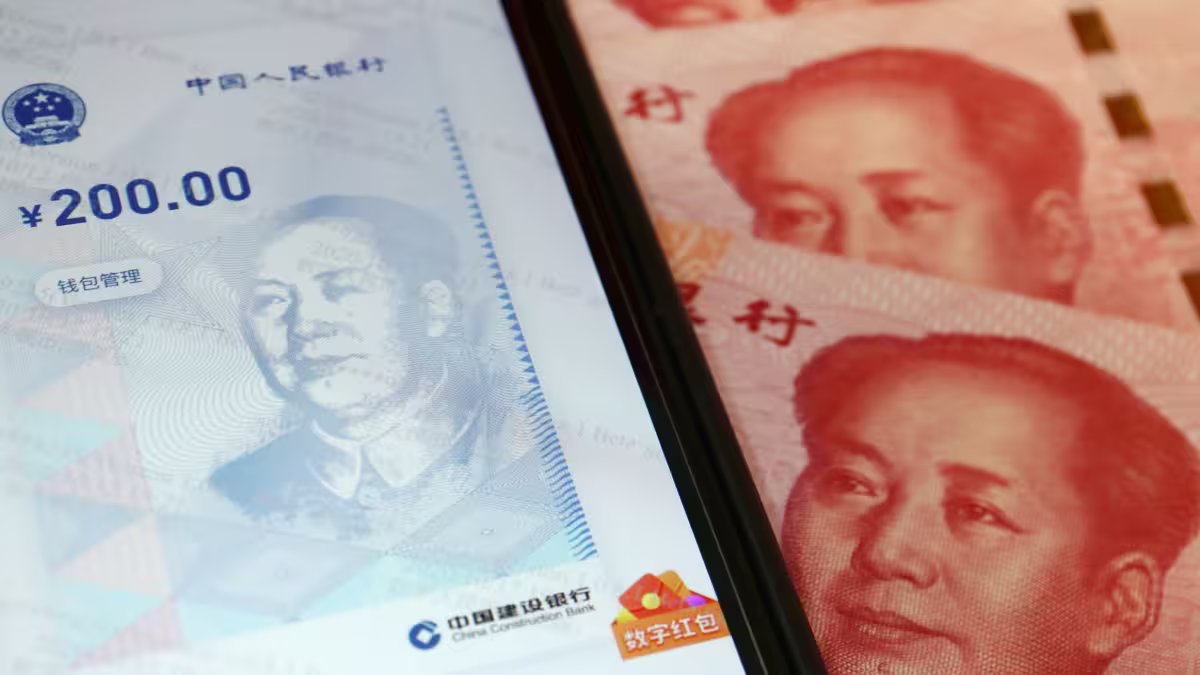
Analysts also said that CMRG was trying to drive more commodity trade into China’s currency, the renminbi, to support Beijing’s goal of reducing the centrality of the dollar in global finance.
In recent years, BHP and Rio have both been selling more iron ore in renminbi — particularly for domestic transactions in “portside” warehouses — trade that used to be conducted in US dollars.
David Cachot, research director for iron ore at Wood Mackenzie, a consultancy, said the adoption of renminbi settlements “has the potential to extend to other strategically important commodities such as lithium, copper concentrates and rare earths, where China plays a dominant role in both consumption and processing”.
The move “reflects changing dynamics in global commodity markets and signals a broader geopolitical and financial realignment as China seeks greater control over trade flows and currency exposure”, Cachot said.
Qiu Huifang, associate professor of economics at Huazhong University of Science and Technology, said that from China’s perspective, pricing shipments in renminbi would help eliminate exchange-rate risks and reduce costs for steelmakers caused by dollar fluctuations.
“It marks a concrete step forward for renminbi pricing of commodities and for the currency’s internationalisation,” she said.
Additional reporting by Cheng Leng in Beijing and Camilla Hodgson in London