The Indian rupee has slipped to a historic low against the US dollar, yet India continues to post one of the fastest growth rates in the world. Here is why both trends can coexist.
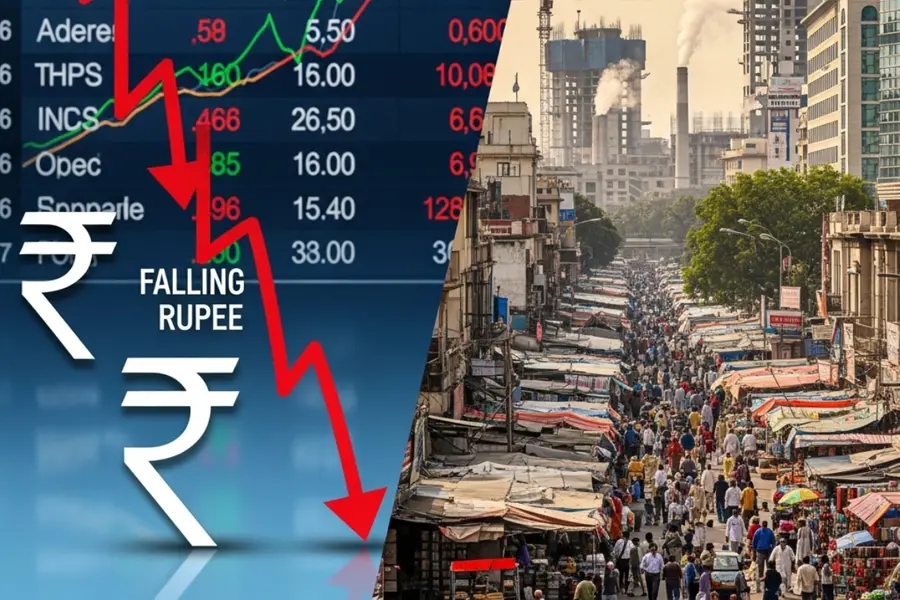
The Indian rupee touched 91 against the US dollar on December 16, marking a historic low and triggering widespread concern. For four consecutive days, the currency has weakened, making each dollar more expensive than before.
Yet, at the same time, India’s economy recorded a robust 8.2% growth in the last quarter, the fastest among major economies globally. How can the rupee be under pressure while the economy continues to expand strongly? This apparent contradiction has puzzled even seasoned observers.
To understand this, think of the rupee as a price tag. When it falls to 91, it simply means that 91 rupees are needed to buy one US dollar, compared with around 85 or 86 earlier. One key reason for the recent slide is a surge in demand for dollars. Indian importers, who rely on foreign goods, have been buying dollars in advance to protect themselves against further depreciation. This practice, known as hedging, is similar to buying umbrellas before the monsoon. Fearing higher costs later, businesses are securing dollars now, which in turn pushes the rupee lower.
Foreign investor behaviour has added to the pressure. This year, overseas investors have pulled out more than $18 billion from Indian markets, the largest outflow on record. When these investors exit Indian equities, they convert rupees into dollars, increasing dollar demand and weakening the rupee further. Compounding the situation are steep 50% tariffs imposed by the United States on certain Indian goods. These tariffs make Indian exports less competitive, reducing dollar inflows, even as India continues to require dollars for imports such as crude oil, electronics and fertilisers. When demand rises and supply tightens, prices inevitably increase.
The Reserve Bank of India (RBI) has stepped in to support the rupee by selling dollars from its foreign exchange reserves. By increasing the supply of dollars, the central bank aims to cool demand and stabilise the currency. The RBI intervened in February, October and twice in November, and market reports suggest it is doing so again, albeit in limited volumes. Traders expect stronger intervention if volatility persists. However, there is a trade-off: every dollar sold reduces India’s forex reserves, forcing the RBI to strike a careful balance between currency stability and reserve protection.
What makes this situation particularly interesting is that despite the currency pressure, India’s economic engine remains strong. While global growth averaged around 3.2%, India expanded by 8.2% last quarter. Finance Minister Nirmala Sitharaman even pushed back against former US President Donald Trump’s remark describing India as a “dead economy”, pointing out that such growth rates and credit rating upgrades tell a very different story.
The explanation lies in understanding what GDP actually measures. Gross Domestic Product captures the total value of goods and services produced within the country. Manufacturing, agriculture, construction and services continue to function largely independently of short-term currency movements. Domestic consumption and investment remain strong, driven by a young population, rising incomes and sustained government spending on infrastructure.
A neighbourhood chai shop, a software firm in Bengaluru, a rice mill in Punjab or a family booking a domestic holiday all contribute to GDP. These everyday economic activities are not directly affected by the rupee’s exchange rate against the dollar. As long as internal demand holds up, economic growth can continue even if the currency weakens externally.
That said, a weaker rupee does have consequences. Imports become more expensive, affecting fuel prices, electronics and other essential goods. Overseas education, foreign travel and imported technology will cost more in rupee terms. For now, inflation remains under control, preventing immediate distress. The government continues to emphasise strong economic fundamentals and long-term growth potential.
Looking ahead, targeted policy measures will be crucial. A favourable trade agreement with the United States could help boost exports and improve dollar inflows. At the same time, the RBI will need to intervene judiciously, supporting the rupee without eroding reserves too aggressively.
In short, the rupee can fall even as the economy grows because they reflect different realities. One measures India’s currency value in global markets, while the other captures domestic production and consumption. Both matter, but they do not always move in tandem. Understanding this distinction helps move beyond alarming headlines and see the broader economic picture.
Subscribe to our Newsletter
Disclaimer: Kindly avoid objectionable, derogatory, unlawful and lewd comments, while responding to reports. Such comments are punishable under cyber laws. Please keep away from personal attacks. The opinions expressed here are the personal opinions of readers and not that of Mathrubhumi.