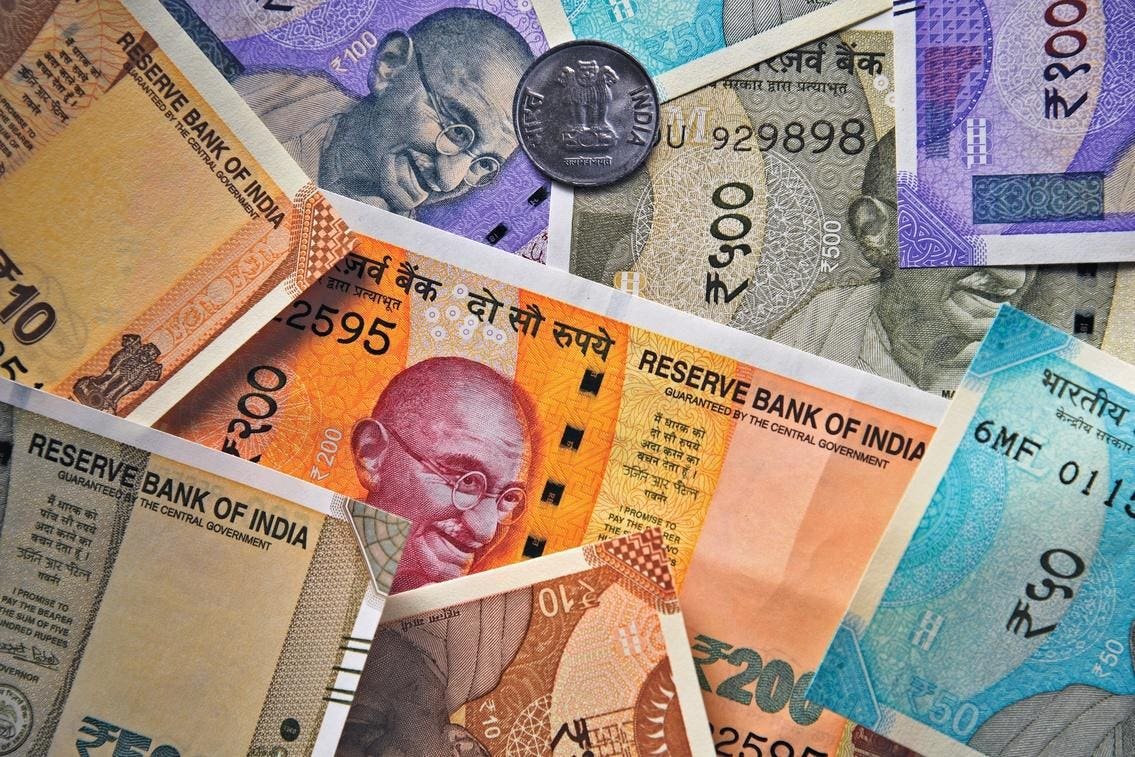
In early trade signals, the one-month non-deliverable forward (NDF) market suggested the rupee could open in the 90.70–90.74 range against the US dollar, slightly firmer than Friday’s close of 90.8650. The local currency had slipped nearly 0.6 per cent in the previous session, marking its sharpest single-day fall in almost two months and pushing it closer to its all-time low of 91.0750. Market participants now believe that while the rupee remains vulnerable, a softer dollar could offer some breathing space in the near term.
Dollar weakens as trade uncertainty rattles markets

The immediate trigger for the dollar’s pullback has been renewed uncertainty surrounding US trade policy after President Donald Trump vowed to impose a fresh wave of tariffs on European allies unless the United States is allowed to buy Greenland. US equity futures also reacted negatively, with S&P 500 futures falling nearly 0.8 per cent, reflecting a broader risk-off mood.
Currency strategists noted that, counterintuitively, tariff threats are no longer strengthening the dollar as they once did. Instead, growing policy uncertainty out of Washington is increasingly being seen as a negative for the US dollar itself, rather than a source of strength.
Why dollar weakness matters for the rupee
A softer dollar generally offers some breathing room to emerging market currencies. By the close, the rupee had slipped to around 90.91 per dollar – its weakest closing level since December 16 underscoring how fragile any recovery remains.
Corporate dollar demand caps any meaningful rebound
Despite supportive global cues, domestic factors continue to weigh heavily on the rupee. Traders said dollar buying by corporates – especially importers and companies hedging future payments – has intensified, quickly absorbing available supply and preventing the currency from holding on to gains.
Some market participants also pointed to mild intervention by the Reserve Bank of India to smooth volatility and check sharper moves.
Equity outflows add to pressure
Foreign portfolio investor (FPI) outflows remain another major drag on the rupee. According to NSDL data, overseas investors sold a net Rs 3,897 crore worth of Indian shares on January 15, along with Rs 909 crore of bonds on the same day. Total equity outflows for January have already crossed Rs 20,000 crore, reflecting caution amid global uncertainty, elevated US bond yields and concerns over valuation. These outflows have kept demand for dollars elevated, limiting the rupee’s ability to capitalise on external tailwinds such as lower oil prices or a weaker greenback.
Greenland dispute adds to global risk aversion
The flare-up over Greenland comes at a time when global markets are already grappling with uncertainty around interest rates, geopolitics and trade.
Analysts warn that the absence of clarity on trade policy has become a persistent feature of global markets.
Key market indicators to watch
Several external indicators are being closely tracked by currency traders to gauge the rupee’s near-term trajectory:
- The dollar index hovering near 99.20, down from recent highs
- Brent crude futures trading around 64.1 dollars per barrel, offering limited relief on the oil import bill
- The 10-year US Treasury yield at around 4.23 per cent, still elevated enough to attract capital into US assets
- Continued FPI selling in Indian equities and bonds
From a technical perspective, analysts note that the rupee has breached the crucial 90.30–90.50 support zone, turning it into resistance. With that floor broken, the all-time low of 91.0750 now emerges as a key level to watch in the coming sessions.