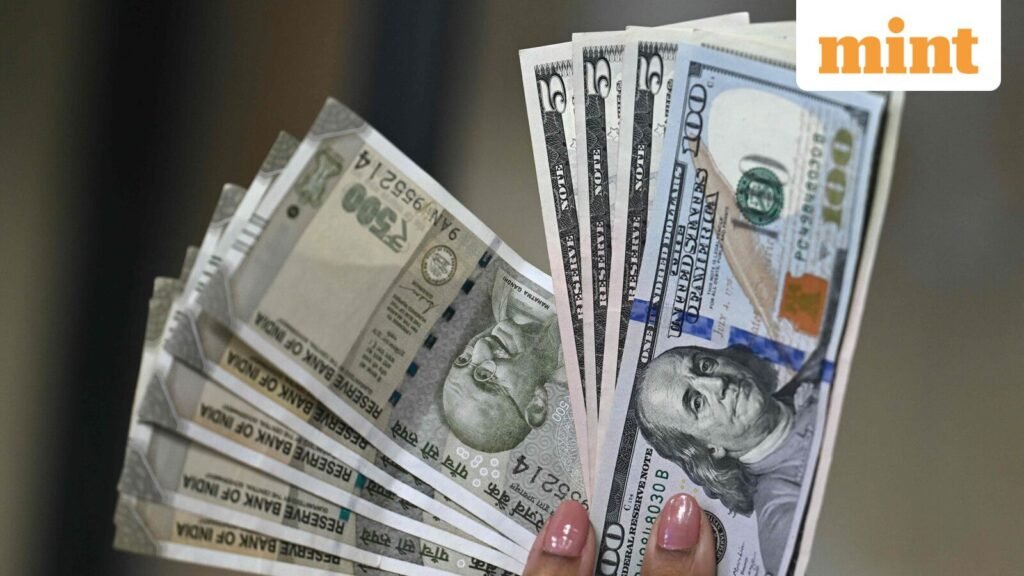
USD vs INR: The Indian rupee is at a historic low level, weighing heavily on stock market sentiment due to the increased risk of a further aggravated selloff by foreign portfolio investors (FPIs).
The domestic currency hit a record low of 95.2350 per dollar on March 30. This was the first time the domestic currency breached the 95 mark. Year-to-date, the rupee is down 5.5%, while for the financial year 2026, it declined by nearly 10%.
Rupee’s weakness is a major macro risk. However, its impact on sectors varies.
A weaker rupee is positive for exporters that earn in foreign currency. Sectors such as IT, pharma, and even textiles, to some extent, gain from the rupee’s weakness. However, the majority of sectors feel the pain as their imports and raw material costs increase, which squeezes their margins.
Moreover, a weak rupee makes imports of essential commodities, such as crude oil, even more costlier, raising inflationary risks. If inflation spikes, the Reserve Bank of India can raise interest rates, affecting overall market sentiment.
Rupee and your stock portfolio
Rupee’s weakness has a ripple effect on the economy. It reduces the purchasing power of consumers, hitting consumption, stokes inflation, and leads to monetary policy tightening. All these together puncture economic growth momentum and drag corporate profitability lower.
A critical risk is the flight of FPIs who have already been aggressively selling Indian equities.
As per NSDL, FPIs pulled out ₹1,25,736 crore from the Indian financial market in March amid surging crude oil prices due to the US-Iran war and the rupee’s fall to record low levels.
According to experts, if the rupee remains weak for a longer period, FPIs may remain net sellers; the return of the Indian stock market may be modest despite buying by the domestic institutional investors (DIIs).
“Rupee’s weakness is a matter of concern. For them to recover, FPIs need to come back. However, it is a loop. Rupee’s weakness can further aggravate foreign capital outflow,” said VK Vijayakumar, chief investment strategist at Geojit Investments.
Vijayakumar said the West Asian conflict remains a key factor. If the war ends in the next few days, as the emerging signals suggest, crude oil prices may come down, and the rupee may strengthen. This may bring in FPIs as the market is now at a fair valuation.
According to Dhirendra Kumar, Founder and CEO of Value Research, long-term equity investors should not lose sleep over the rupee’s weakness.
“If you’re a long-term equity investor, Indian companies that earn in dollars actually benefit. The real impact is on inflation, your imported goods, your fuel, and your edible oils get costlier, and that quietly erodes purchasing power,” Kumar explained.
“The sensible response isn’t panic; it’s ensuring your portfolio has some international diversification. A small allocation to US or global funds gives you a natural hedge. When the rupee falls, your foreign investments rise in rupee terms. That’s not speculation, that’s just common sense asset allocation,” said Kumar.
The Reserve Bank of India (RBI) is reportedly taking measures to stem the rupee’s fall.
According to a Mint report, the RBI is expanding its scrutiny beyond banks to corporate treasury positions in the foreign exchange market to assess large arbitrage trades.
Earlier on 27 March, the central bank capped banks’ net open positions in the domestic market at $100 million at the end of each day
Read all market-related news here
Read more stories by Nishant Kumar
Disclaimer: This story is for educational purposes only. The views and recommendations expressed are those of individual analysts or broking firms, not Mint. We advise investors to consult with certified experts before making any investment decisions, as market conditions can change rapidly and circumstances may vary.