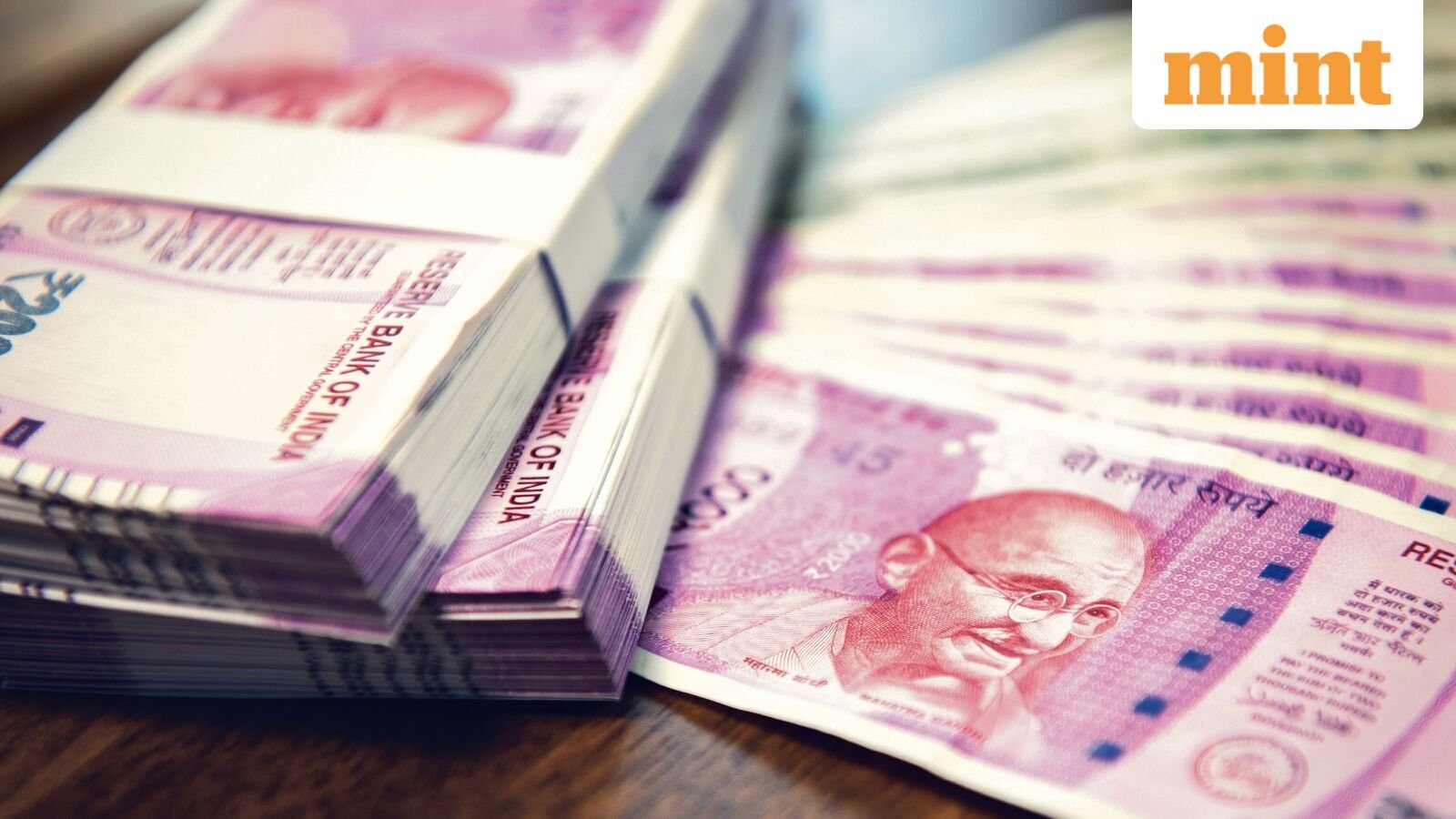
Mumbai: The Indian rupee staged a sharp relief rally on Tuesday after the announcement of the landmark US-India trade agreement.
Market participants believe the deal will stabilise the currency near the 90-per-dollar mark in the near term and slow the pace of depreciation in the next financial year.
The rupee opened stronger at 90.4263 per dollar on Tuesday against the closing level of 91.5163 on Monday, according to data by Bloomberg.
This was supported by expectations that the trade deal would revive foreign investor sentiment and unwind hedging-related pressure that had weighed heavily on the currency through 2025.
The agreement, announced by US President Donald Trump on Monday after a call with Prime Minister Narendra Modi, reduces tariffs on Indian goods to 18% from as high as 50% and removes penalties linked to India’s purchase of Russian crude.
“We welcome the announcement of a landmark trade agreement between the Republic of India and the United States of America. At 18%, India’s tariff rate is now lower than that of several major Asian trading partners, supporting growth in labour-intensive and export-oriented sectors such as textiles, gems and jewellery, and engineering goods,” Dhiraj Relli, managing director and Chief Executive Officer of HDFC Securities said on the development.
Market participants said the agreement removes a chunk of policy and tariff uncertainty that had triggered record equity outflows last year, making the Indian unit the worst-performing Asian currency in 2025, down 6% for the year and 2% last month.
“The US-India trade deal will improve sentiment, so in the near term rupee will stay closer to the 90 levels. It may even briefly touch below but it will definitely improve sentiment,” said Gaura Sengupta, chief economist at IDFC FIRST Bank.
In the near term, support for the Indian unit is seen near 90.00–89.60 per dollar levels, while the next hurdle on the upside is seen near 90.80–91.00,” Ritesh Bhansali, deputy chief executive officer at Mecklai Financial Services.
While the long-standing trade deal is expected to improve sentiment and inflows by foreign portfolio investors (FPIs), the currency is still seen depreciating, albeit at a slower pace, as the earlier depreciation was driven less by trade fundamentals and more by capital flows.
“The major issue for INR and why the depreciation has been is because of capital outflows, and the current account was never an issue because India front-loaded its exports to the US,” Sengupta said. For the April-December period, India’s exports to the US rose 10% on year, cushioning the current account despite global trade disruptions.
This has come as foreign direct investment slowed as dollar-adjusted returns on Indian investments declined. However, the trade deal is expected to support capital inflows and improve the balance of payments position.
“The BoP which was a large deficit in FY26 should become a very small negative in FY27… we still expect that you will have a much more moderate or gradual pace of depreciation,” Sengupta said, pegging that FY27 depreciation at around 3%, compared with expectations of 6% earlier.