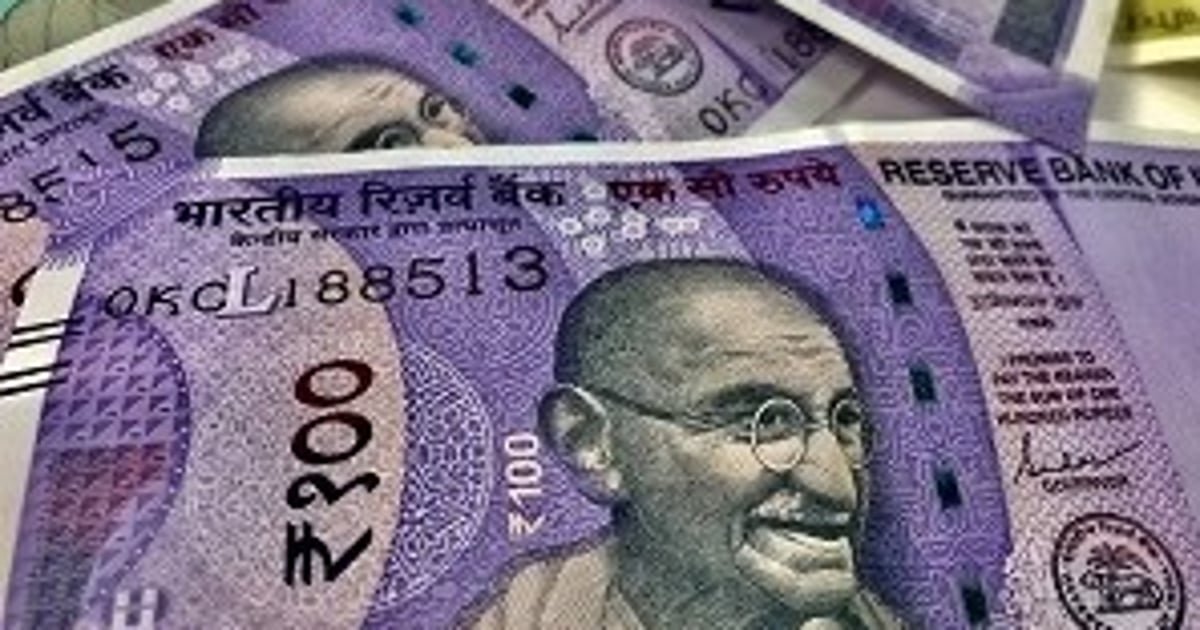
The Indian rupee fell to an all-time low of 92.31 against the US dollar on Monday (March 9) after opening sharply weaker, as surging crude oil prices and a global risk-off mood weighed on emerging market currencies.
The currency opened at 92.20 per dollar, compared with 91.74 in the previous session, before sliding further in early trade to breach its previous record low of 92.3025 touched last week.
The decline of more than 50 paise from Friday’s (March 6’s) close marks one of the sharpest single-day falls in months, highlighting mounting pressure on the rupee.
Traders said the Reserve Bank of India likely stepped into the foreign exchange market earlier in the session to curb volatility. According to market participants, the central bank is believed to have sold dollars before the domestic spot market opened, helping the rupee briefly recover from around 92.30 to 92.20 before the official open.
Oil surge weighs on rupee
Pressure on the rupee intensified after crude prices surged sharply amid escalating tensions involving the United States, Israel and Iran.
Benchmark Brent crude jumped more than 25% to around $117 a barrel, extending last week’s nearly 28% rally. The roughly 50% surge in oil prices over recent sessions has been driven by fears of supply disruptions in the Middle East as the conflict expanded.
Concerns have also grown over potential disruptions to shipments through the strategic Strait of Hormuz, a key route for global oil trade.
Adding to geopolitical uncertainty, Mojtaba Khamenei was named successor to Ali Khamenei as Iran’s supreme leader, signalling that hardliners remain firmly in charge in Tehran a week into its conflict with the United States and Israel and raising the likelihood of a prolonged war.
Higher crude prices pose a significant challenge for India, one of the world’s largest oil importers, as they raise the country’s import bill, risk widening the current account deficit and amplify pressure on the rupee.
Global markets turn risk-averse
The spike in oil prices also triggered a broad selloff across global markets. US equity futures dropped more than 2%, while Japanese and South Korean shares led losses across Asian markets with declines of roughly 6.5%.
The risk-off sentiment strengthened the US dollar and weighed on emerging market currencies, including the rupee.
RBI intervention in focus
Traders expect the Reserve Bank of India to remain active in the foreign exchange market if volatility intensifies. The central bank had already stepped in last week to temper the rupee’s decline.
“Obviously, there will be a lot of pressure on the rupee today. It will likely be a one-sided move, and it will be down to the RBI to step in and calm the market,” a currency trader at a bank said.
Domestic fiscal developments also watched
Apart from global factors, markets are also tracking domestic fiscal developments after the Government of Maharashtra announced a farm loan waiver of up to ₹2 lakh per farmer, a programme estimated to cost around ₹35,000 crore.
Analysts expect the rupee to remain volatile in the near term as elevated oil prices, geopolitical tensions and foreign investor outflows continue to shape sentiment in currency markets.
–With agencies inputs
First Published: Mar 9, 2026 9:10 AM IST