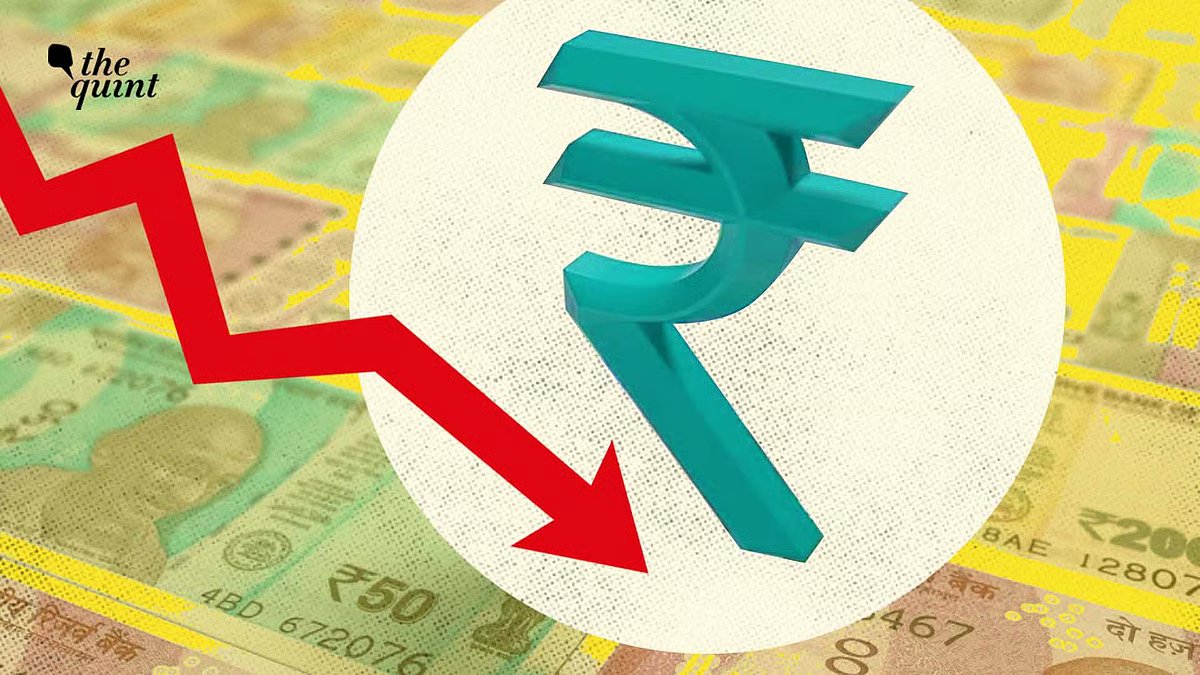
Rupee depreciation against the US dollar is actually a double whammy.
First, the US dollar has been depreciating against most global currencies. The US dollar index closed at 105.97 on 6 December 2024. On 5 December 2025, a year later, it closed at 98.99. The US dollar effectively depreciated against global currencies by 6.6 percent. Correspondingly, all major global currencies strengthened against the US dollar, though by varying degrees.
Second, the Indian rupee depreciated against the US dollar. On 6 December 2024, the rupee closed at 84.67 to a dollar. On 5 December 2025, it closed at 89.95. The rupee depreciated by 6.2 percent against dollar in a year.
Three big weaknesses are responsible for this sorry state of the Indian rupee.
First, India’s merchandise trade has become a big foreign-exchange hole. October export declining by 12 percent and imports shooting up by 17 percent resulted into a massive trade deficit of $42 billion, sending shockwaves and making traders apprehensive as a precursor of drastic future.
Second, strong capital inflows (foreign direct investment, portfolio investment, external commercial borrowings) used to bail India out of its trade deficit.
With belief in earning good returns from the Indian stock market rudely shaken, foreign portfolio investors (FPIs) have been persistently net-selling (more than $15 billion this year).
Net foreign direct investment (FDI), thanks to massive cash-outs by foreign start-up investors and repatriations by old investors, is contributing very small capital inflows. As the rupee depreciates sharply, with hedging costs going up, external commercial borrowings (ECBs) have become very costly reducing inflows.
India’s capital flows are at a huge risk, weakening the rupee rather than supporting it.
The government’s muddled policy in not permitting investments from China is hitting India both ways. While it prevents the FDI in the dynamic and futuristic sectors—computers, electric vehicles (EVs), solar cells and modules etc—it forces India to import the same machinery and equipment from China, causing a double drain on foreign-exchange (FE) reserves.
Third, the RBI has consciously increased its gold holdings, which effectively means exchanging US dollars for gold. The RBI has also sold US dollars and bought other foreign currencies.
These tactics have made a large portion of forex reserves illiquid, reducing the RBI’s flexibility to intervene effectively in the currency market. These three weaknesses have become structural and are likely to persist, making rupee quite vulnerable.