Unlock the Editor’s Digest for free
Roula Khalaf, Editor of the FT, selects her favourite stories in this weekly newsletter.
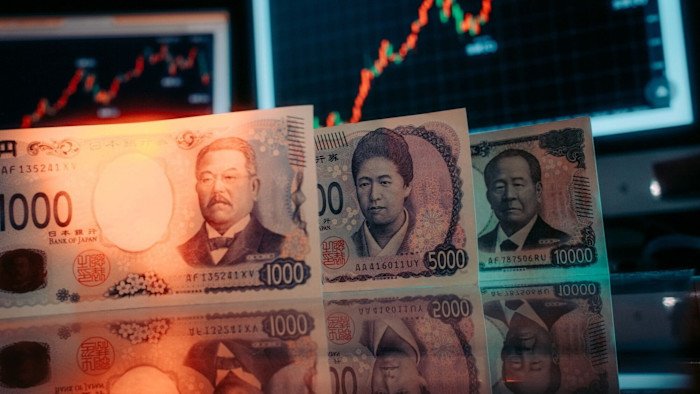
Japan’s currency has fallen against the US dollar since the war in Iran broke out this week, defying its traditional role as a haven asset as traders in Tokyo braced for possible government intervention.
The yen has weakened 1 per cent since Friday to ¥157.2 a dollar. That marks a sharp departure from the buying surge and rapid unwinding of the so-called yen carry trade once associated with heightened geopolitical tension, according to traders.
“The yen is no longer a safe haven,” said Neil Newman, Japan strategist at Astris Advisory. He noted that in past crises, the yen tended to rise on bets that Japanese companies would rapidly repatriate overseas earnings.
“Companies haven’t behaved like that for about four years,” he said. “The pressure is actually on them to do the opposite and invest overseas, which they are still doing like crazy. In Japan’s current economic situation, there is no incentive to bring the money back.”
Analysts said the yen’s unexpected weakness highlighted fundamental shifts and vulnerabilities in the Japanese economy.
The currency has fallen nearly 5 per cent in the past 12 months as markets wrestled with the implications of Prime Minister Sanae Takaichi’s expansive spending plans and her resistance to further interest rate increases by the Bank of Japan.
Tai Hui, chief Asia-Pacific market strategist at JPMorgan Asset Management, said volatility had significantly reduced the yen’s attractiveness as a hedging currency.
“Investors are looking at the [Iran] situation and saying: ‘How do I hedge my risk without introducing unintended risk?’,” said Hui. “You have a lot more policy crossroads in Japan right now and a new government. The calculus for using yen as a hedge against geopolitics is really not clear.”
The war in Iran has also increased Japan’s exposure to surging energy prices and the risk of higher inflation. The country relies on imported crude oil and natural gas for much of its energy.
Takahide Kiuchi, an economist at the Nomura Research Institute, said rising commodities prices would make the BoJ “even more cautious about raising interest rates”, adding that growing expectations of a delayed rate increase would put further pressure on the yen.
Japan’s commitment to invest $550bn in the US over the next three years as part of a trade deal struck with President Donald Trump’s administration to reduce tariffs is likely to affect the currency further.
After the yen tumbled on Tuesday, Japan’s finance minister Satsuki Katayama said the government was watching market movements “with an extremely high sense of urgency” and would take all necessary measures — including direct intervention.
The force of those comments appeared to put a floor on the yen’s slide for now, analysts said, even as downward pressure remained strong.
“The Japanese government is being increasingly open about the possibility of intervention . . . so if the yen goes towards ¥160, people’s cautiousness will be high,” said Koichi Sugisaki, Japan macro strategist at Morgan Stanley MUFG Securities.
The Middle East conflict has also not caused an abrupt reversal of the yen carry trade — the relatively risky practice of borrowing yen cheaply to invest in higher-yielding assets elsewhere — which has in the past caused sharp strengthening in the Japanese currency.
The absence of a clear unwinding suggested “the risk aversion is not too extreme”, said Naomi Fink, chief global strategist at Amova Asset Management.
“Markets are not yet reflecting the seriousness of the situation in the way that other physical markets, such as Baltic freight rates and war risk insurance, are currently doing,” she said.