By Jason Chau
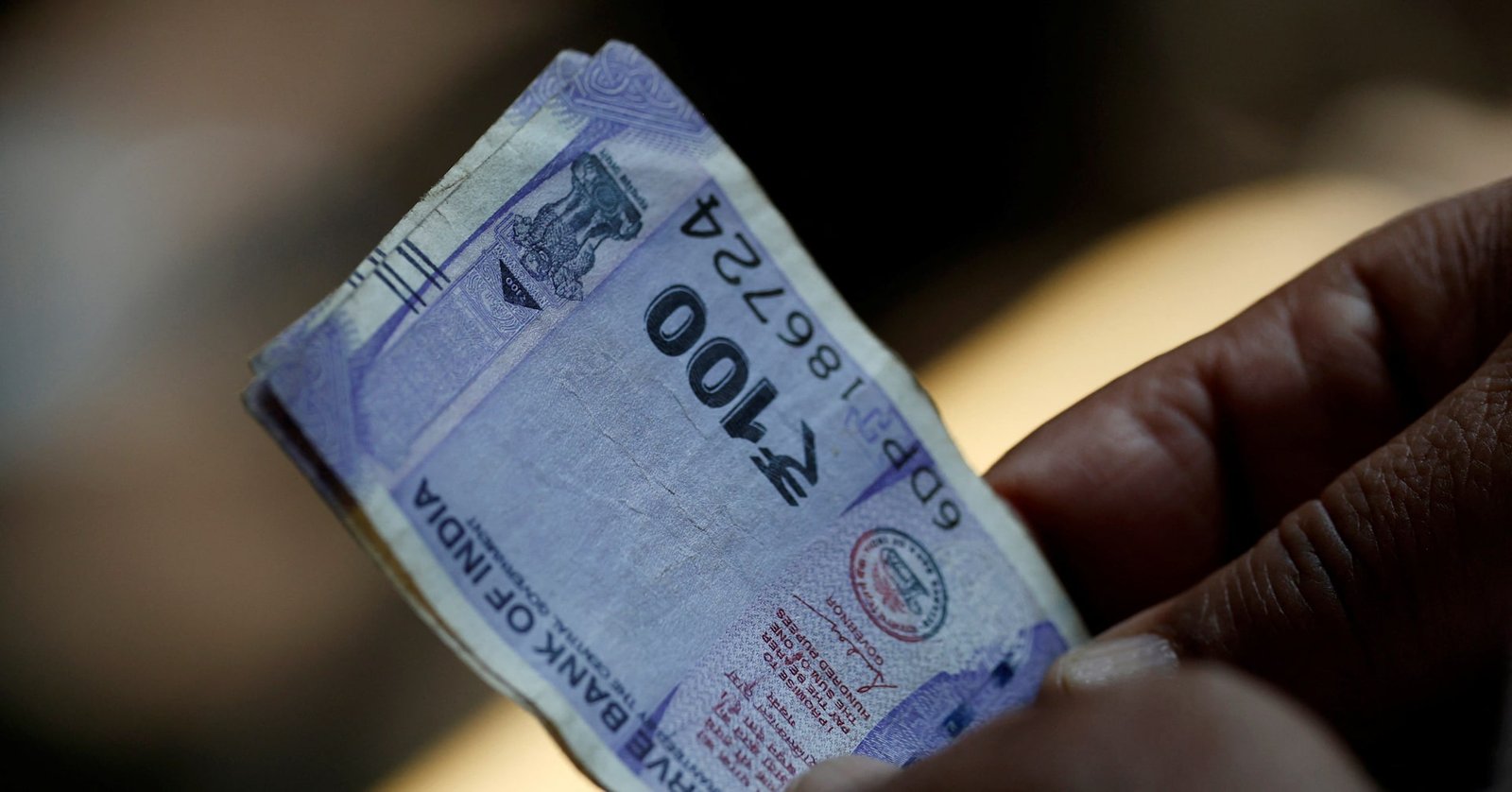
The Indian rupee weakened sharply against the dollar, dragged by the prospect of a prolonged military conflict in the Middle East.
The currency has steadily wilted in recent months, hitting series of record lows against the dollar due to the country's persistent trade deficit, global risk aversion and uncertainty over U.S. tariffs.
The dollar recently traded at 92.19 rupees Wednesday, according to LSEG data, as traders returned from an Indian holiday on Tuesday to deal with a surge in oil prices and an escalation in the Middle East conflict.
On Friday before the attacks on Iran it had traded around 91.05 rupees, after rising steadily from a low of about 83.76 rupees in early May last year.
"Prolonged tensions among the United States, Israel, and Iran are mounting pressure on India across its current account, inflation outlook, and currency stability," said Devarsh Vakil, head of prime research at HDFC Securities in a note.
He added that higher crude oil prices will likely raise the country's import bill, widen its current account deficit, drive inflation, and prompt foreign capital outflows.
Risk aversion owing to the Middle East conflict has already sent Asian stock markets tumbling this week, with India's Sensex benchmark recently 1.7% lower.
India's markets and investor sentiment are vulnerable to the country's high dependency on imported energy, particularly crude oil, noted Radhika Rao, senior economist at DBS.
Although its direct trade with Iran has dropped sharply in recent years due to U.S. sanctions, more than half of India's total petroleum and crude supply come from the Middle East.
"Longevity and severity of the conflict will dictate the extent to which risk-appetite weakens, and high energy prices crimp demand," she added.
She said that markets are likely to recover swiftly if hostilities end within a fortnight, as they did in June last year, but "an escalation in the regional conflict or consequent blockade of the crucial Strait of Hormuz will carry wider macro ramifications."
Write to Jason Chau at jason.chau@wsj.com
(END) Dow Jones Newswires
March 04, 2026 01:44 ET (06:44 GMT)
Copyright (c) 2026 Dow Jones & Company, Inc.