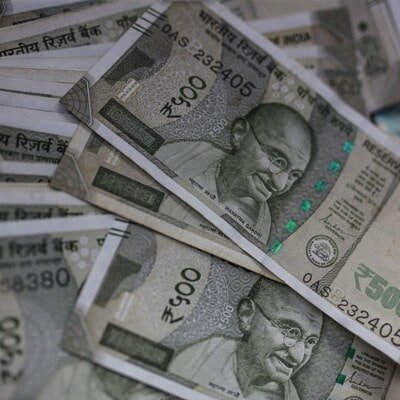
The Indian rupee on Tuesday fell to an all-time low of 91.02 against the United States dollar. This came amid the continued outflow of foreign capital from the equity market, Reuters reported.
The demand for the dollar because of the likely maturity of positions in the non-deliverable forwards market also contributed to the Indian currency’s weakening, Reuters reported. Non-deliverable forwards are financial derivative contracts used to hedge or speculate on currencies and are settled in cash.
This was the fourth consecutive day recording a fall in the rupee’s value. The previous all-time low of 90.78 was hit on Monday.
The Indian currency has fallen 6% in 2025, Reuters reported. This makes the rupee the worst-performing Asian currency this year.
Foreign investors have also pulled out $18 billion from the Indian equity market this year, according to Reuters.
However, in recent weeks, the fall of the rupee has been mainly driven by uncertainty over a potential trade deal between New Delhi and Washington.
Without a trade deal with Washington, Indian goods are facing a combined US tariff rate of 50%. A 25% so-called reciprocal duty was imposed on August 7, followed by an additional 25% punitive levy on August 27.
The punitive tariffs were introduced as part of US President Donald Trump’s pressure campaign against countries purchasing discounted oil from Russia amid Moscow’s war on Ukraine.
However, trade talks between the two countries have gained fresh momentum in recent months.
On Monday, Commerce Secretary Rajesh Agrawal said that India and the US are “very close” to finalising an initial trade agreement on tariffs, but he did not specify a deadline, The Hindu reported.