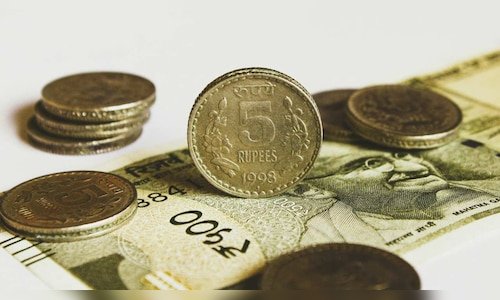


Jio Platforms’ $3.2-billion IPO helped support the rupee through foreign investor inflows, but rising crude prices and uncertainty over whether those inflows will last threaten the currency’s recovery
The $3.2-billion initial public offering (IPO) of Jio Platforms has provided support to the Indian rupee, but the currency’s recovery faces a key test as rising crude oil prices threaten to offset foreign investor inflows.
The rupee ended at 94.8175 against the US dollar on Thursday, weakening 0.4 per cent and snapping an eight-session winning streak. Brent crude climbed 3.3 per cent to $112.40 a barrel, its highest level since May, as concerns over geopolitical tensions in West Asia weighed on global markets. The rupee had closed at 94.46 against the dollar a day earlier, after strengthening on foreign portfolio inflows linked to Jio’s IPO and measures taken by the Reserve Bank of India (RBI).
How Jio’s IPO supported the rupee
Jio Platforms’ $3.2-billion IPO attracted strong institutional investor interest, bringing foreign portfolio flows into focus as the rupee recovered from recent lows.
When overseas investors convert dollars into rupees to fund purchases of Indian shares, the additional supply of dollars and demand for rupees can support the domestic currency. IPO-related transactions can also involve short-term foreign exchange arrangements, with investors and banks managing their dollar and rupee requirements around share allotments.
Reuters reported that foreign inflows linked to the Jio offering helped the rupee reach a six-week high on October 21. The currency had recovered by more than 2 per cent from levels near record lows earlier in October, supported by the IPO-related flows, RBI measures and a softer dollar at different points during the rally.
 More from Business
Why the IPO inflows may not be enough
Hemant Sood, founder and managing director of Findoc Group, said the rupee’s recovery remained vulnerable to oil prices and the durability of foreign inflows.
In a comment shared with Firstpost, Sood said the relevant measure was fresh overseas money converted into rupees, rather than the overall size of the IPO. He added that the incremental currency support could fade after share allotments and settlements, even if investors continued to hold their shares.
For the rupee to appreciate more sustainably, foreign buying would need to broaden beyond a handful of large equity offerings and extend to other equity and debt investments, alongside longer-term direct investment.
That would depend on several factors, including corporate earnings, market valuations, policy predictability and global investor appetite for risk.
The RBI’s measures have also helped ease pressure on the currency. The central bank announced steps on October 10 to curb speculative activity and manage dollar demand. Its market interventions have reinforced the impact of these measures and foreign inflows.
But such support cannot indefinitely offset a deterioration in India’s external balance, Sood said. Expectations of further RBI rate increases could also influence the currency, although foreign investors would weigh potential returns against hedging costs, exchange-rate risks and the implications of tighter monetary policy for economic growth.
Why oil remains the bigger risk
India imported 88.7 per cent of its crude oil requirements in the 2025-26 financial year, according to provisional government data. This dependence makes the country particularly vulnerable when international oil prices rise.
Higher crude prices increase the amount Indian refiners need to pay overseas suppliers in dollars. If sustained, they can widen the import bill and put pressure on the current account, while also complicating the RBI’s efforts to manage inflation.
The duration of the oil shock matters more than a single day’s price movement. Services exports and remittances provide some cushion by generating foreign currency, but prolonged high energy prices could put that resilience under pressure.
Reuters reported on October 23 that the rupee faced renewed pressure from elevated oil prices and a broader shift towards safer assets in global markets. The currency was expected to open weaker, around 94.84-94.88 per dollar, after Thursday’s decline.
What comes next for the rupee?
Sood expects the rupee to remain volatile in the near term, with the risk of renewed depreciation if oil prices stay elevated after IPO-related conversions subside. A more durable recovery, he said, would require broader foreign inflows and relief on energy costs.
For businesses with overseas payments or foreign currency liabilities, periods of currency volatility also highlight the importance of managing exchange-rate exposure. Staggering hedges against actual foreign currency obligations can reduce dependence on a single exchange-rate forecast.
The Jio IPO has offered the rupee timely support, but its longer-term direction will depend on whether foreign inflows persist and whether India can withstand the pressure of a prolonged oil price shock.