Brent crude surged past $117 a barrel last Friday as escalating tensions in West Asia and concerns over supply disruptions rattled energy markets, renewing questions about the economic impact of higher oil prices on India, one of the world’s largest crude importers. After climbing more than 7% over three sessions, Brent eased to around $115 a barrel on Monday, October 26.
The pressure has persisted. Brent was trading at about $115.50 a barrel on Wednesday, October 28, following an attack on a Saudi Arabian refinery.
For India, the implications extend far beyond fuel prices. Higher crude prices inflate the country’s import bill, increase demand for dollars, put pressure on the rupee and add to inflationary risks. They can also squeeze corporate margins, dampen household spending and complicate the government’s fiscal management.
Every $10 increase in global crude oil prices could reduce India’s GDP growth by about 0.5%, reflecting the country’s heavy dependence on imported oil and its exposure to volatility in global energy markets, Vandana Bharti, Research Head – Commodity at SMC Global Securities, had told ANI.
The strain is already visible in the trade data. India’s crude oil import bill jumped 46.3% year-on-year to $90.6 billion during April-September FY27, even as import volumes were largely unchanged at 122.7 million tonnes, compared with 121.8 million tonnes a year earlier, according to data from the Petroleum Planning and Analysis Cell (PPAC).
The sharp rise in India’s oil import bill despite largely unchanged volumes underscores the country’s vulnerability to higher crude prices. Even when consumption remains stable, costlier oil can strain the rupee, widen the current account deficit and add to inflationary pressures.
Why India is particularly vulnerable
India’s dependence on imported crude has risen steadily, reaching 88.7% in FY26, according to PPAC data. At the same time, domestic crude production has declined marginally, falling from 29.7 million tonnes in FY22 to 28 million tonnes in FY26, according to data submitted by the government to Parliament.
As a result, even modest increases in global crude prices can significantly raise India’s energy import bill.
The source of crude supplies adds another layer of complexity. India has diversified its imports in recent years, including by increasing purchases of Russian crude after the Russia-Ukraine war began in 2022. However, diversification does not insulate the country from global price swings, supply-chain disruptions or geopolitical risks.
The current crisis also underscores that energy security is not just about access to crude oil. The ability to transport, refine and distribute oil is equally critical. Any disruption to key shipping routes, particularly the Strait of Hormuz, can drive up freight and insurance costs, delay shipments and strain supplies, even when crude remains available from other sources.
The import bill: The first and most immediate hit
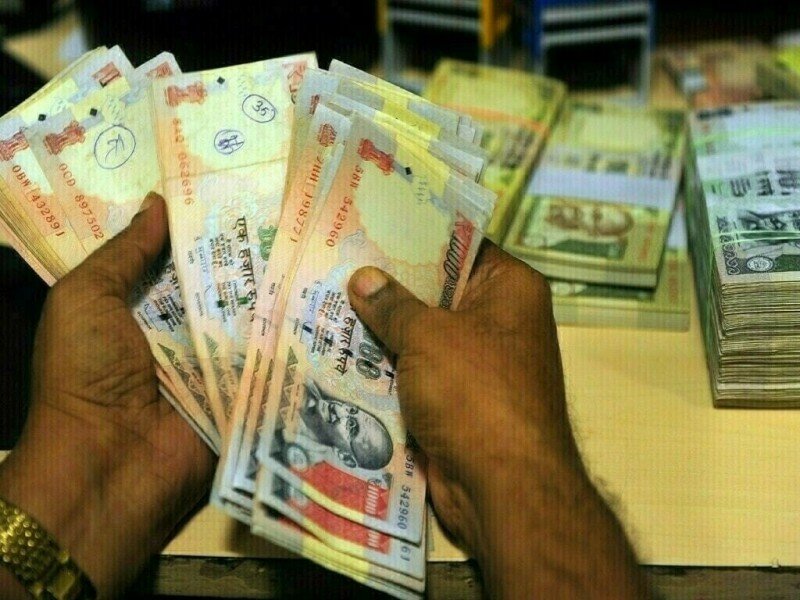
India’s April–September crude import bill rose by nearly $29 billion from $61.9 billion in the corresponding period last year, despite only a marginal increase in volumes.
September alone saw the bill jump 46.6% year-on-year to $15.4 billion, while import volumes increased 6.8% to 21.7 million tonnes, according to PPAC data reported by Moneycontrol.
The numbers illustrate how quickly higher prices can affect India’s external finances. More dollars are needed to pay for the same quantity of oil, leaving fewer resources available for other imports unless offset by stronger export earnings, services receipts or capital inflows.
The impact can be amplified when the rupee weakens against the dollar. A refinery importing crude at a given dollar price faces a higher rupee cost if the currency depreciates.
Rupee was trading at 95.19 per dollar, compared with its previous close of 95.1150, amid pressure from elevated oil prices.
The resulting combination of expensive crude and a weaker currency can further increase the cost of energy imports, putting pressure on India’s current account and currency.
Will petrol, diesel and LPG become more expensive?
This is where the economic impact meets household budgets. Higher international crude prices increase the cost of the raw material used to produce petrol, diesel and other petroleum products. However, domestic retail prices do not necessarily rise immediately or in proportion to global prices.
Higher crude prices do not automatically lead to higher pump prices. The burden can be shared between consumers, oil marketing companies and the government through pricing decisions, taxes and subsidies.
According to an Axis Bank Research estimate, the Centre, state governments, public-sector undertakings and the Reserve Bank of India could provide support equivalent to around 1.7% of GDP to cushion the impact of crude averaging $100 a barrel in 2026, assuming retail fuel prices remain unchanged.
The report estimated that every additional $10 per barrel increase could raise the support burden by another 20 basis points of GDP under the same assumption.
How higher oil prices feed into inflation
The effects of expensive crude are not confined to petrol pumps.
Diesel is an important input for road freight, agriculture and industrial activity. Higher fuel costs can raise the cost of transporting food and other goods, while petroleum-derived inputs are used in industries ranging from chemicals and plastics to textiles and packaging.
A July 2025 study published in the Reserve Bank of India’s Bulletin, titled Revisiting the Oil Price and Inflation Nexus in India, estimated that a 10% rise in global crude prices could increase headline inflation by around 20 basis points. The study also noted that government intervention in domestic fuel prices and taxes has helped contain the pass-through.
An analysis by Ashoka University’s Isaac Centre for Public Policy found that sustained crude prices above $117 a barrel could push FY27 inflation above the RBI’s 6% upper tolerance limit, depending on the extent of fuel price pass-through.
The pressure on growth, businesses and government finances
Higher oil prices can affect economic growth through several channels.
The government faces a trade-off between containing inflation and limiting the fiscal and financial impact on oil marketing companies.
The broader macroeconomic risks have also been flagged by the Finance Ministry. In its September 2026 Monthly Economic Review, the ministry warned that geopolitical tensions and elevated crude prices could add to imported inflation and create pressure on the rupee and capital flows, according to a Reuters report published on October 1.
For the Reserve Bank of India, persistent oil-led inflation could complicate monetary policy decisions, particularly if higher fuel and transport costs begin to feed into broader prices. The effect would depend on the inflation outlook and the extent to which the initial shock spreads through the economy.
How long could the pressure last?
The duration of the oil-price shock will be as important as its peak. S&P Global Energy’s October 2026 outlook raised its forecast for Brent crude to an average of a little over $100 a barrel in the fourth quarter of 2026, with prices expected to remain near $90 for much of 2027.
India has several buffers, including diversified crude sourcing, foreign-exchange reserves, domestic refining capacity and the ability to adjust taxes and other policy measures. These can help manage temporary disruptions, but they cannot fully insulate the economy from a prolonged period of expensive oil.
The central question is therefore not simply whether crude crosses $115 or $120 a barrel. It is whether prices remain elevated long enough to turn a temporary import-cost shock into a sustained squeeze on the rupee, inflation, corporate earnings and public finances.
For India, the cost of expensive oil will ultimately depend on both the global price and how much of the shock is absorbed by the government, oil companies, businesses and households.
Also Read: From Britain to Sweden: Why governments want citizens to prepare for emergencies
Brent crude tops $115: What it means for petrol prices, inflation and the Indian rupee