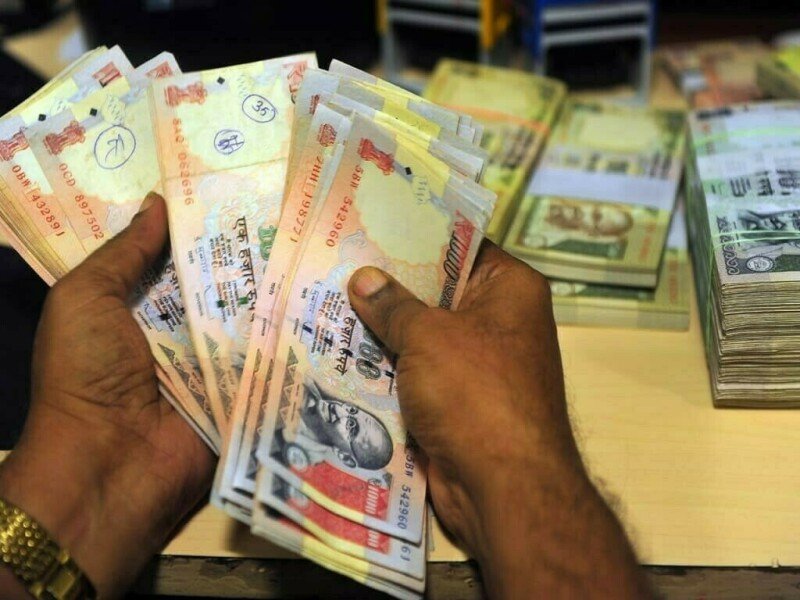
Foreign money continued to leave Indian shores in November, with Foreign Direct Investments (FDI) seeing outflows on a net basis for the third consecutive month as per data released on Wednesday – the same day the Indian rupee hit a new all-time low of 91.75 against the US dollar.
According to latest Reserve Bank of India (RBI) data, November saw net FDI outflow of $446 million. This comes on the back of $1.67 billion of outflow in October and $1.66 billion in September. August had seen a minor net inflow of $215 million.

The continued FDI outflows add to an exodus from the equity markets, with Foreign Portfolio Investors (FPIs) having already pulled out $3.36 billion so far in 2026 on a net basis after 2025 saw the exit of $18.91 billion.
“The uncertainty surrounding the India-US trade deal and the weakening of the rupee have kept net FPI flows to India muted in recent months,” the RBI said on Wednesday in its monthly State of the Economy article.
On a gross basis, FDI into India in November amounted to $6.41 billion, down 2% from October but up 22% from November 2024. Japan, Singapore, and the US accounted for more than three-fourth of the total FDI inflows, the RBI said. The central bank added that around 75% of the gross FDI inflows were for the financial services sector, followed by manufacturing, and retail and wholesale trade.
Net FDI is calculated after adjusting for investments that are repatriated by foreign companies and overseas investments made by Indian companies.
November saw net FDI outflows even though foreign investments by Indian companies more than halved from October to $1.51 billion. “Sector-specific breakdown suggests that more than 70% of outward FDI was in manufacturing, financial, insurance, and business services,” the RBI said.
Story continues below this ad
Although Indian companies’ FDI fell, foreign investors repatriated $5.34 billion in November – the most since December 2024.
Indian companies’ outward FDI and foreign investors exiting their investments in India has piled up pressure on the rupee, which hit fresh record lows in December as it broke past the 90- and 91-per-dollar marks in quick succession in the first half of December (FDI data for December will be released next month). And while the RBI’s intervention relieved some pressure in recent weeks, the rupee has weakened sharply this week, closing at a new low of 91.71 per dollar on Wednesday.
“The positive consequences of the rupee movement are that there is an export advantage to be had at a time when we still face 50% tariff in the US. However, continued depreciation also increases uncertainty for corporates and can lead to more caution being shown,” Madan Sabnavis, Bank of Baroda’s Chief Economist, said.
So far in the first eight months of 2025-26, overseas investments by Indian companies and repatriations by foreign investors have totalled $59.1 billion, up from $55 billion in April-November 2024. Meanwhile, net FDI inflows in April-November 2025 stand at $5.63 billion, compared to a mere $959 million in all of 2024-25. Gross FDI inflows, meanwhile, have been $64.73 billion, compared to $80.62 billion in the entirety of the last fiscal.
Story continues below this ad
Weak FDI inflows have been a huge concern, with Chief Economic Advisor V Anantha Nageswaran saying last month that a rise in interest rates in developed countries and a push to localise supply chains had altered the dynamic, with India having to compete not just with other emerging economies for global fund flows but also richer nations who want to onshore their production. This, the government’s top economist had said, is one of the reasons why Indian entities’ overseas investments have gone up “because in order to sell into those markets, you have to be present there these days rather than being able to export there”.
At the same time, Nageswaran had admitted that “we need to up our game with respect to courting FDI, courting global supply chain companies to come here”.


© The Indian Express Pvt Ltd