

By Christine Idzelis
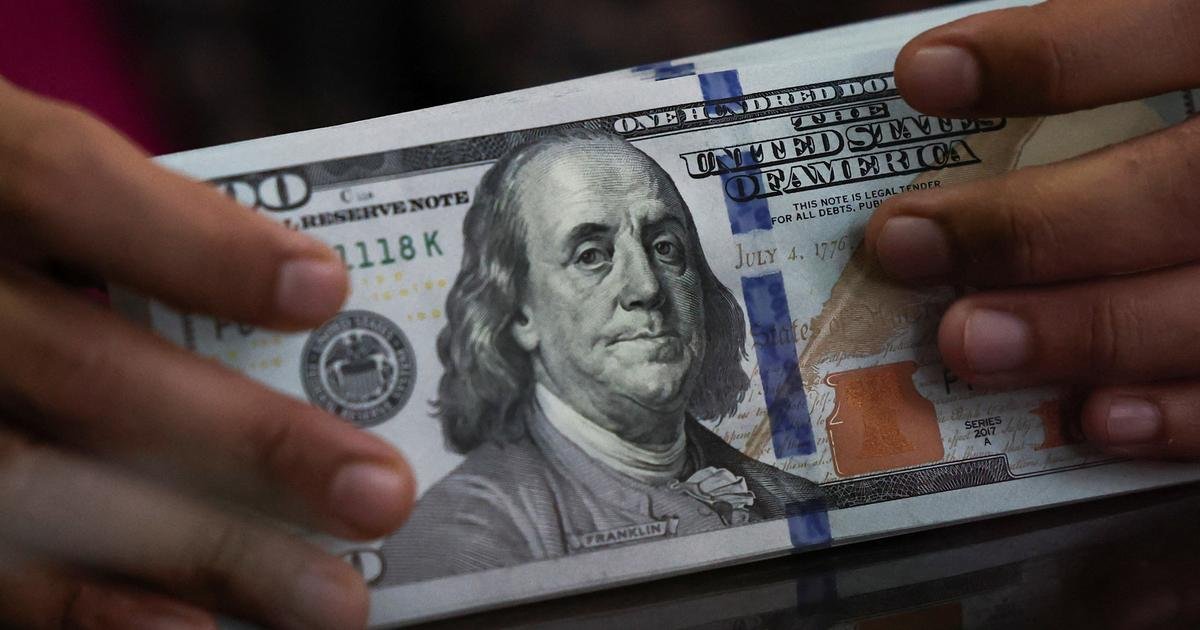
The dollar recently climbed to its strongest level in a year and a half
The greenback’s recent rally is putting some investors on edge.
The U.S. dollar’s recent rally is accelerating, with some investment banks blaming a strong economy and an artificial-intelligence-inspired spending boom for drawing more foreign capital into the U.S.
However, some are worried that the greenback’s latest sprint higher could turn it into a “wrecking ball” that causes even more instability in a stock market that is already wobbling.
“If [the] dollar keeps surging like this, it’s going to turn into a wrecking ball,” wrote BofA Global Research investment strategist Michael Hartnett in commentary shared with clients last week.
The ICE U.S. Dollar Index DXY on Monday topped 103 and touched its strongest intraday level since April 2, 2025, according to FactSet data.
The dollar is climbing lately on expectations that the Federal Reserve may keep raising interest rates and as the U.S. economy looks stronger than the rest of the world, according to Emily Roland, co-chief investment strategist at Manulife John Hancock Investments. A strengthening U.S. dollar tends to present headwinds for riskier assets globally, reflecting an anticipated move toward higher borrowing costs, she said by phone on Monday.
“You’re better off in U.S. stocks than you are in international stocks when the dollar strengthens,” Roland said. Markets may face a “tightening of financial conditions” that U.S. large-cap quality stocks generally are better positioned to weather, she noted – adding that “quality is going to bring you to those companies that have those great balance sheets.”
Roland and Matt Miskin, her fellow co-chief investment strategist at Manulife John Hancock Investments, looked at the long-term correlation between the U.S. dollar and various asset classes. They found that most assets are negatively correlated with the dollar – meaning that when the buck strengthens, these assets tend to weaken.
“Oil and, by extension, energy stocks are among the few markets that are even modestly positively correlated with the U.S. dollar,” Roland and Miskin wrote in a note shared with MarketWatch.
Roland told MarketWatch that a stronger greenback makes it more expensive for companies in other countries to pay off debt when they’ve borrowed in U.S. dollars and their local currencies soften.
At the same time, a more robust U.S. economy can help contribute to the buck’s strength by attracting an influx of foreign capital chasing stronger expected returns.
Recently, a stronger dollar has also been linked to the outperformance of shares of companies poised to benefit from AI, according to a team of strategists at Goldman Sachs.
“We have found that dollar performance looks linked to AI-related equity performance – in both good times and bad,” the Goldman Sachs team said in commentary shared with MarketWatch.
Tipping point
In 2025, the ICE U.S. Dollar Index weakened significantly, tallying one of its worst calendar-year showings on record. But things have looked very different this year. In addition to the AI boom, rising interest rates in the U.S. have also helped burnish the dollar’s appeal.
The team at Goldman expects the good times for the buck to continue into 2027, with the pace of the dollar’s gains expected to slow, even as its path of appreciation persists.
“It’s been an absolutely critical engine to economic growth,” Roland said of AI. “If there is a slowdown in the data-center buildout for some reason or another, that actually could cause the dollar’s acceleration to slow.”
Expectations for more interest-rate hikes by the Federal Reserve should continue to support the greenback, according to Tom Essaye, founder and president of Sevens Report Research.
While stocks are probably safe for now, Essaye believes a stronger dollar could start to hurt major U.S. equity indexes SPX if the ICE index hits 105 or above.
-Christine Idzelis
This content was created by MarketWatch, which is operated by Dow Jones & Co. MarketWatch is published independently from Dow Jones Newswires and The Wall Street Journal.
(END) Dow Jones Newswires
11-16-26 1746ET
Copyright (c) 2026 Dow Jones & Company, Inc.