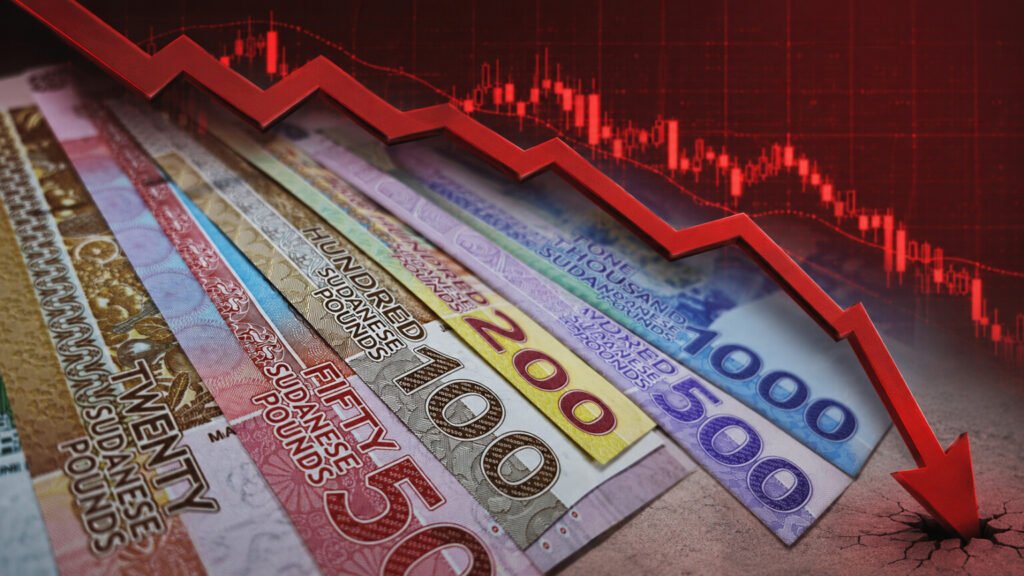
The sharp depreciation of the Sudanese Pound against foreign currencies has prompted the closure of most shops in several cities, as markets grapple with uncertainty and traders struggle to determine stable prices for goods.
Foreign exchange dealers in Khartoum and Port Sudan told this publication that the Sudanese pound had suffered a further decline against major foreign currencies, with the US dollar trading above 8,200 Sudanese Pounds. The UAE Dirham has surpassed 2,050 pounds, while the Saudi riyal has risen above 2,025 pounds, they said.
A Radio Tamazuj survey of several markets in Khartoum and Wad Madani found most shops closed amid volatile exchange rates and continued fluctuations in the value of the pound. Some traders had stopped selling altogether, waiting for the market to stabilize.
The depreciation of the local currency has had a direct impact on the prices of basic commodities. A 50-kilogramme sack of sugar has risen to around 470,000 Sudanese Pounds from approximately 380,000 pounds, while a sack of flour has increased to about 120,000 from 80,000 pounds.
Musa Ibrahim said markets had effectively shut their doors to consumers because of the steep rise in foreign exchange rates. He criticized what he described as the government’s failure to address the economic crisis.
“What do you want from us? Do you want us to leave the country to you?” he asked.
He attributed the rising cost of goods to the increase in the customs exchange rate against the Sudanese pound, saying commodity prices were rising on a daily basis. He added that the situation had led to the closure of many bakeries and shortages of diesel and other essential commodities.
Another resident, Mohamed, said commodity prices had “gone through the roof”, adding that the continued increases in the cost of consumer goods had made it increasingly difficult for people to afford their necessities.
The developments come amid continued sharp fluctuations in the Sudanese Pound’s exchange rate, placing further pressure on consumers and traders and directly affecting the prices of goods and services in markets across the country.