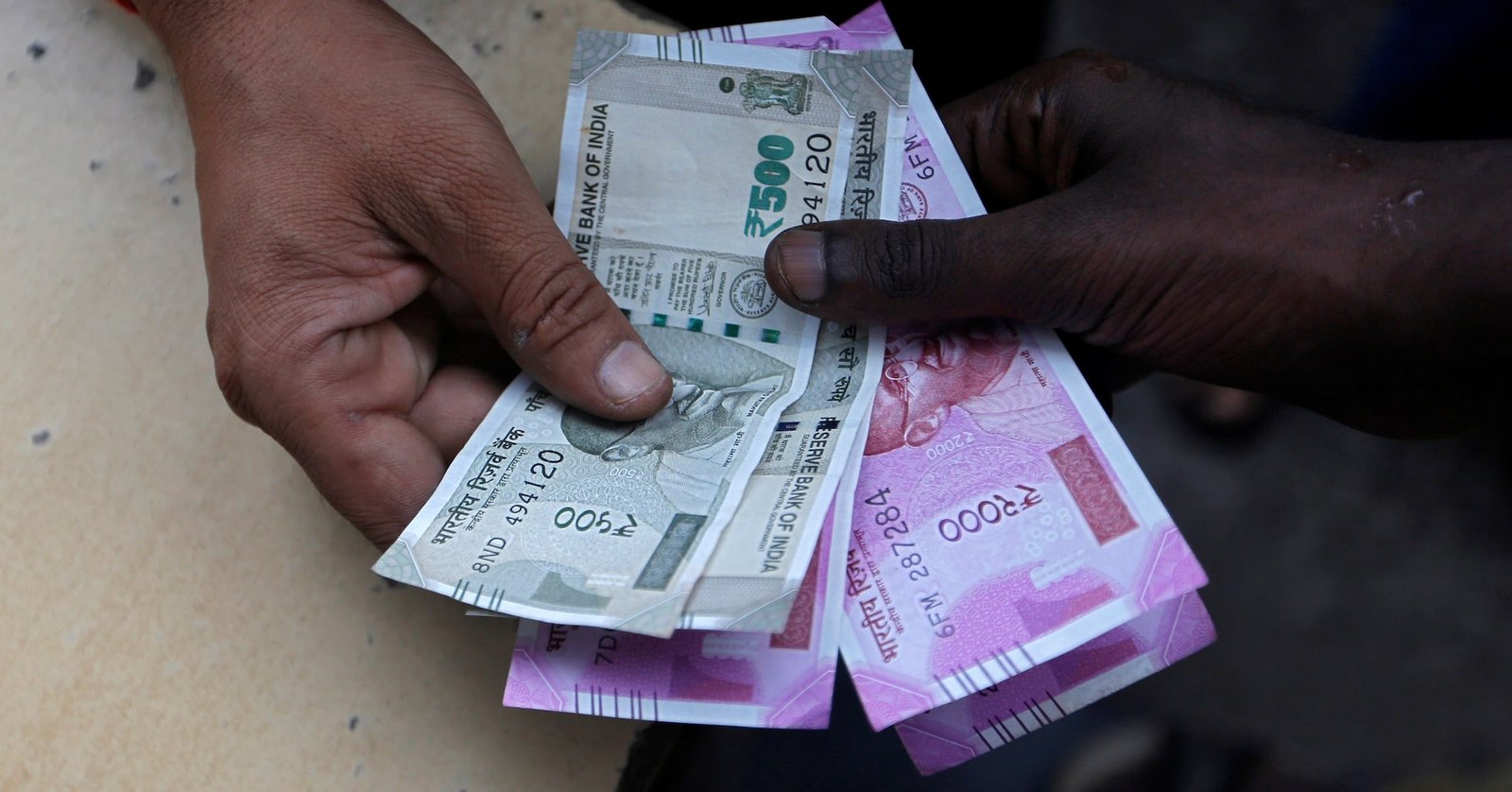
A few days ago, Arvind Panagariya, Chairman, 16th Finance Commission of India and professor at Columbia University let the cat among the pigeons with a social media post that advised Reserve Bank of India (RBI) to not let the psychology of ₹100 per dollar determine the Bank’s policy response.
The context was the continuing depreciation of Indian rupee against US dollar, and Panagariya argued that even if rupee touches a historic low of 100 against a US dollar, “100 is just a number, like 99 and 101”, and the right response at this moment is to let the rupee depreciate.
The comment saw a flurry of responses from various quarters, with people like Ashwani Mahajan, National Co-convener of Swadeshi Jagran Manch and former professor, PGDAV College, University of Delhi, saying India must take every possible step to curb this instability.
Panagariya’s argument is that whether the oil shortage, which is causing the depreciation of rupee due to India’s heavy dependence on oil imports, is short-lived or long-lived, no response is the best response.
“If the oil shortage is short-lived (3 months to a year), the rupee will depreciate now but will substantially recover once the oil-import bill shrinks and foreign capital seeks Indian investments precisely to take advantage of the ‘cheap’ rupee. If oil shortage is long-lasting (One to an unknown number of years), a resort to anything other than depreciation will be a losing proposition and trying to defend the rupee will continue to bleed the reserves until they are exhausted,” he says.
In fact, Gita Gopinath, former IMF deputy managing director and professor at Harvard University says the policy question is whether to deplete reserves to support the rupee and her argument will be to let the rupee adjust to arrive at lower imports, higher exports and to encourage capital inflows.
Ashwani Mahajan, while agreeing to the problems RBI interventions could give rise to, says he is unable to digest the argument of letting rupee have a free fall, keeping status quo, and not doing anything to curb imports in a country like India.
“In fact, there is huge scope for self-reliance, by encouraging domestic production of the commodities by raising tariffs on imports equivalent to the disadvantage to the domestic production. For instance, if in the production of a product, the domestic producer faces a cost disadvantage due to higher electricity tariff, cesses of various kinds, logistics bottlenecks, and many others, its the bound duty of the government to raise tariffs on imports, at least to the higher cost, for which at least our domestic producers are not responsible. My experience from the industries shows that we can reduce the imports by at least 25 to 30% if we adopt these safeguards. IMF, World Bank economists are actually ‘ceteris paribus economists’, and don’t understand this very simple logic,” he says.
Panagariya is of the opinion that the economy is well-positioned to absorb some inflationary pressure that will accompany the depreciation.