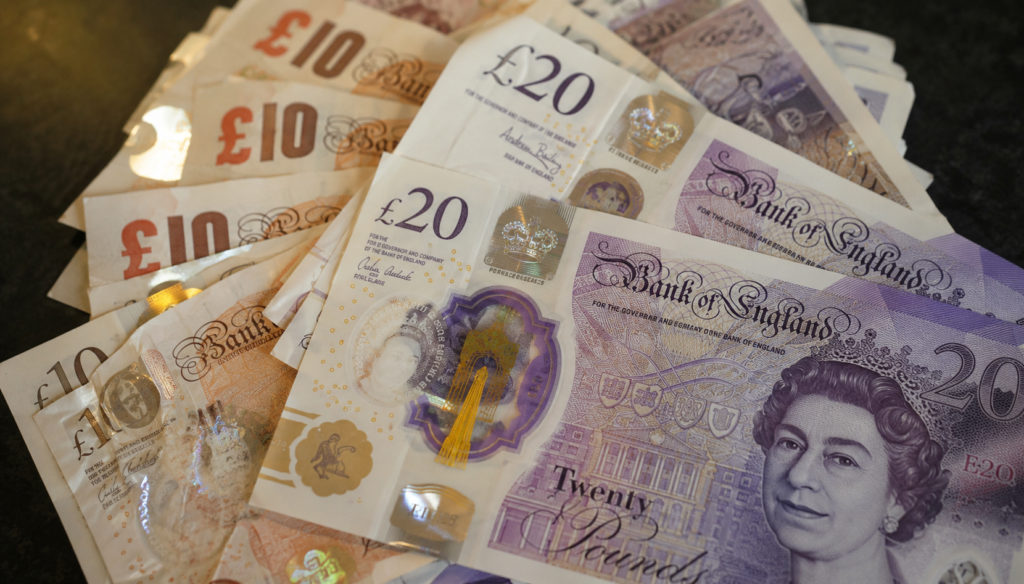
The British pound slipped on Tuesday after fresh labour market data showed a sharp slowdown in hiring activity across the UK, adding pressure on sterling and raising questions over the strength of the country’s economic outlook.
According to data released by the Office for National Statistics (ONS), Britain’s employers reduced hiring and posted fewer job vacancies in April.
The decline in jobs was the largest since May 2020, during the early phase of the COVID-19 pandemic.
However, the ONS noted that the figures were likely to be revised.
Sterling was last down 0.26% against a broadly stronger US dollar at $1.3399.
The decline came a day after the pound had climbed 0.83%.
Labour data weighs on sterling
Market participants said the weaker-than-expected labour market data reduced support for the pound during Tuesday’s trading session.
“The relief rebound for the pound has been dampened this morning by the release of much weaker-than-expected UK labour market data,” said Lee Hardman, senior currency economist at MUFG, as cited in a Reuters report.
Hardman also said the latest figures could soften expectations surrounding further interest rate increases by the Bank of England.
Data may dampen near-term expectations for Bank of England rate hikes in response to the energy price shock, analysts said.
Despite the disappointing labour market figures, traders in the UK rates market continue to price in a rate increase during the Bank of England’s July Monetary Policy Committee meeting.
This suggests investors are currently placing limited emphasis on the steep fall in employment reported on Tuesday.
Dollar strengthens amid global uncertainty
The US dollar edged higher as investors balanced hopes of easing tensions in the Middle East against concerns that the Federal Reserve could still raise interest rates later this year.
The stronger dollar added further pressure on sterling during the session.
Analysts noted that currency markets remained sensitive to both geopolitical developments and shifting central bank expectations, particularly as uncertainty around global inflation and energy prices continues.
Political uncertainty remains in focus
Political developments in Britain also remained a key focus for investors.
Andy Burnham is seeking a seat in parliament, a move that could position him to challenge British Prime Minister Keir Starmer, who has been facing mounting pressure from within the Labour Party to step down.
Starmer said on Monday that his time as the country’s leader was “not over.”
Analysts said the ongoing political uncertainty could continue to weigh on UK assets in the coming months.
Depending on the outcome of the June by-election, a full Labour leadership contest could follow and potentially continue through July and August.
Analysts warned that international investors may remain cautious towards UK assets during an extended period of political instability.