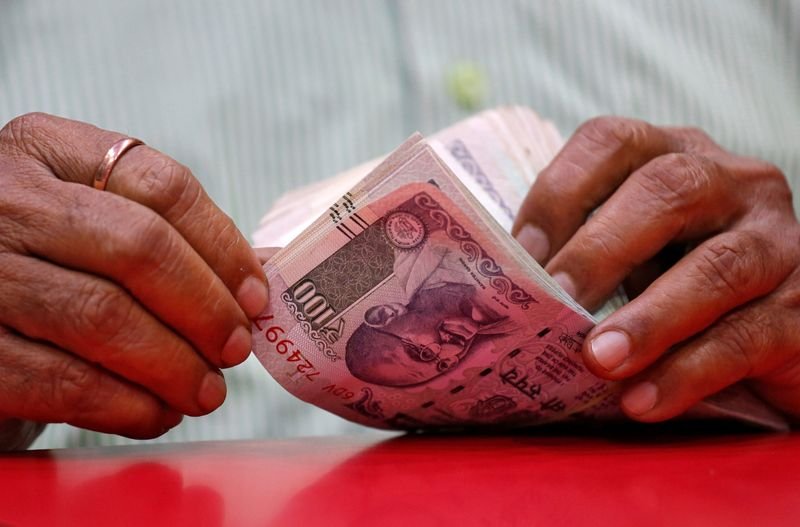
The rupee gained for the second consecutive session on reports that the Reserve Bank of India asked oil companies to refrain from buying dollars from the spot market and instead avail a special window.
The Indian unit closed the day at 92.93/$ compared to the previous close of 93.20/$. The rupee, which gained 0.29 per cent on Friday, was one of the better-performing Asian currencies; only the Korean won, Japanese yen, Singapore dollar, and Thai baht appreciated more than the domestic unit.
“The Indian rupee extended its winning streak for a second session,” said Dilip Parmar, senior research analyst, HDFC Securities. “Softening crude oil prices, a weaker greenback versus major currencies, a pause in gold imports by bankers, and tapered dollar demand from oil importers further bolstered the local rupee,” Parmar added.
Banks paused gold imports as the order from the Directorate General of Foreign Trade, part of the Ministry of Commerce and Industry, was yet to be issued. The order, which authorised banks to import gold and silver, was not issued at the beginning of the financial year as is the practice. The order was finally issued on Friday afternoon.
After depreciating over 4 per cent in March following the West Asia conflict, the domestic currency has gained over 2 per cent so far this month after the central bank announced regulatory measures to curb volatility in the foreign exchange market.
“With RBI announcing further measures of taking oil companies out of the demand for dollars, the rupee gained again to 92.65 levels,” said Anil Kumar Bhansali, executive director and head of treasury, Finrex Treasury Advisors. “The measures may continue till the lines of credit last, which could be for a month or so. Expecting that rupee could go to 92.00 levels slowly and steadily as a big chunk of demand is out of the market (oil and arbitrageurs), while FPIs have become dollar sellers in the market as stocks move up,” he said.
The country’s foreign exchange reserves increased by $3.8 billion to hit the $700 billion mark for the week ended April 10. The increase is mainly due to a $3.1 billion rise in foreign currency assets. Gold reserves increased by $601 million.
After hitting an all-time high of $728 billion for the week ended February 27, foreign exchange reserves fell $40 billion in March as the central bank intervened heavily to curb exchange rate volatility following the West Asia crisis. In the last two weeks, reserves swelled by $13 billion as stability returned with peace talks between Iran and the United States.
India’s foreign exchange reserves remain adequate, providing cover for goods imports for around 11.2 months and around 95 per cent of the external debt outstanding.