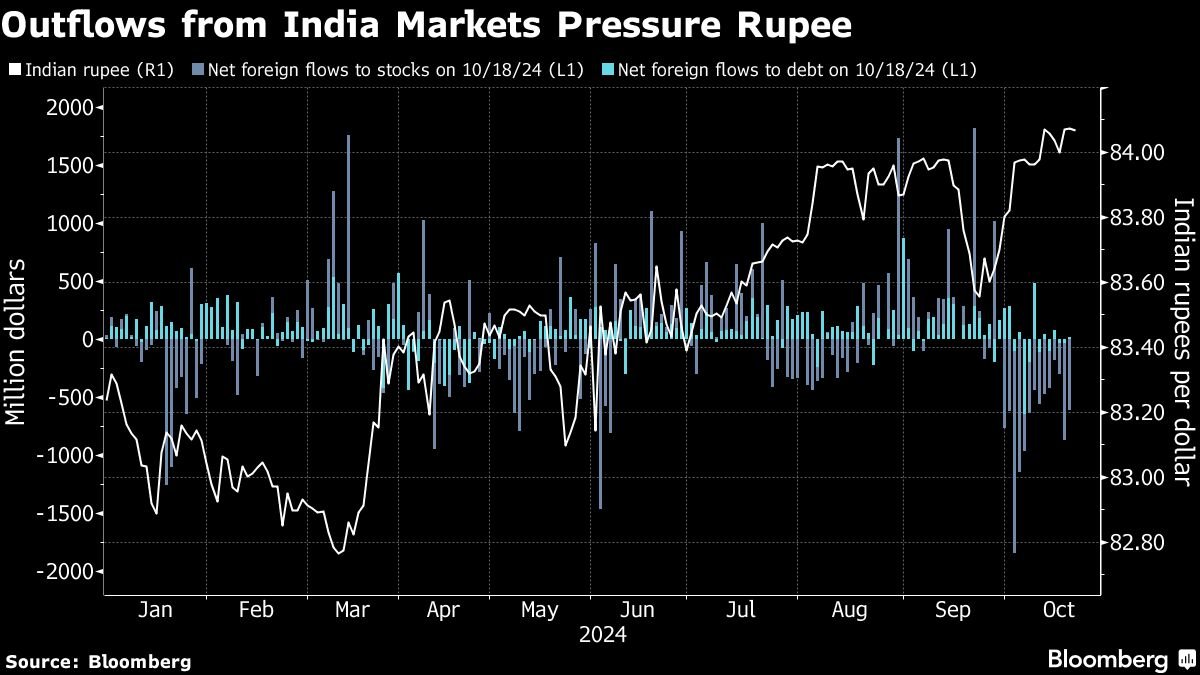
India’s central bank has intensified its crackdown on speculative activity in the rupee, this time targeting corporate arbitrage after its initial clampdown on banks failed to alleviate pressure on the currency.
Late on Wednesday, the Reserve Bank of India barred banks from offering rupee non-deliverable forwards to resident and non-resident clients. It further said that companies cannot rebook cancelled forward contracts.
The series of measures from the central bank comes at a time when the rupee has hit a string of all-time lows on worries over the spillovers from the Iran war. The currency fell 4.24% in March, marking its worst monthly drop in six years.
Earlier this week, the RBI put a limit of $100 million on net open rupee positions of banks. However, that failed to offer relief to the currency with banks exiting positions by offering them to corporates, Reuters reported.
The RBI’s latest step now targets this surge in corporate arbitrage.
By forcing banks to cut their positions, the central bank opened up arbitrage between the onshore and NDF market which corporates exploited, putting renewed pressure on the rupee and diluting the impact of the initial measures, three bankers said.
India’s RBI bars banks from offering clients rupee non-deliverable forwards amid currency strain
One banker said corporate arbitrage flows at his bank alone were estimated at $750 million–$800 million. He and the other bankers requested anonymity, citing restrictions on speaking to the media.
The rupee, after the RBI’s crackdown on banks, had rallied past 93 in the interbank market on Monday but slid quickly beyond 95 to an all-time low.
The RBI did not respond to an email requesting comment.
Action on speculative activity
Additionally, the central bank barred banks from rebooking any foreign exchange derivative contract on behalf of clients, whether deliverable or non-deliverable, which has been cancelled after April 1.
Up until now, a corporate would book a forward contract to hedge its dollar exposure. If the exchange rate later moved in its favour, it could cancel the contract and book a profit. Since the underlying exposure still remained, it was then allowed to enter into a new forward contract again, effectively repeating the cycle.
“All of this basically cuts speculation,” said Dhiraj Nim, FX strategist and economist at ANZ Bank. However, the fundamental is that if oil prices stay where they are, “your current account stress remains and capital flows remain scanty”, he added.
“It does not reverse the rupee’s course but it does make the central bank’s objective of curbing excess volatility easier.”
The central bank further prohibited banks from undertaking FX derivative contracts with related parties.