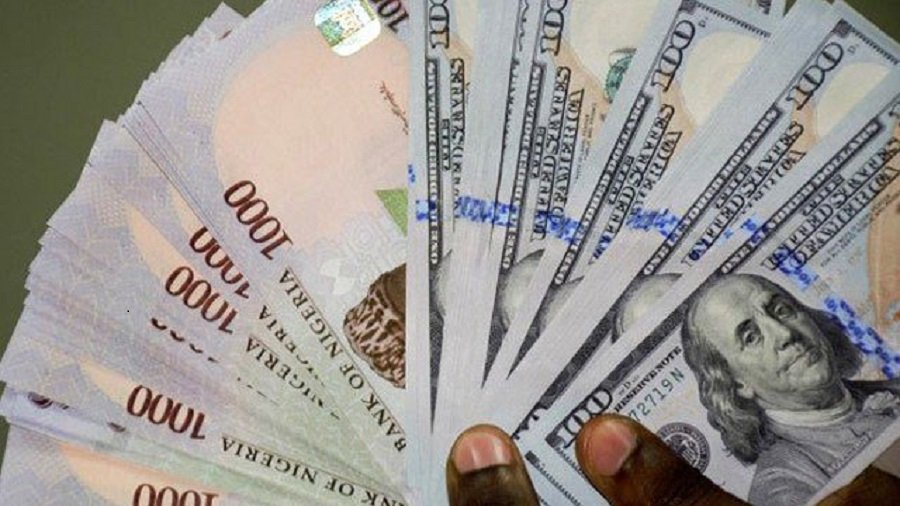
The local currency is currently showing signs of cautious stabilisation against the dollar and British pound sterling.
The naira settled at N1,837 per pound sterling at the official market and N1,380 per dollar at the official market and N1,415 per dollar at the parallel market.
Price action suggests that the psychological break below N1,900 per pound sterling has boosted naira bulls’ morale, as the naira has held most of its gains against the British pound this year.
Central Bank of Nigeria (CBN)-led foreign exchange (forex) reforms have begun to take hold after a period of significant volatility, supported by record-high foreign reserves and aggressive disinflationary measures.
The British pound has recently found a “structural floor,” leading to a sideways consolidation pattern, while the naira showed significant strength earlier in the year.
The pair is presently trading well below its 200-day moving average of N1,915 per pound sterling, indicating that the long-term trend favours naira strength.
The British pound has somewhat recovered from its 52-week low of N1,804/£ on March 18, suggesting that the aggressive sell-off may be slowing.
Technical charts highlight distinct “battleground” zones where price movement might halt or reverse. The primary resistance lies between N1,860/£ and N1,875/£.
A short-term reversal toward N1,900/£ would be signaled by a break above this level, supported by important support from N1,805/£–N1,807/£. This is the crucial “line in the sand.”
The next technical target is N1,790/£ if the naira gains more strength. The British pound has a slight bullish bias for the week if it trades above N1,827/£.
To fight inflation, the CBN has maintained high interest rates. Recently, the Monetary Policy Rate was lowered from its peak to 26.5 per cent.
The BoE’s “hawkish hold” at 3.75 per cent has kept the pound strong against other currencies and prevented a complete collapse against the naira, despite Nigeria’s improving macroeconomic picture.
The parallel market premium has been reduced to less than 2% by increasing liquidity in the official market. Remittances from the diaspora have tripled to about $600 million monthly.
Nigerian banks have raised over N4.6 trillion in new capital following the banking sector recapitalisation deadline.
This exercise has significantly reduced excess naira liquidity that previously contributed to devaluation, alongside the elimination of “Ways and Means” financing, which cut government borrowing by 90%. The British pound faces pressure, while the naira stabilises.
Geopolitical tensions have caused global energy price shocks, keeping Brent crude above $100 a barrel.
While this boosts Nigeria’s income, it also puts inflationary pressure on the UK and may lead the Bank of England to adopt a “stronger for longer” stance.
British Pound Sterling Posts a Dim March in the Foreign Exchange Market
The British pound maintained its strength during Friday’s North American session, holding above 1.3300, but ended the week with around 0.20 per cent losses versus the US dollar.
The British pound sterling is headed for monthly losses due to risk aversion driven by an energy shock from the Middle East conflict and the US dollar’s safe-haven appeal.
Consequently, sentiment remains weak, with Wall Street reporting losses and the US dollar expected to close the week with gains of over 0.45 per cent, according to the US Dollar Index.
The dollar’s performance against six other currencies is tracked by the DXY, which is currently at 99.94, essentially unchanged for the day.
The closure of the Strait of Hormuz by the Islamic Revolutionary Guard Corps (IRGC) contributed to the negative atmosphere.