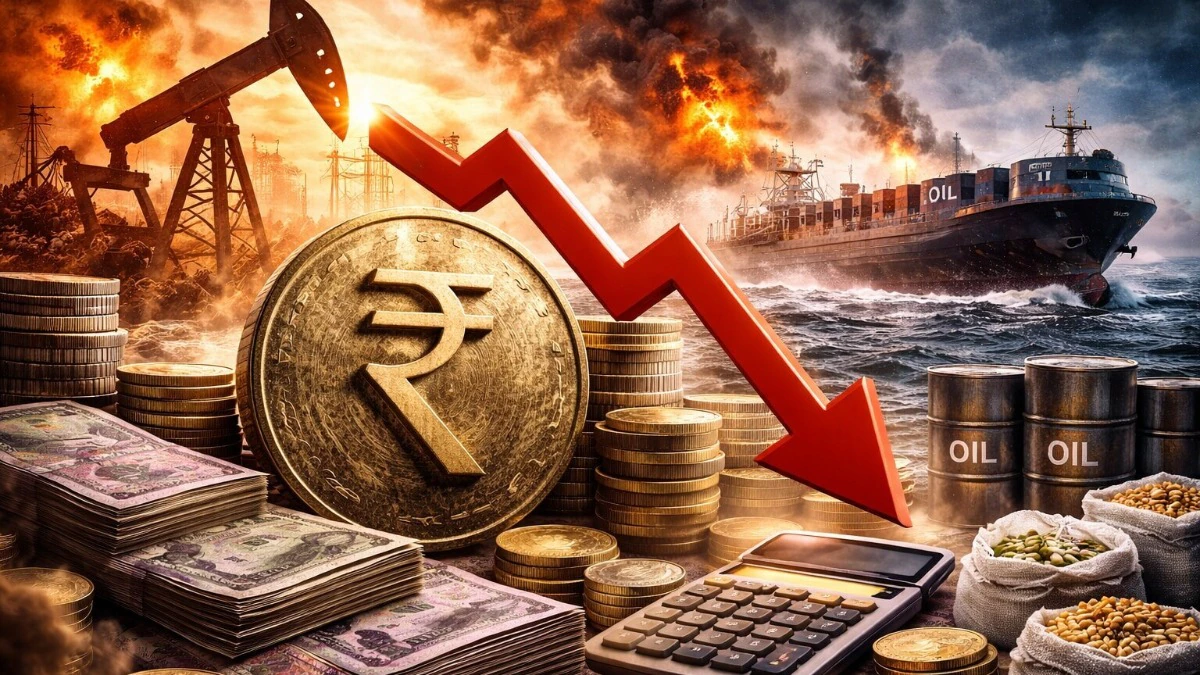
The Indian rupee fell to a record low against the US Dollar on Monday, slipping past the 92.30 level as a surge in crude oil prices, rising geopolitical tensions in the Middle East and foreign investor outflows pressured the currency.
The rupee weakened in early trade as investors turned cautious amid escalating tensions in the Middle East and a sharp spike in global oil prices. Pressure on the currency was compounded by a stronger US Dollar and persistent selling by foreign investors in Indian equities.
The decline in the rupee came as global oil markets surged on fears of supply disruptions in the Middle East.
Brent crude surged above USD 114 a barrel, its highest level since 2022, on concerns over supply disruptions and risks to key shipping routes in the region.
Media reports said several oil-producing countries, including Kuwait, the United Arab Emirates and Iran, cut production after the Strait of Hormuz was shut following Iran’s attack on ships passing through the strategic oil transit route, raising fears of major disruptions to global supply.
Brent crude’s May futures contract was trading around 25 per cent higher at USD 115.77 a barrel at 9:20 am on the Intercontinental Exchange, compared with Friday’s close of USD 92.69.
US President Donald Trump said the surge in oil prices was “a small price to pay” for the safety and peace of the United States and the world.
Oil Surge Adds Pressure
Higher oil prices tend to weigh on the rupee as India imports more than 80 per cent of its crude oil needs, increasing the country’s import bill and demand for dollars when prices rise.
Foreign institutional investors have also been pulling money out of Indian markets in recent sessions. When overseas investors sell local assets, they convert rupees into dollars, adding pressure on the domestic currency.
VK Vijayakumar, Chief Investment Strategist at Geojit Investments Limited, said the surge in oil prices could deliver a significant shock to economies.
“Brent crude has spiked above USD 115, delivering a big oil shock to economies and markets. Big oil importers like India will be hit hard if the West Asian conflict lingers long and crude price remains high,” he said.
He said markets are likely to factor in the inflationary impact of higher oil prices.
“Inflation will certainly move up whether the oil price hike is passed on to consumers or not,” Vijayakumar said.
According to him, the duration of the conflict remains the key uncertainty, which could continue to affect foreign investor sentiment.
“FIIs have again turned aggressive sellers in India after a short bout of buying earlier,” he noted.
Impact Of A Weaker Rupee
A weaker rupee increases the cost of imports for India, particularly commodities such as crude oil. Higher import costs can add to inflationary pressures and raise input costs for sectors that depend heavily on imported raw materials.
However, a depreciating currency can benefit export-oriented sectors such as information technology and pharmaceutical companies, which earn a large share of their revenues in dollars.
Vijayakumar added that geopolitical shocks historically tend to have a limited long-term impact on markets. Domestic consumption sectors such as banking, financials, automobiles, telecom and cement may remain relatively insulated, while defence and pharmaceutical stocks could show resilience during periods of uncertainty.
Market participants are expected to closely monitor crude oil prices, geopolitical developments and trends in foreign investment flows in the coming days. If oil prices remain elevated and foreign investor outflows continue, the rupee could remain under pressure in the near term. However, any easing in geopolitical tensions or stabilisation in oil prices could provide some support to the currency.