The Indian stock market on Wednesday continued its slide amid concerns related to the conflict in West Asia.
At closing time, the benchmark Sensex index had fallen more than 1,100 points or 1.4%, to close at 79,116.19. The Nifty had also fallen by 1.5% and closed at 24,480 points.
The market had crashed on Monday when it opened for the first time since the conflict began. It was closed on Tuesday because of Holi.
The India VIX index, which measures volatility in the market, had spiked above 23% at closing time on Wednesday.
Major Asian stock indices also fell on Wednesday. Hong Kong’s Hang Seng index had plummeted about 2.01%.While Japan’s Nikkei tanked 3.6% and South Korea’s Kospi fell 12.06%.
Rupee at record low
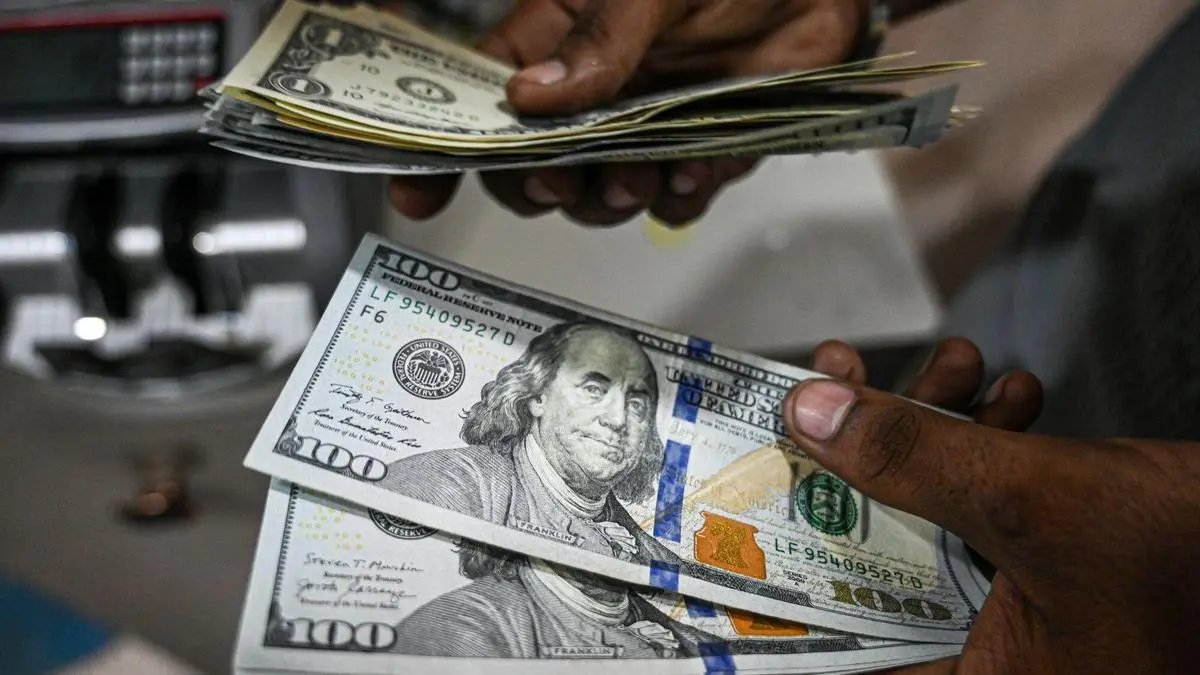
On Wednesday the Indian rupee sunk by 67 paise to close at an all-time low of 92.16 against the United States dollar amid concerns that rising crude prices may lead to higher inflation, PTI reported.
The price of benchmark Brent crude had jumped by 1.29% to $82.46 per barrel on Wednesday.
On Saturday, Israel and the US launched a joint operation to “degrade the capabilities” of the Iranian government.
The attacks came amid tensions between the three countries over Tehran’s nuclear programme. Washington acts as a guarantor of Israel’s security. Israel has been claiming that Iran is close to obtaining a nuclear weapon, which could alter the regional security balance.
Tehran has long maintained that its nuclear programme is for civilian purposes.
Iran retaliated by striking Israel and US military bases in the region, and targeting major cities in other Gulf countries and some ships.
US President Donald Trump on Tuesday said it was “too late” for Iran to seek negotiations.
On Monday, Iran claimed that the Strait of Hormuz was “closed” for shipping traffic, warning that any vessel attempting to pass through the strategic waterway would be set on fire.
In measures viewed as an attempt to assuage concerns about access to oil, Trump on Tuesday said that he had ordered the country’s International Development Finance Corporation to provide political risk insurance and financial guarantees for maritime trade in the Gulf.
The US Navy will escort oil tankers through the Strait of Hormuz, he added.
The narrow waterbody connects the Gulf to the Arabian Sea. About 20% of global petroleum liquids consumption traverses the maritime chokepoint.