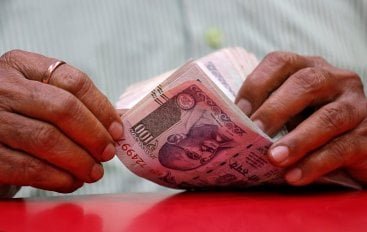
The rupee is under severe pressure in Wednesday’s trade. The currency slipped below 92 per dollar levels as the conflict in West Asia continues to exacerbate and is exerting pressure on the currency. The currency slipped past the 92 per dollar levels as the Brent Crude prices hit levels above $82/ barrel.
Why is the rupee plummeting?
Here is a quick look at the top factors that led to the sharp correction in the rupee
1. Spike in crude oil prices
With the closure of the Strait of Hormuz, market apprehension over crude and LNG supply disruptions has intensified. Around one-fifth of the global crude oil is transported via ships sailing through this route.
Traders have said the Indian rupee is extending declines amid the spike in crude prices. Brent crude futures are trading above the $82 per barrel mark, adding pressure to the currency, as India is highly dependent on the Middle East for its oil and gas requirements.
The Indian rupee becomes sensitive to spikes in oil prices as roughly 50% of the country’s crude needs are dependent on this route. This further impacts the Indian economy by increasing its import bill and widening its current account balance.
“The currency is reacting not only to immediate headlines but also to the structural risks building underneath.” CR Forex Advisors Managing Director, Amit Pabari said.
2. Strengthening dollar index
The United States Dollar Index, or DXY, which measures the strength of the dollar against a basket of six other currencies including EUR, JPY, GBP, CAD, CHF, and SEK, climbed for its third straight gain. Commenting on the advance in DXY Pabari noted that the dollar index has firmed, supported not just by geopolitical risk but also by steady US economic data.
The index is currently trading near the 99 level amid dimmed expectations of a rate cut by the US Federal Reserve. A high dollar index signals more demand for the greenback, as investors shift towards US assets, putting downward pressure on the rupee.
3. US-India trade deal in background
With the escalation of the US-Israel conflict with Iran, optimism over the potential benefits of a US-India trade deal has been pushed to the background. As of March 2 ,foreign investors were net sellers of domestic equities worth Rs 3,229 crore according to data available on NSE.
Can the rupee fall further ?
On Wednesday, Indian markets also opened in deep red as the Sensex crashed over 1,700 points to slip below 78,700, while the Nifty plunged more than 500 points, sliding under 24,400 in the early trading hours.
The currency breaching the 92-level mark marks a decline of more than 2% in the Indian rupee since the start of the year, making it one of the worst-performing emerging market currencies.
In 2025, the Indian rupee emerged as the weakest Asian currency, having fallen by nearly 5%.
Outlook for Rupee
“From a technical standpoint, the 91.50–91.80 zone is emerging as a strong support area for USD/INR. However, upside risks remain elevated, with immediate resistance now seen around the 92.50 level.” Pabari added.