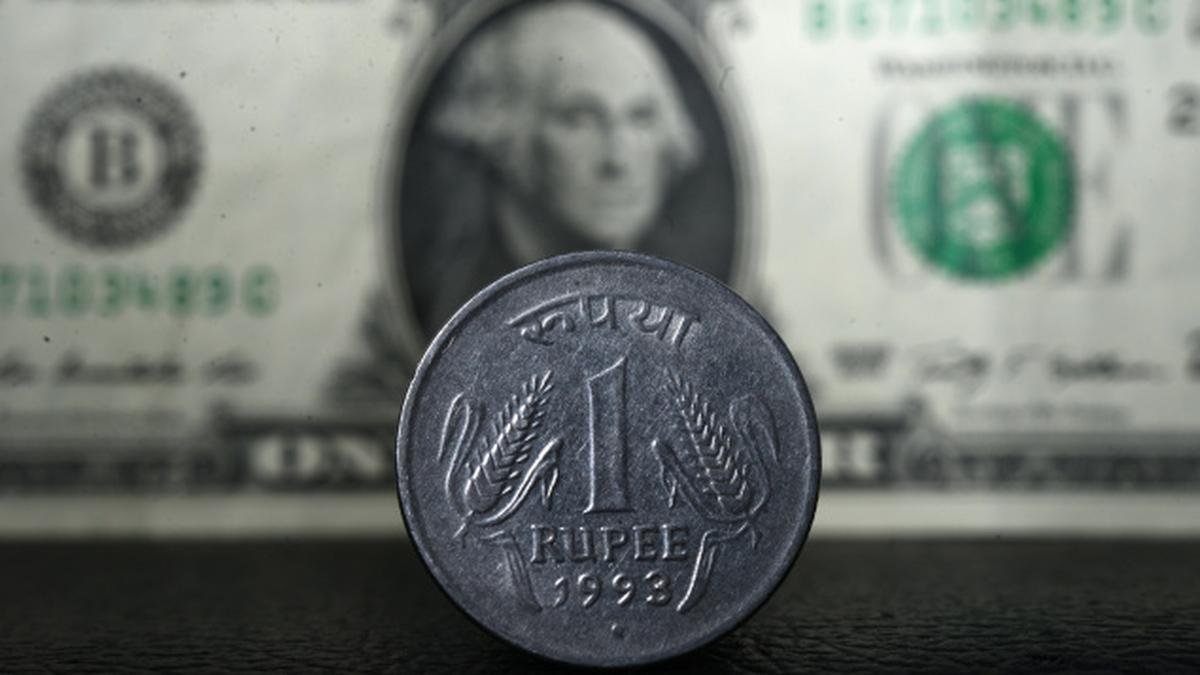
The Indian Rupee (INR) trades broadly weak against the US Dollar (USD) during afternoon trading hours in India on Friday. The USD/INR pair holds onto gains near 91.20 as the Indian stock market struggles to attract foreign investment.
According to data from the NSE, there seems to be no consistent inflows of overseas funds into the Indian equity market despite the announcement of a trade deal between the United States (US) and India in early February. So far this month, Foreign Institutional Investors (FIIs) have bought shares worth Rs. 895.58 crore, which represents pennies against the outflow seen in the last seven months.
On February 2, both India and the US acknowledged the trade deal announcement by President Donald Trump in which Washington agreed to cut tariffs on imports from New Delhi to 18% from 50% (which included 25% punitive tariffs).
Meanwhile, Indian Trade Minister Piyush Goyal has signaled that there could be some revisions in the trade deal with the US to get “best possible opportunities”, following the Supreme Court’s (SC) ruling against President Donald Trump’s tariff policy, CNN reported.
Also, the Indian currency is failing to capitalize on signs of easing tensions between the US and Iran. Oman’s Foreign Minister, Badr al-Busaidi, said in early trade that talks between the two nations on nuclear issues have made “significant progress,” and they will resume next week in Vienna.
It seems that the absence of a meaningful impact of positive US-Iran talks on the oil price has failed to support the Indian Rupee. As of writing, WTI oil price trades 0.3% lower at near $65.25. The Indian currency is highly sensitive to changes in oil prices, given that the Indian economy relies heavily on oil imports to meet its energy needs.
On the domestic front, investors await the Q4 Gross Domestic Product (GDP) data, which will be published at 04:00 PM IST (10:30 GMT). The GDP data is expected to show that the economy expanded at an annualized pace of 7.2%, slower than 8.2% growth seen in the third quarter of 2025.
In the Asian session, the US Dollar trades marginally and is expected to end the week broadly sideways after the whole tariff tantrum. During the press time, the US Dollar Index (DXY), which tracks the Greenback’s value against six major currencies, ticks lower to near 97.70.
This week, US President Trump announced 10% global tariffs, and US Trade Representative Jamieson Greer said that Washington could raise these tariffs to 15% or above on some nations. The White House called for global levies to offset the impact of the SC’s ruling against Trump’s tariff policy, which came on February 20.
On the monetary policy front, traders remain confident that the Federal Reserve (Fed) will leave interest rates unchanged in its policy meetings in March and April, according to the CME FedWatch tool. Market speculation for the Fed to avoid any monetary policy adjustment in the next two meetings has been prompted by inflation remaining above the central bank’s 2% target for a long period.
On Thursday, Chicago Fed President Austan Goolsbee signaled support for several interest rate cuts this year, but cautioned against front-loading them as inflation is still above the 2% target. “Rates can come down, but don’t want to front-load before inflation eases,” Goolsbee said in an interview with Fox News.
US Dollar Price Today
The table below shows the percentage change of US Dollar (USD) against listed major currencies today. US Dollar was the weakest against the Swiss Franc.
| USD | EUR | GBP | JPY | CAD | AUD | INR | CHF | |
|---|---|---|---|---|---|---|---|---|
| USD | -0.15% | -0.08% | -0.06% | -0.09% | -0.20% | -0.08% | -0.20% | |
| EUR | 0.15% | 0.07% | 0.06% | 0.07% | -0.04% | 0.11% | -0.05% | |
| GBP | 0.08% | -0.07% | -0.02% | -0.00% | -0.11% | 0.00% | -0.12% | |
| JPY | 0.06% | -0.06% | 0.02% | 0.01% | -0.11% | 0.02% | -0.11% | |
| CAD | 0.09% | -0.07% | 0.00% | -0.01% | -0.12% | 0.03% | -0.12% | |
| AUD | 0.20% | 0.04% | 0.11% | 0.11% | 0.12% | 0.15% | -0.01% | |
| INR | 0.08% | -0.11% | 0.00% | -0.02% | -0.03% | -0.15% | -0.15% | |
| CHF | 0.20% | 0.05% | 0.12% | 0.11% | 0.12% | 0.00% | 0.15% |
The heat map shows percentage changes of major currencies against each other. The base currency is picked from the left column, while the quote currency is picked from the top row. For example, if you pick the US Dollar from the left column and move along the horizontal line to the Japanese Yen, the percentage change displayed in the box will represent USD (base)/JPY (quote).
Technical Analysis: USD/INR steadies around 91.00
-1772167038401-1772167038404.png&w=1536&q=95)
USD/INR trades almost flat near 91.20 as of writing. The pair holds a mild bullish bias as it stabilizes above the 20-day Exponential Moving Average, which has flattened and now tracks just below spot.
The 14-day Relative Strength Index (RSI) approaches 60.00, signaling positive but moderate momentum rather than an extended uptrend.
Immediate support emerges at the 20-day EMA near 90.94, with a break below exposing the recent reaction low at 90.58 and then the February 3 low at 90.15 as deeper support. On the topside, initial resistance stands at the January 22 low of 91.35, followed by the January 28 low of 91.66.
(The technical analysis of this story was written with the help of an AI tool.)
Fed FAQs
Monetary policy in the US is shaped by the Federal Reserve (Fed). The Fed has two mandates: to achieve price stability and foster full employment. Its primary tool to achieve these goals is by adjusting interest rates.
When prices are rising too quickly and inflation is above the Fed’s 2% target, it raises interest rates, increasing borrowing costs throughout the economy. This results in a stronger US Dollar (USD) as it makes the US a more attractive place for international investors to park their money.
When inflation falls below 2% or the Unemployment Rate is too high, the Fed may lower interest rates to encourage borrowing, which weighs on the Greenback.
The Federal Reserve (Fed) holds eight policy meetings a year, where the Federal Open Market Committee (FOMC) assesses economic conditions and makes monetary policy decisions.
The FOMC is attended by twelve Fed officials – the seven members of the Board of Governors, the president of the Federal Reserve Bank of New York, and four of the remaining eleven regional Reserve Bank presidents, who serve one-year terms on a rotating basis.
In extreme situations, the Federal Reserve may resort to a policy named Quantitative Easing (QE). QE is the process by which the Fed substantially increases the flow of credit in a stuck financial system.
It is a non-standard policy measure used during crises or when inflation is extremely low. It was the Fed’s weapon of choice during the Great Financial Crisis in 2008. It involves the Fed printing more Dollars and using them to buy high grade bonds from financial institutions. QE usually weakens the US Dollar.
Quantitative tightening (QT) is the reverse process of QE, whereby the Federal Reserve stops buying bonds from financial institutions and does not reinvest the principal from the bonds it holds maturing, to purchase new bonds. It is usually positive for the value of the US Dollar.