Unlock the Editor’s Digest for free
Roula Khalaf, Editor of the FT, selects her favourite stories in this weekly newsletter.
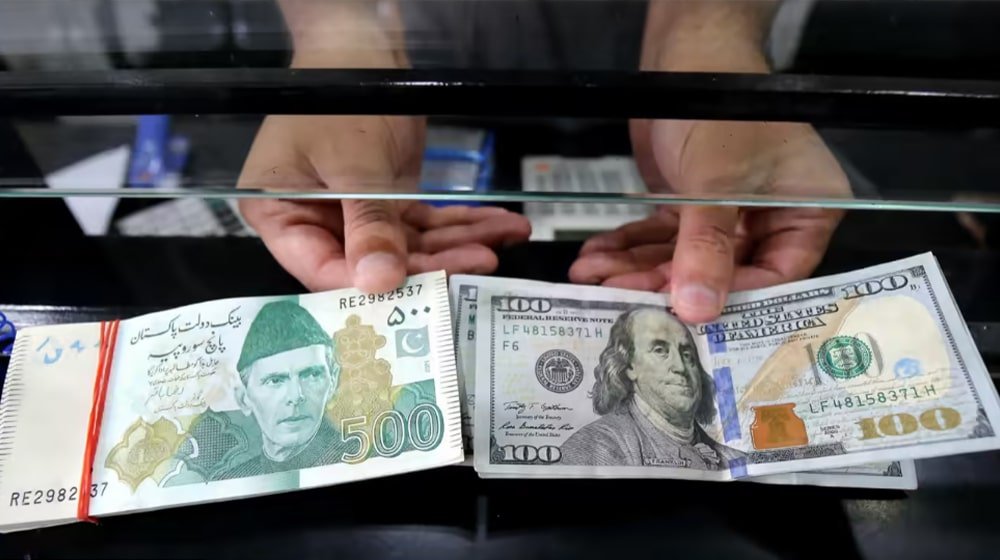
The US dollar is morphing into an increasingly political animal. In general, and in very broad terms, the world’s most important reserve currency ebbs and flows based on good, old-fashioned economic fundamentals — the pace of growth, shifts in expectations for interest rates and so on.
But there are signs of this normal order breaking down. Instead, what really moves the dollar is the wild soap opera that is US politics.
Wall Street analysts are largely dancing around this issue, often for fear of irritating the president. But when they publish achingly dry studies on the “more limited role of rate differentials”, what they mean, and often say in private, is: “It’s the politics, stupid.”
This dynamic is starting to show itself in market performance. Since the start of this year, for example, analysts have largely upgraded their forecasts for US economic growth, from about 2 per cent to about 2.4 per cent, on the expectation that the Trump administration will seek to run the economy hot into the congressional elections in November. At the same time, other developed economies are largely creaking along.
Similarly, the gap between short-term bond yields in the US and those in much of the rest of the developed world would typically point to a higher dollar. Instead, the dollar index, which tracks its value against a basket of other currencies, has fallen by about 1.7 per cent so far this year. That’s not end-of-days stuff, but the divergence from usual correlations does suggest we all need to look at the vast currency market through a new lens.
Analysts at Société Générale are among those highlighting the power of politics here — and only really on one side. The euro’s value against the buck is now “no longer reacting to transatlantic political‑risk differentials”, they wrote, “and is instead driven almost entirely by US‑specific uncertainty”.
This is where the erosion of US institutions, particularly the central bank, shows up in investment portfolios.
The past week has brought a live example of this longer-term phenomenon in action. On Wednesday, the release of key US jobs data (delayed due to yet another temporary federal government shutdown) revealed that, contrary to rather downbeat expectations, the US economy added a net 130,000 new jobs in January. Economists had been expecting around half that. Although there had been some downward revisions to recent months, the headline result was unambiguously strong. US two-year bonds weakened a little, sending yields somewhat higher on a sense that US interest rates might need to be a little higher over the rest of this year.

All things equal, you’d imagine this shift would drag the dollar higher too — higher rates typically make the currency more attractive. But not this time. “The dollar was flat, which is pretty remarkable given the move in rates,” noted Robin Brooks, a senior fellow at the Brookings Institution. “I see this as a sign that we’re on our way to the correlation switch, whereby the Fed is seen as increasingly politicised, causing markets to sell the dollar on strong data.”
In a strange way, some Trump advisers might count this as a win. Some of them do, after all, have a fondness for dollar weakness, arguing it would help to foster a renaissance in US manufacturing jobs. It’s safe to say the jury is out on that one.
One issue, though, is that this can easily spiral, affecting how non-US investors treat American assets for years to come. That is because for pensions and other long-term investors buying US stocks is a hard habit to break. That is despite the widespread aversion to new US political risks that have seeped in under the second Trump presidency. It can take months to convince the various investment committees that leaning heavily into European stocks, for example, and out of US markets, is a risk worth taking.
Hedging away dollar risk by selling dollars, while still buying US assets, is a much easier path and one that requires a lot less soul searching. Vincent Mortier, chief investment officer at European asset manager Amundi, told me he still faces an uphill battle in convincing clients and prospective clients to peel away from standard benchmark stock weightings, which rely heavily on the US.
By contrast, agreeing to hedge out at least some dollar risk is now in the “vast majority” of new client mandates, he said. Last year, he added, was a “wake-up call” that non-US investors simply cannot afford not to address this risk.
“In the past there was a premium on the US dollar because it’s the only real reserve currency,” he added. “Now it’s being challenged. I think the premium was about 5 to 10 per cent, and there’s no need to pay that premium now. Mathematically, the dollar should drift down.”
All this is not so much a case of “sell America” as “hedge America”. But the effect on the dollar is the same, and the more consistently this plays out, the more hedging will happen and more dollar weakness will ensue, almost regardless of the strength of the US economy itself. “We’re entering a new era,” said Brooks at Brookings. “US growth will boom this year. But the dollar will fall.”
katie.martin@ft.com