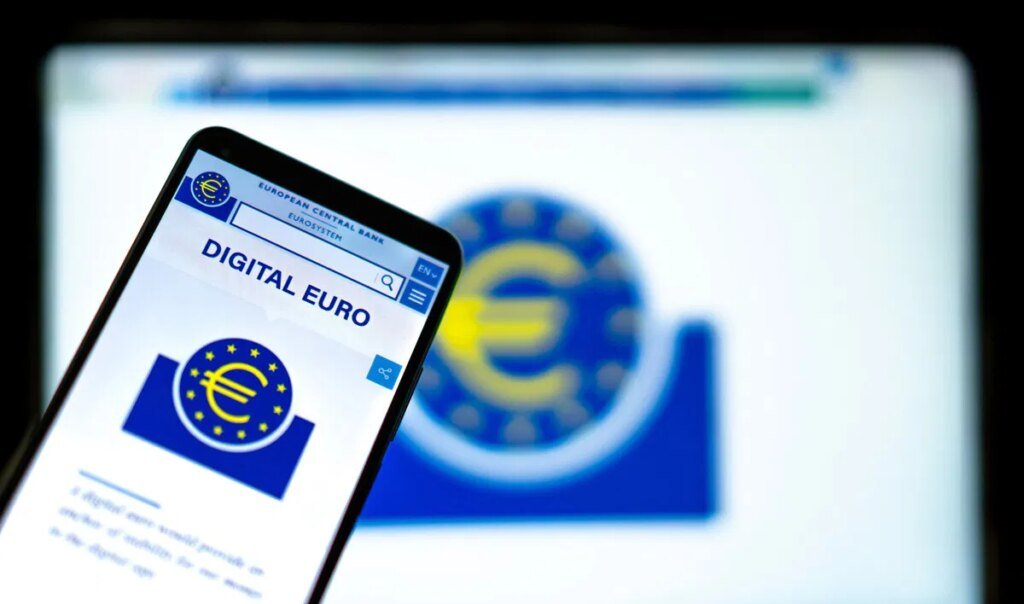
The proposed digital euro would allow Europeans to make online and offline payments using a central bank backed digital wallet.
Credit: Shutterstock/FilipArtLab
Imagine paying for dinner, rent or a train ticket with a euro that exists only in digital form, issued directly by Europe’s central bank. That is the idea behind the digital euro, a project that is moving steadily through the EU system. It would not replace cash or your bank account, but it could add a new way to pay that feels familiar and different at the same time. Proposed by the European Commission and developed by the European Central Bank (ECB), it is designed to let people pay online and offline, using a wallet provided through banks or payment services. The idea is to keep a state-backed option for day-to-day payments as shopping becomes more digital, while boosting resilience and pan-European acceptance. EU lawmakers still have to agree the legal framework, and the ECB has not yet taken a final decision on issuance.
What it might feel like in daily life
For most people, the digital euro would not look like a dramatic shift. In practice, it is expected to appear as an extra wallet option, likely inside familiar banking apps or payment apps, rather than a brand-new system you must adopt.
The biggest everyday change would be choice. Today, many digital payments rely on private networks and commercial bank money. The digital euro would be central bank money in digital form, meaning a public alternative for routine purchases, from supermarket shopping to transport tickets.
Offline payments, travel, and “cash-like” privacy
One of the most practical features being built is offline payments, aimed at working even when your mobile signal drops or networks go down. That could matter during local outages, in rural areas, or when travelling.
Privacy is also central to the pitch. The ECB has said that offline payments are intended to offer cash-like privacy, where transaction details are known only to the payer and payee, not routinely visible to third parties. Online payments would still need safeguards against fraud and money laundering, but the Eurosystem says it is designing the digital euro with “high privacy standards”.
Limits, banks, and what you should expect
An important point is that the digital euro is being designed mainly for payments, not savings. That is why holding limits are widely discussed, with policymakers and researchers often citing a few thousand euros per person as a plausible range, to avoid destabilising banks by encouraging large shifts out of deposits. The ECB has stated it is developing a methodology for calibrating holding limits.
For Europeans, the immediate takeaway is simple. If it launches, the digital euro would likely become a new payment option, useful for everyday spending, travel, and resilience, without replacing cash or forcing people to abandon existing methods.