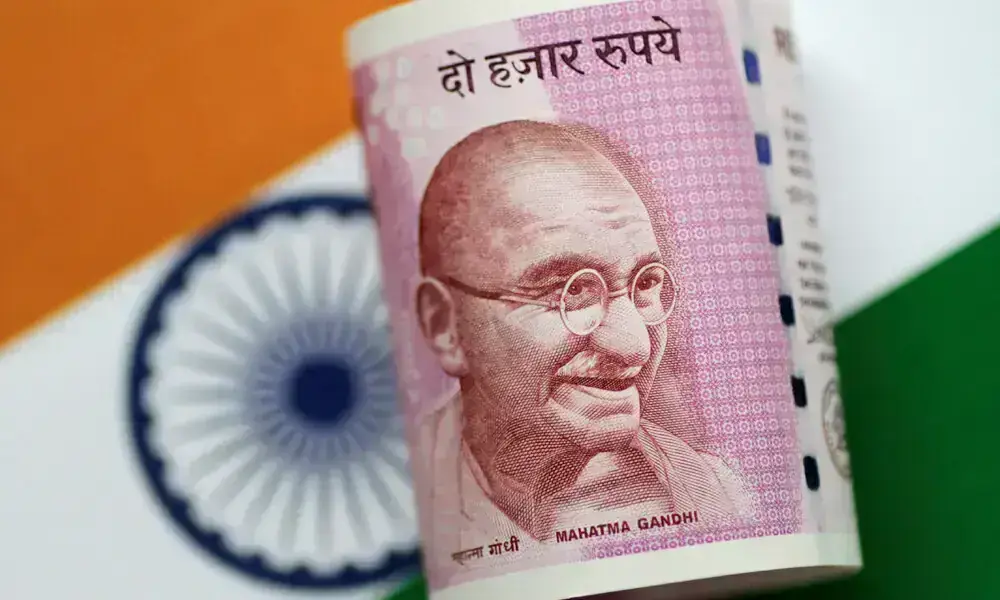
The Indian rupee slipped to an all-time low on Thursday, breaching the 92-per-dollar mark, as sustained foreign capital outflows and heightened corporate hedging demand outweighed support from a resilient domestic economy, Reuters reported.
The currency moved past the psychologically important 92 level, surpassing its previous record low of 91.9650 touched last week. The rupee has declined about 2 per cent so far this year and nearly 5 per cent since US President Donald Trump imposed steep tariffs on India’s merchandise exports, even as the country posted strong GDP growth of 8.2 per cent in the quarter ended 30 September.
Traders said the Reserve Bank of India likely intervened in the market before the opening of local spot trade to slow the pace of depreciation as the rupee approached the key threshold. A dealer at a foreign bank noted that the central bank’s action appeared aimed at curbing volatility rather than defending a specific level.
The rupee’s fall has been sharp, having crossed 91 for the first time just six trading sessions earlier. The RBI has consistently maintained that it does not target any particular exchange rate and intervenes only to manage excessive fluctuations.
Pressure on the currency has been driven by a combination of higher US tariffs, persistent foreign portfolio outflows, increased bullion imports and rising corporate anxiety over further depreciation. This has come despite India remaining the world’s fastest-growing major economy and recently concluding a free trade agreement with the European Union.
Since the tariffs took effect, the rupee has weakened about 7.5 per cent each against the euro and the Chinese yuan. On a trade-weighted basis, the real effective exchange rate stood at 95.3 in December, the lowest level in a decade, according to RBI data.
Goldman Sachs analysts said that while elevated US tariffs on Indian exports are expected to be lowered eventually, delays could continue to strain external balances. The firm expects the rupee to weaken to 94 per dollar over the next 12 months, adding that the RBI appears more comfortable allowing flexibility in the currency while using dips to rebuild foreign exchange reserves.
Market participants also pointed to a shift in corporate behaviour, with importers stepping up hedging against a weaker rupee, while exporters slowed dollar sales in the forward market, tightening supply and amplifying downward pressure on the currency.