Stay informed with free updates
Simply sign up to the Foreign exchange myFT Digest — delivered directly to your inbox.
Syria will replace banknotes bearing ousted president Bashar al-Assad’s face and slash two zeros from the pound in a bid to restore confidence in the economically devastated country’s currency.
Syria’s central bank will from January 1 re-denominate the pound with new banknotes featuring Syrian plants such as olives, roses and mulberries.
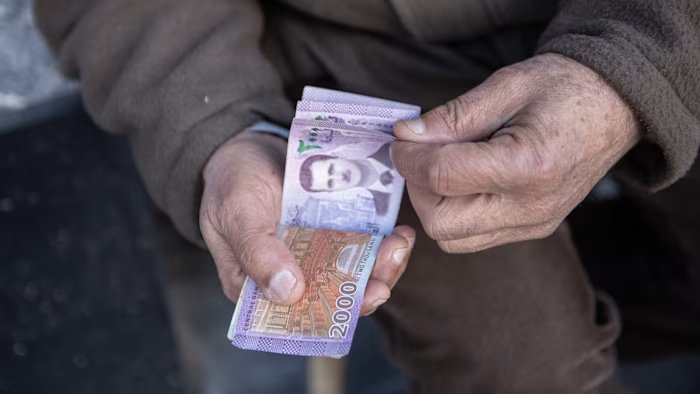
The old currency, which Syrians have continued to trade in the year since the fall of Assad’s regime, includes a S£2,000 banknote with the face of the longtime dictator.
One unit of the updated pound will be equivalent to 100 units of existing currency.
The Syrian pound has lost more than 99 per cent of its value since 2011 through a brutal civil war, sanctions and corruption.
As a result the largest note in circulation, S£5,000, is worth just over $0.40, meaning large purchases in Syria’s cash-based economy involve hauling suitcases stuffed with bills.
The new government says the policy will ease daily transactions and make the currency feel more manageable and trustworthy to Syrians who watched its downward spiral over the past decade. It also seeks to simplify accounting at banks and businesses.
Syria’s central bank governor Abdulkader Husrieh said in a press conference that the currency change would “increase confidence levels domestically and abroad”, adding the move was part of the bank’s broader strategy to improve economic stability.
At a launch ceremony for the new currency this week, President Ahmed al-Sharaa acknowledged that the policy would not control inflation: “The decision . . . doesn’t mean improving the economy or the exchange [rate] in the country but rather the ease of transactions in society.”
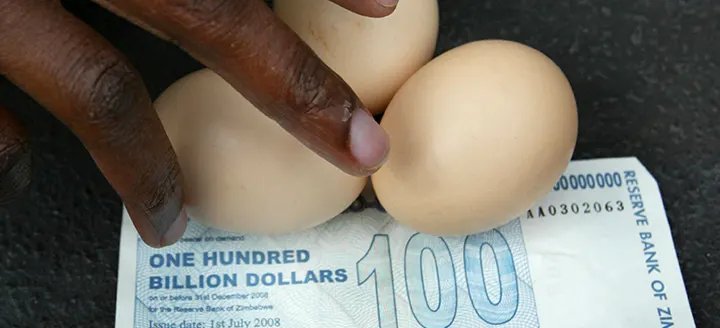
Other countries such as Turkey, Venezuela and Zimbabwe have also cut zeros from their currencies after spiralling inflation forced people to bring huge piles of cash for basic payments. Iran has also in recent months considered re-denominating its currency.
Ibrahim Qawshaji, an economist from Hama who attended the launch ceremony, said the lower numbers could cause a psychological shift: “You’re changing the nominal value of money, goods, services and salaries. Those massive amounts wore people down.”
The switch will take place over an initial transition period of three months, subject to renewal, during which the two currencies will coexist and vendors will be mandated to list prices in both, Husrieh said. The Assad-era bills will be gradually phased out in favour of the new notes.
The move also has symbolic weight, doing away with bills associated with the Assad era, including an old S£1,000 note still in circulation bearing the face of Hafez al-Assad, Bashar al-Assad’s father who ruled the country before him.
Sharaa said the choice of Syrian nature for the new notes reflected peoples’ daily lives and the country’s geographic diversity: “It’s an expression of a new national identity . . . and a move away from the pattern of worshipping individuals.”
The government is also hoping to turn people back towards Syrian pounds and away from dollars. Since the fall of Assad’s regime ended a ban on foreign currency, Sharaa said people had turned increasingly to paying with dollars to avoid unwieldy bags of cash.
Sharaa’s government, which took power in December 2024 after ousting Assad’s regime, has courted western backers by promising to implement democratic processes and economic reforms. But progress has been slow.
His administration’s failure to prevent sectarian bloodshed and unite the country has also threatened to undermine Sharaa’s credibility.
Samir Aita, a Syrian economist and president of the Circle of Arab Economists, described the policy as a “show”.
“Why is it necessary to make new bills today while there are no real economic reforms?”
Aita said the current exchange rate was artificial and only maintained by a limit on liquidity.
If the technically complex implementation of the currency switch succeeds, analysts say it could help give the central bank more control over the money supply and a starting point for understanding how much cash is in circulation, which it currently does not have.
But Husrieh, the central bank governor, also underscored the political significance of the move. “We have to break with the past,” he said at the launch ceremony.