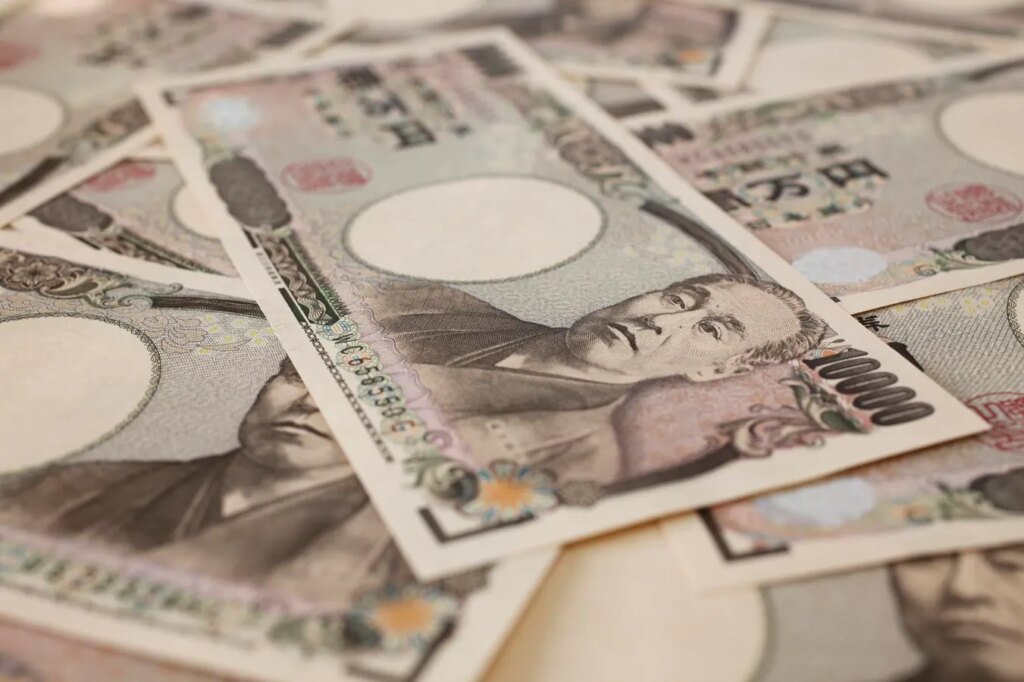
As the Japanese yen slides yet again, Prime Minister Sanae Takaichi is probably praying Donald Trump is too distracted to notice as U.S. politics goes awry.
In recent days, President Trump doubled down on his desire to fire Federal Reserve Chairman Jerome Powell. Part of Trump’s thirst for lower interest rates is to secure a weaker exchange rate to boost U.S. exports.
Yet it’s Japan that’s enjoying the sliding currency of Trump’s dreams. One reason: traders are scaling back bets the Bank of Japan will raise rates on December 19. With the economy contracting 1.8% year-on-year in the third quarter and Takaichi cajoling the BOJ to stand pat, the yen is moving lower.
Another: at a moment of great geopolitical peril, investment funds are flocking to the dollar. While that’s normally the case, you’d think Trump’s tariffs and general erraticism, the U.S. national debt topping $37 trillion, and the Fed in rate-cut mode would weigh on the reserve currency. Hardly.
Now, Takaichi is left to worry that Trump might notice and think Japan is resorting to its beggar-thy-neighbor ways. And right around the time that Treasury Secretary Scott Bessent’s team is finalizing its annual currency manipulators list.
Since taking office on October 21, Takaichi has been walking on geopolitical eggshells vis-à-vis Trump. The last thing Japan needs is for Trump to raise the 15% rate. Few variables could trigger Trump more than the perception that Tokyo is devaluing the yen.
Takaichi is also walking a tightrope regarding the $550 billion “signing bonus” Trump expects Japan to pay to his White House in cash. Her Liberal Democratic Party knows better than to pay up now. Not before the Supreme Court has a chance to rule Trump’s tariffs unconstitutional. There’s a decent chance America’s top court will do just that.
The bigger issue, though, is how this latest drop in the yen is exactly what Japan doesn’t need as 2026 approaches. In fact, it could set back Japan’s economy in unpredictable ways.
Tokyo’s most consistent economic policy over the last 25 years has been to keep the yen undervalued. The policy went into overdrive in late 2012, when then Prime Minister Shinzo Abe prodded the BOJ to push quantitative easing into uncharted territory.
Yet the resulting 30% drop in the yen is backfiring at this very moment. For more than a dozen years now, Tokyo has been running what’s arguably history’s greatest corporate welfare program. It’s taken the onus off a succession of governments to level playing fields, reduce bureaucracy, rekindle innovation, empower women and attract more international talent.
It relieved corporate CEOs of the need to restructure, invent new products and technologies, and take chances, as Japan Inc. did in decades past.
The yen’s latest drop seems a recipe for even greater mediocrity — and at the worst possible moment. Trump’s tariffs are an intensifying headwind just as China is steadily raising its economic game.
For all China’s troubles — including a confidence-destroying property crisis — President Xi Jinping is investing big in putting China at the forefront of artificial intelligence, robotics, biotechnology, electric vehicles, renewable energy, semiconductors, and other technologies of the future.
These efforts are gaining traction. Chinese EV maker BYD has the global auto industry in a whirl, at the same time Japan’s legacy giants are losing market share. Eleven months after China’s “DeepSeek shock” upended the AI world, Japan Inc. still has no response.
It’s also hard not to connect the dots between Japan punching below its weight in the race for tech unicorns and the weak yen. It’s even harder to think that the yen weakening to 160, and now, is in anyone’s best interest, least of all Japan’s 125 million people.